oem-odm · B2B PROCUREMENT
High Density Print Sweatpants Manufacturer: Raised Leg Ink
By Weavnora · Updated
Direct answer
What buyers need to know
High density print sweatpants manufacturer means a factory that screen prints thick, sharp-edged plastisol layers onto fleece sweatpants or joggers to create a raised logo, controlling stencil thickness, curing and stretch. Typical builds use 280-420 GSM fleece, logos 4-20 cm wide, strike-offs in 7-12 days and wash tests of 3-5 cycles. MOQ depends on style and fabric.
High density print sweatpants manufacturer means a factory that screen prints thick, sharp-edged plastisol layers onto fleece sweatpants or joggers to create a raised logo, controlling stencil thickness, curing and stretch. Typical builds use 280-420 GSM fleece, logos 4-20 cm wide, strike-offs in 7-12 days and wash tests of 3-5 cycles. MOQ depends on style and fabric.
High density printing gives a logo a sharp, raised, almost moulded look. Unlike puff ink, which expands into a soft rounded shape, high density ink is built up in thick, controlled layers with crisp vertical edges. On sweatpants, that makes a small thigh logo or hip wordmark look precise and premium, and it pairs well with a matching high density hoodie. The challenge is that sweatpants stretch and fold more than a hoodie chest, and a thick ink layer can crack if it is too stiff or too large. This guide explains how a high density print sweatpants manufacturer handles that.
What is a high density print sweatpants manufacturer?
A high density print sweatpants manufacturer is a factory that produces fleece sweatpants or joggers and screen prints them with high density ink, a thick plastisol pushed through a thick-emulsion stencil to build a raised, square-edged print, then cures and tests it for stretch and wash durability. Most leg logos are 4-20 cm wide on 280-420 GSM fleece, with a strike-off in 7-12 days before bulk.
How does high density printing work?
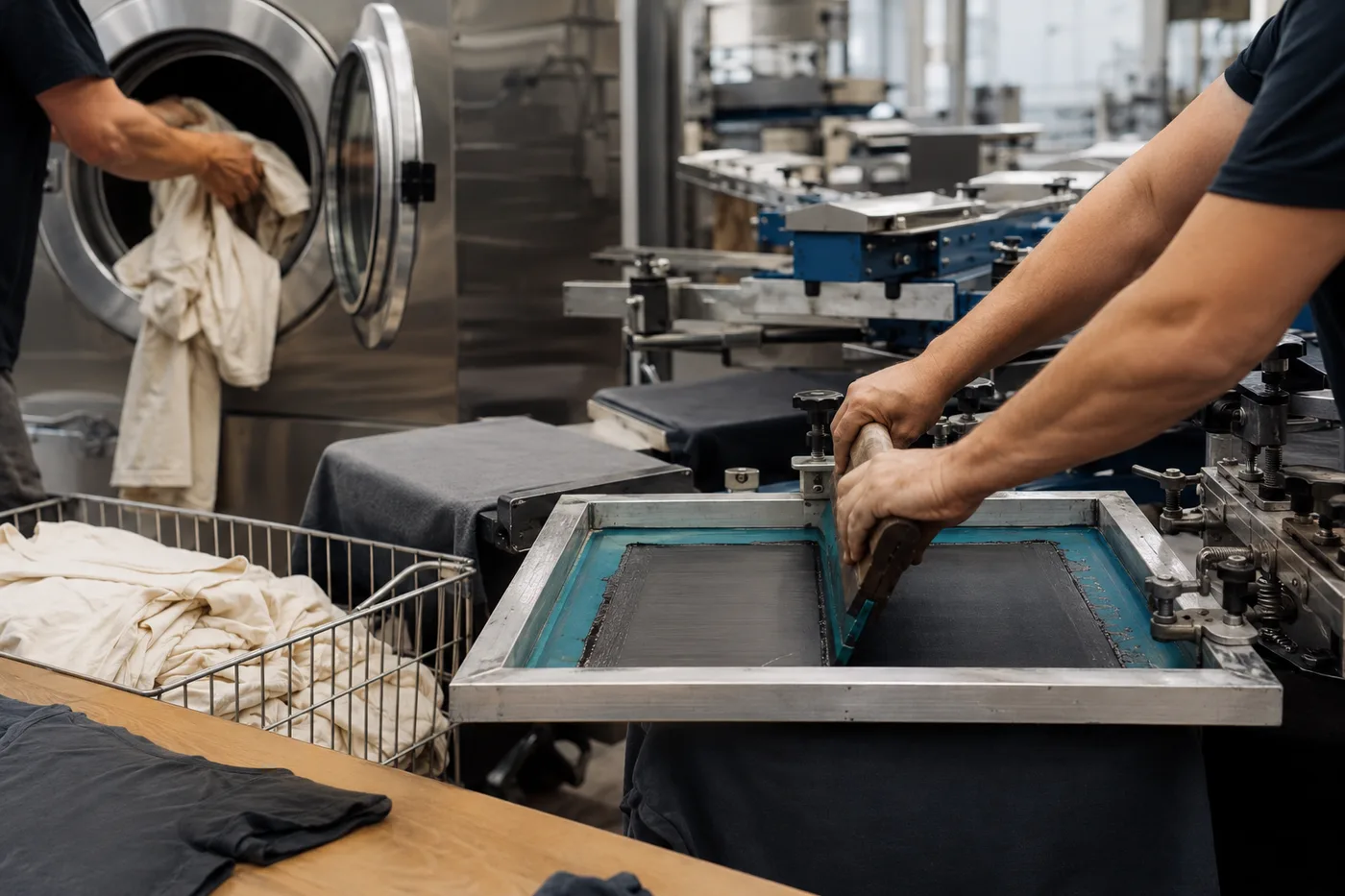
The printer uses a screen with a thick emulsion or capillary film, which creates a deep stencil. High density plastisol is pushed through in one or more passes, often with flashing between layers, to build height. The edges stay sharp because the stencil wall holds the ink in shape. After printing, the panel is fully cured in a tunnel dryer. A colour layer can be printed on top, and some designs combine flat ink and raised ink in the same graphic.
On sweatpants, most factories print on cut leg panels before sewing, which keeps placement consistent and avoids printing over seams. Our high density print hoodie manufacturer guide and high density print t-shirt manufacturer guide explain the method on tops.
Want to see raised ink on your sweatpants? Weavnora develops heavyweight sweatpants and runs high density strike-offs on your fleece, so you can check height, edges and flex before bulk. See our screen printing page for the base styles and fabrics we work with, then request a quote with your style, fabric and quantities. MOQ depends on style and fabric, so we confirm it in your quote.
Where should a high density logo go on sweatpants?
The best spots are the upper thigh, the hip just below the pocket opening, the back pocket area and near the ankle cuff. These areas flex less than the knee or seat. Keep large raised areas moderate in size: a bold wordmark 4-20 cm wide is common, while full-leg raised prints are much more likely to crack. Thin raised lines and small text can lose definition, so ask the printer to review artwork before strike-off.
Which fleece works best for high density ink?
A smooth, stable fleece face gives the sharpest edges. Heavier fleece supports the print and stops the leg from rippling around a stiff logo. Fabrics with spandex need a more flexible ink system and careful stretch testing. If the sweatpants are garment dyed or washed, print after washing, because harsh washes can affect plastisol. For fabric weights, see the heavyweight cotton sweatpants manufacturer guide.
High density vs puff vs silicone on sweatpants: which option fits?
| Selection criteria | High density print | Puff print | Silicone print |
|---|---|---|---|
| Shape | Sharp, square edges | Rounded, foamy | Sharp, rubbery |
| Handfeel | Firm, smooth | Soft, spongy | Soft-touch, flexible |
| Flex on the leg | Medium | Medium to good | High |
| Detail | Good for bold shapes | Limited fine detail | Very good |
| Relative cost | Medium | Lower to medium | Higher |
The trade-offs are edge sharpness versus flexibility, softness and cost. High density gives the most precise raised look at a moderate cost. Puff is softer and cheaper but less crisp. Silicone flexes best but costs more; see the silicone print hoodie manufacturer guide for how silicone behaves on fleece. For cost drivers, read our high density print cost per piece guide.
What should a high density brief include?
Send vector artwork, finished print size, target height or "standard" raised effect, ink colours and Pantone references, and placement measurements from the waistband and side seam. State whether the print is on one leg or both and whether it mirrors. If the hoodie in the set has a matching logo, specify whether it should be the same height or scaled. A good printer will tell you if any part of the design is too thin for high density and suggest changes.
How should the strike-off be tested?
- Stretch the print area lengthwise and widthwise and check for cracks.
- Wash several cycles inside out and inspect edges and adhesion.
- Check height and edge sharpness against the artwork.
- Confirm colour and gloss level.
- Fold the garment as it will be packed and check that the print does not stick or mark the next layer.
Agree a sealed sample and keep it with the inspection team.
Which bulk QC checks matter?
Inspectors should check placement on each leg, height consistency between pieces, edge definition, pinholes, lint trapped in the ink, registration of colour layers and complete curing. They should measure finished garments, because cured panels can shrink slightly. The custom bottoms and sets manufacturing guide explains how printing fits into the sweatpants production sequence.
How long does a high density sweatpants order take?
Plan for artwork review, screen making with thick stencils, a strike-off with stretch and wash tests, any adjustment, bulk panel printing and then sewing. High density printing is slower than flat printing because of multiple passes and flashing, so allow extra print days for large orders or several logos. Re-orders are faster when screens and approved settings are kept.
Can high density be combined with other decoration?
Yes. A common combination is a high density logo on the thigh with a flat screen print or embroidery elsewhere, such as a small back pocket mark. Another is tonal high density, where the raised ink matches the fleece colour so the logo reads through texture alone. Each added technique needs its own test, so plan the strike-off to include every element.
High density print sweatpants manufacturer: typical specs and key numbers
| Spec | Typical estimate range |
|---|---|
| Sweatpants fleece weight | 280-420 GSM |
| Raised logo width | 4-20 cm |
| Print passes for height | 1-4 passes |
| Strike-off time | 7-12 days |
| Wash test before approval | 3-5 cycles |
| Bulk production after approval | 30-45 days |
| MOQ (pcs per style and colour) | Depends on style and fabric; confirmed in your quote |
These are typical industry estimate ranges for planning, not quotes; confirm actual figures with your supplier for your fabric, quantity and destination.
Key takeaways
- A high density print sweatpants manufacturer builds sharp raised ink logos that survive leg movement.
- Upper thigh, hip, back pocket and cuff placements reduce cracking risk.
- Keep raised areas bold but moderate; very thin lines lose definition.
- High density is sharper than puff and firmer than silicone.
- Approve a strike-off after stretch and wash tests, and keep it as the bulk standard.
Request a high density print sweatpants quote
Ready to put a raised logo on your joggers? Send your tech pack or reference images, fabric preference, colours and quantities through our quote request form. MOQ depends on style and fabric, so we confirm it in your quote together with sampling time, approval steps and an itemised price.
Buyer questions
Frequently asked questions
Will high density print crack on sweatpants?
Not when the size and placement are sensible and curing is correct; we stretch-test the strike-off.
Is high density the same as puff print?
No. High density has sharp edges; puff expands into a softer rounded shape.
Can high density be tonal?
Yes. Tonal raised logos are popular and read through texture.
Is it printed before or after sewing?
Usually on flat panels before sewing for accurate placement.
What is the MOQ for high density print sweatpants?
MOQ depends on style and fabric, so we confirm it in your quote.
Start a sourcing conversation
Share quantity, target GSM, destination and sample requirements.
Start your RFQ →Email files to postmaster@weavnora.com.