Weavnora journal

Apparel sourcing
without the guesswork.

Technical guides and production insight for fashion brands, importers and sourcing teams across North America and Europe.

Editorial standard

Written for sourcing decisions, reviewed for production accuracy.

We publish only buyer guides that pass a distinct-topic and procurement-value review. Every guide must answer a specific purchasing question, use measurable specifications where appropriate, and avoid unsupported claims about prices, certifications, customers or delivery guarantees.

Drafts are reviewed against the relevant material, construction, finishing, sampling or quality-control workflow before publication. Existing guides are updated when the underlying process or commercial information changes.

ALL INSIGHTSFABRICSWASH & FINISHOEM / ODMQUALITY CONTROL
Blank heavyweight hoodie with rib-knit cuff and waistband swatches and measurement tools

Hoodie Rib Cuff & Hem Specification: Buyer Guide

Define rib structure, composition, finished dimensions, recovery, attachment and the approved finished-garment sample.

Specify the complete rib

Record structure, composition, dimensions, recovery and color relationship.

Evaluate it with the body

Review rib on the intended hoodie after dyeing, washing and finishing.

Link sample to bulk

Use one identified finished sample and measurable inspection limits.

The guide turns cuff and waistband expectations into traceable sampling and bulk controls.

Read the complete buyer guide
Knit fabric swatches showing pilling differences beside textile test equipment

Apparel Fabric Pilling Test & Acceptance: Buyer Guide

Build a comparable pilling requirement with a named method, specimen, exposure level, rating system and acceptance threshold.

Name the complete method

Record the standard, apparatus option, cycles and conditioning.

Identify the tested material

Link composition, construction, GSM, color and finish to the result.

Make a traceable decision

Connect the rating to a written limit, sample revision and bulk lot.

The guide explains why an isolated grade cannot control fabric pilling risk.

Read the complete buyer guide
French terry and brushed fleece hoodie material reference

French Terry vs Fleece Hoodie Fabric: Buyer Guide

Compare structure, warmth, hand feel, finishing and approval requirements before choosing a hoodie fabric.

Compare structure first

Loop-back French terry and brushed fleece create different product results.

Match use and market

Choose through intended climate, layering, fit and retail direction.

Approve the complete hoodie

Evaluate the identified fabric after garment construction and finishing.

The guide helps buyers compare fabric options without treating GSM as a complete performance specification.

Read the complete buyer guide
Private-label garment labels, hangtags and packing reference

Private Label Apparel Labels & Hangtags: Buyer Guide

Control component identity, artwork, dimensions, attachment, placement, compliance data and SKU variation.

List every component

Map brand, size, care, origin, hangtag and barcode items to each style.

Approve artwork and samples

Control versions, dimensions, material, finish and variable data.

Inspect bulk attachment

Check identity, placement, legibility and SKU accuracy.

The guide turns a branding package into production-ready component and approval records.

Read the complete buyer guide
Garment sewing production for heavyweight cotton T-shirts

Heavyweight T-Shirt Seam & Stitch Specification Guide

Define construction by garment area, stitch density, thread, reinforcement and workmanship before bulk sewing.

Map every garment area

Specify shoulders, armholes, sleeves, side seams, hem and neckline separately.

Set measurable requirements

Record seam type, allowance, stitch-density range and inspection criteria.

Approve the finished sample

Review construction on the intended fabric after the agreed finishing.

The guide converts high-quality stitching into traceable requirements for sampling and bulk inspection.

Read the complete buyer guide
Heavyweight cotton T-shirt neckline and rib construction reference

Heavyweight T-Shirt Neckline Rib Specification Guide

Define rib material, neckline measurements, recovery, attachment construction and the exact finished sample that controls bulk production.

Specify the complete neckline

Connect body fabric, rib, dimensions, construction and finishing.

Measure critical points

Define neck width, drops, finished rib width and buyer-approved tolerances.

Approve recovery and appearance

Review the intended finished garment before bulk release.

A measurable neckline specification helps buyers evaluate the complete collar instead of relying on the phrase thick rib.

Read the complete buyer guide
Apparel cartons, garment packing and final quality-control reference

Apparel Export Carton Packing & Shipping Mark Guide

Connect each garment SKU to folding, polybags, carton assortment, labels, shipping marks and packing-list records.

Start with the SKU matrix

Reconcile every carton assortment with the purchase order.

Approve packaging and marks

Control bag, carton and label details before full packing.

Reconcile before handover

Verify carton-level contents, weights, marks and final records.

Clear packing instructions reduce receiving errors and avoid undocumented warehouse decisions.

Read the complete buyer guide
Garment-dyed T-shirts with shade references and quality-control tools

Garment-Dyed T-Shirt Colorfastness Testing: Buyer Guide

Wash colorfastness and rubbing colorfastness are separate controls. A useful test request identifies the method, complete procedure, representative samples, individual acceptance criteria and traceable report.

Separate wash and rubbing risks

Record laundering, dry rubbing and wet rubbing requirements independently.

Define the complete procedure

Name the method, selected option, specimen details, conditions and evaluation rules.

Connect results to bulk approval

Link the report to the exact sample, shade, wash route and specification revision.

The full guide explains sample selection, acceptance decisions and reporting without presenting one unexplained grade as a universal standard.

Read the complete buyer guide
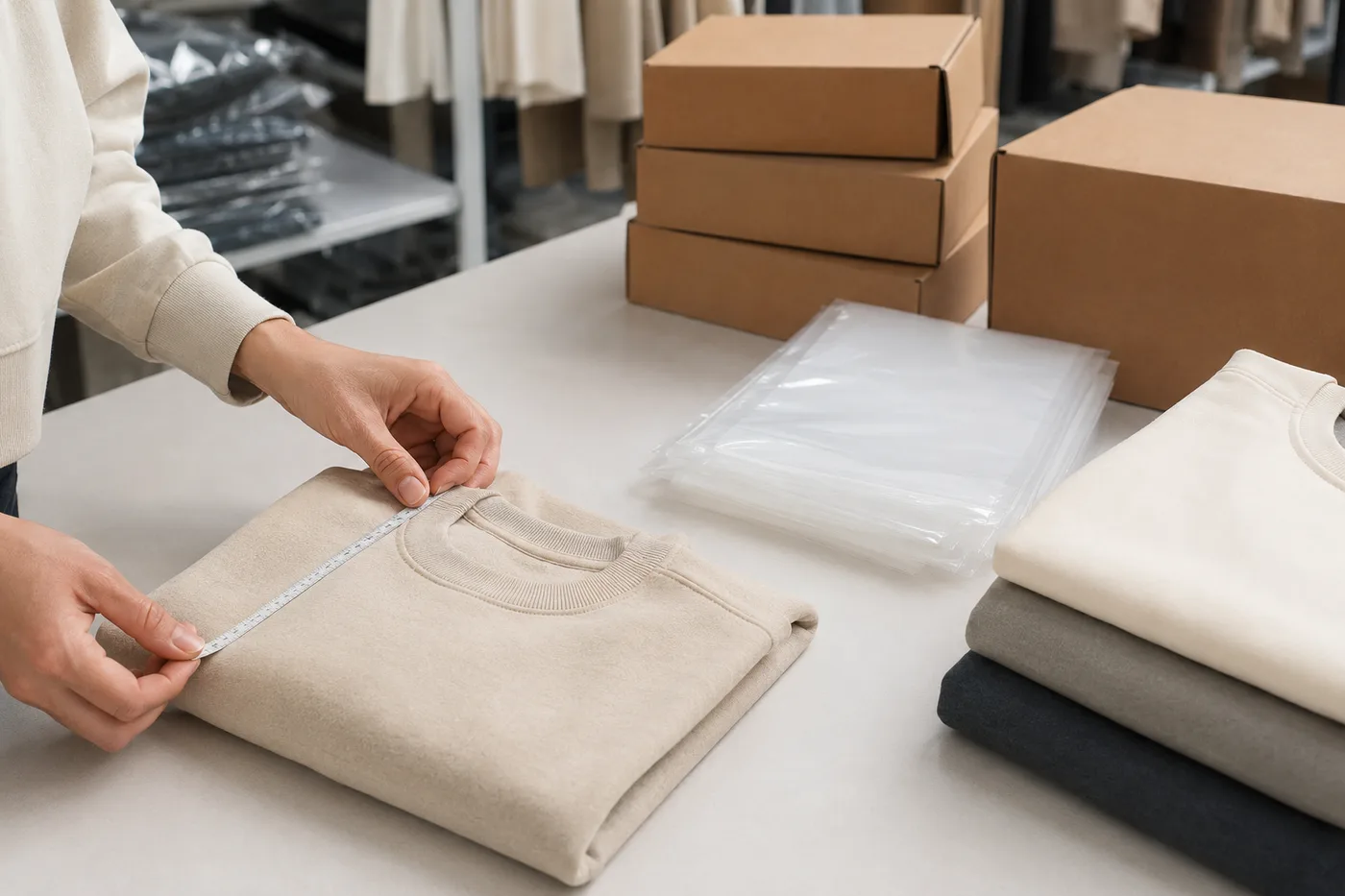
Illustrative garment measurement and packing scene

Washed T-Shirt Shrinkage & Size Tolerance: Buyer Guide

For washed T-shirt orders, buyers should agree on two separate requirements: garment measurements at delivery and dimensional changes after consumer laundering. Define measurement points, washing and drying conditions, test cycles and acceptance limits before approving bulk production. A statement such as prewashed cotton does not replace a measurable specification.

Separate the two acceptance checks

Delivery tolerance and post-laundering dimensional change need separate limits.

Use a measurable calculation

Compare before-and-after results for each agreed measurement point.

Specify the test procedure

Agree washing, drying, cycles and sample selection before approval.

Read the calculation example and testing checklist before agreeing your purchase specification.

Read the complete buyer guide
Two apparel development routes with blank garments, specification sheets, fabric swatches and buyer approval tools

OEM vs ODM Apparel Manufacturing: How Buyers Choose

The practical difference between OEM and ODM is the maturity of the buyer brief, the product decisions still open and the approvals required before bulk production.

Choose OEM for a controlled specification

Use OEM when measurements, material direction, artwork and the commercial order plan are already buyer-defined.

Choose ODM support for open decisions

Use ODM support when a concept or reference still needs garment, material, fit or decoration decisions organized before sampling.

Keep buyer approval in either route

The final brief, physical sample, color-size allocation and bulk release remain buyer-approved controls.

The complete guide provides direct definitions, a route comparison, six buyer questions and confirmed commercial parameters without inventing services or guarantees.

Read the complete buyer guide
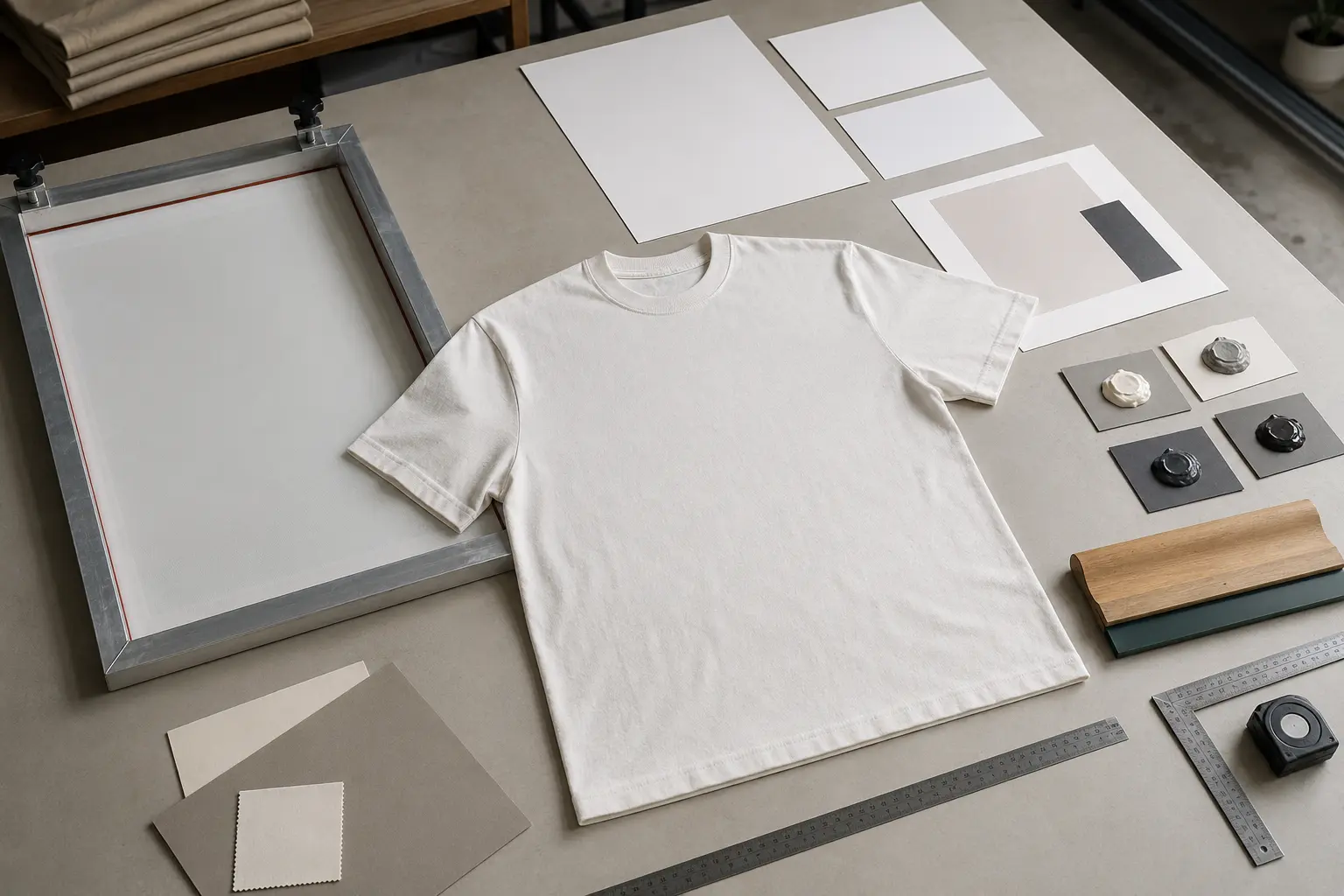
Blank heavyweight cotton T-shirt with screen-printing frame, squeegee, color swatches and artwork documents

How to Prepare Screen-Print Requirements for Heavyweight Cotton T-Shirts

A method-specific screen-print brief connects one artwork version, physical dimensions, measurable placement and color direction to the intended 100% cotton garment sample.

Identify the exact garment base

Name the style, buyer-selected 220–300 GSM target, color or wash and sample size.

Make artwork and placement measurable

Record the approved file version, physical print boundary and position from identifiable garment points.

Approve the decorated sample

Connect the physical result to the 1,000-piece style and mixed color-size allocation before bulk release.

The complete guide includes seven preparation steps, a control hierarchy, supported program parameters and concise procurement answers.

Read the complete buyer guide
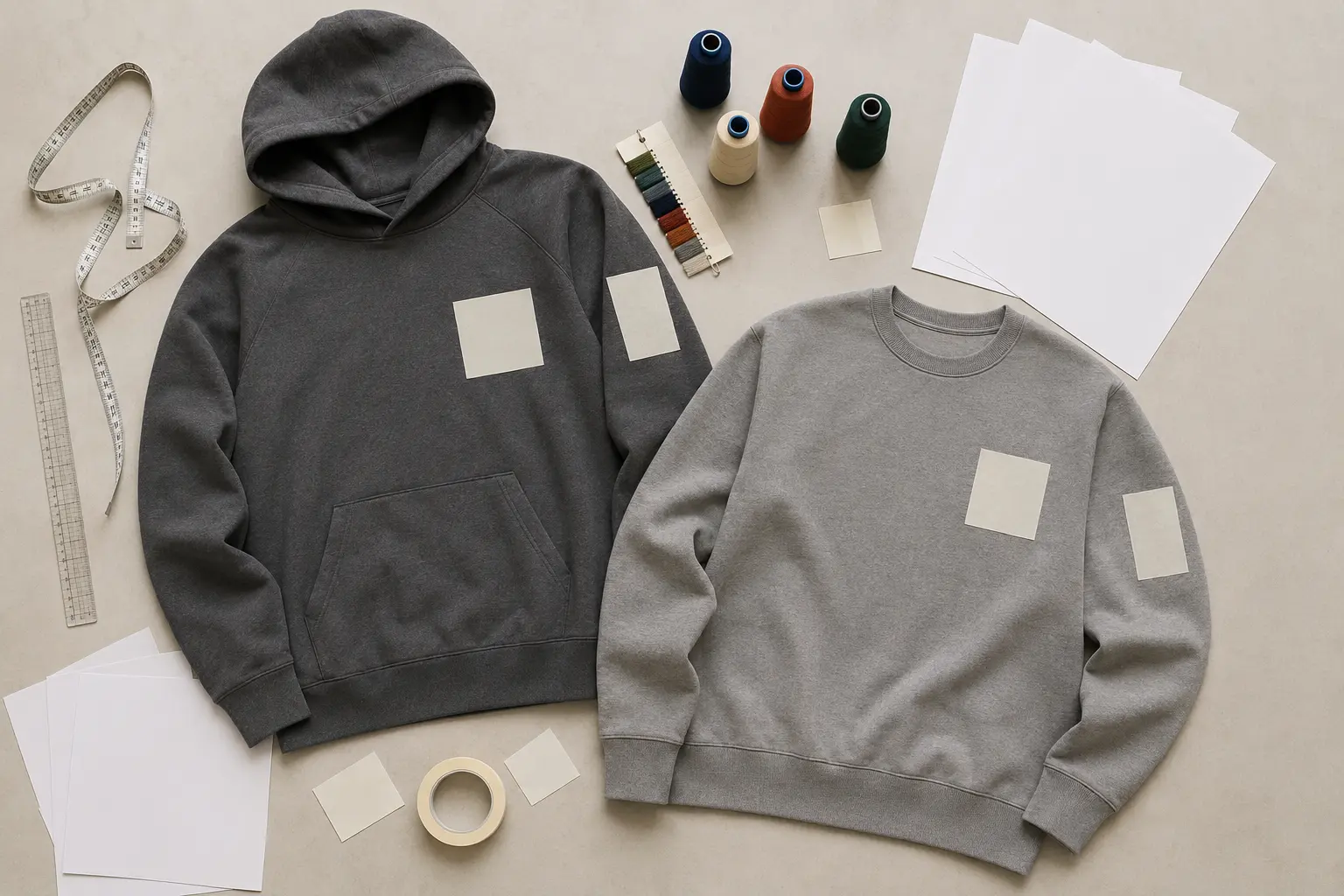
Blank hoodie and crewneck sweatshirt with embroidery thread, measuring tools and blank approval documents

How to Specify Embroidery Placement on Hoodies and Sweatshirts

A production-ready placement specification connects one artwork version and physical artwork size to measurable reference points on a named garment and sample.

Name the exact garment

Identify the hoodie or sweatshirt style, color and sample size before defining position.

Make size and position measurable

Record physical artwork dimensions and buyer-selected distances from identifiable seams, center lines or neckline points.

Approve the physical result

Review embroidery on the intended garment sample, then connect that version to the 1,000-piece mixed color-size allocation.

The complete guide provides seven placement-control steps, location-specific review questions, confirmed program parameters and concise buyer answers.

Read the complete buyer guide
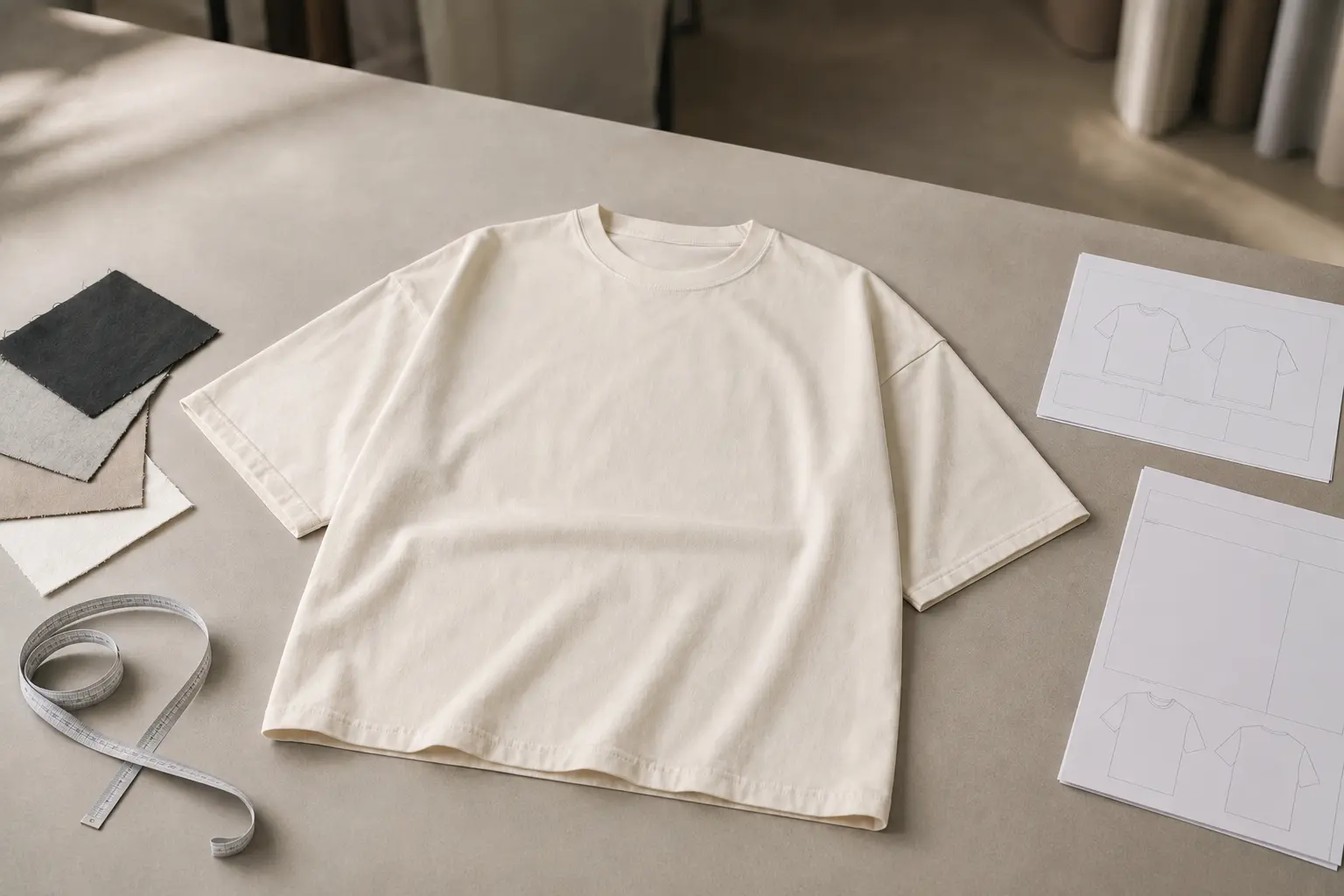
Blank oversized heavyweight cotton T-shirt with fabric swatches, measuring tools and blank sourcing documents

How to Prepare an Oversized Heavyweight T-Shirt Sourcing Brief

A controlled brief converts an oversized silhouette into measurable fit points, a 100% cotton 220–300 GSM target and an approval-ready commercial plan.

Define the silhouette

Use visual references to communicate volume, then identify the body, shoulder, sleeve and neckline relationships that matter.

Add measurable fit control

Provide buyer-approved measurements or a measurable reference garment so “oversized” is not the only fit instruction.

Connect sample to bulk

Approve the physical result before allocating mixed colors and mixed sizes within the 1,000-piece style MOQ.

The complete guide includes seven sourcing decisions, a fit-control comparison, confirmed program parameters and concise buyer FAQs.

Read the complete buyer guide
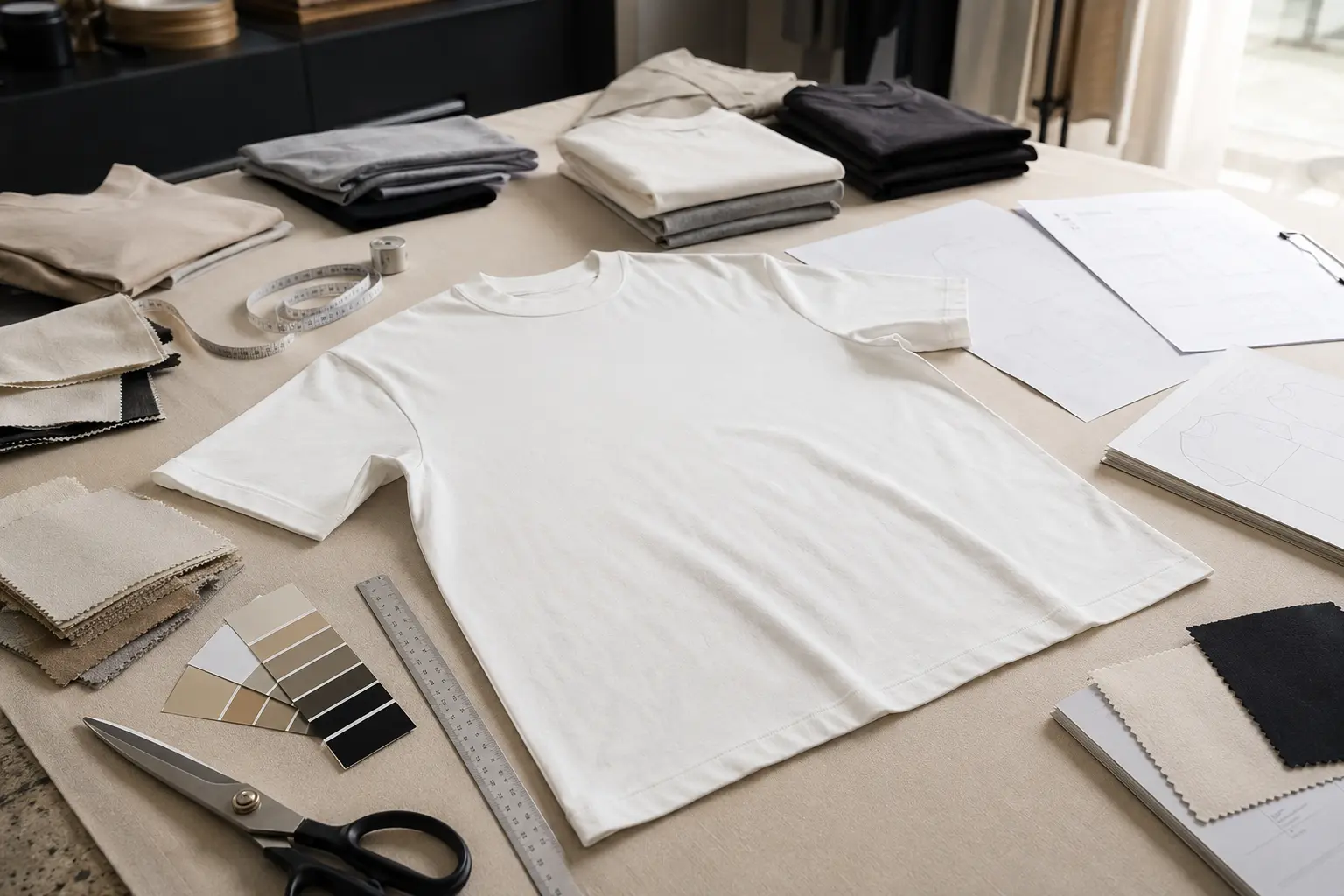
Blank heavyweight cotton T-shirt with fabric swatches, color chips, measuring tools and blank development documents

Private Label T-Shirt Development Process: Buyer Guide

A controlled development process separates the product brief, measurable specification, physical sample, color-by-size allocation and bulk-release decision.

Define one commercial product

State the 100% cotton T-shirt direction, buyer-selected 220–300 GSM target, fit, wash, decoration, quantity and destination requirements.

Approve the physical result

Use the 7-day sample target only after required details are confirmed, then compare the garment with the controlling brief before bulk release.

Authorize the style allocation

Reconcile mixed colors and mixed sizes to the 1,000-piece style MOQ before planning the 30-day bulk target.

The complete guide provides seven buyer-controlled development gates, an OEM-versus-ODM comparison, confirmed program parameters and concise procurement answers.

Read the complete buyer guide
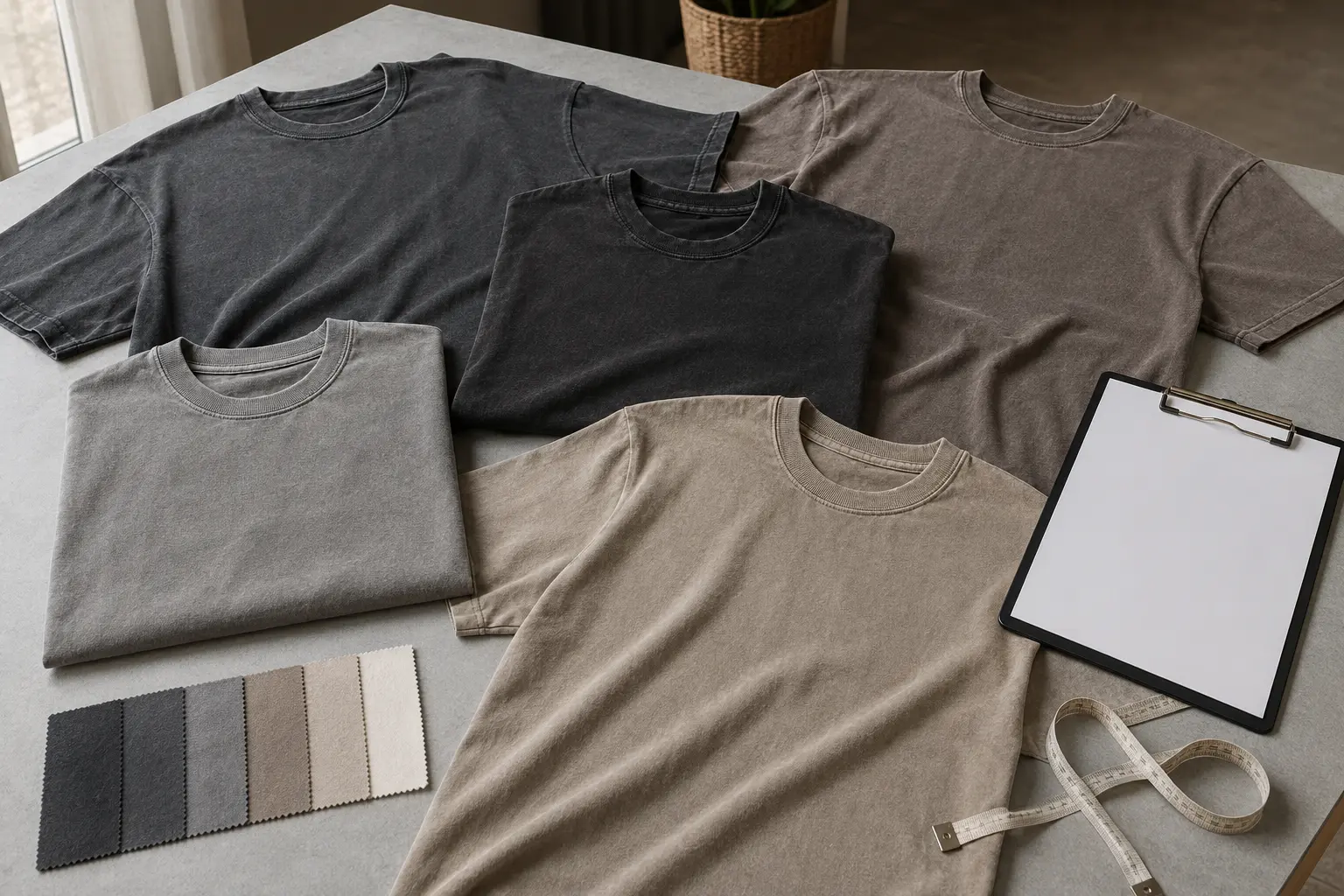
Vintage-washed heavyweight cotton T-shirts arranged with neutral shade swatches and inspection tools

Vintage Wash T-Shirt Quality Control Checklist for Bulk Orders

A buyer-led wash review connects the approved appearance reference to overall shade, surface character, measurements, decoration and one traceable bulk-release decision.

Identify the controlling reference

Record the exact style, color, size, wash direction and sample version used for the decision.

Review the complete garment

Compare production-representative pieces for overall shade, surface, seams, edges, measurements, hand feel and decoration.

Issue one bulk decision

State approved, corrections required or rejected, then connect the result to the 1,000-piece style and color-by-size matrix.

The complete guide includes a six-point inspection sequence, control comparison, confirmed 220–300 GSM program parameters and concise buyer FAQs.

Read the complete buyer guide
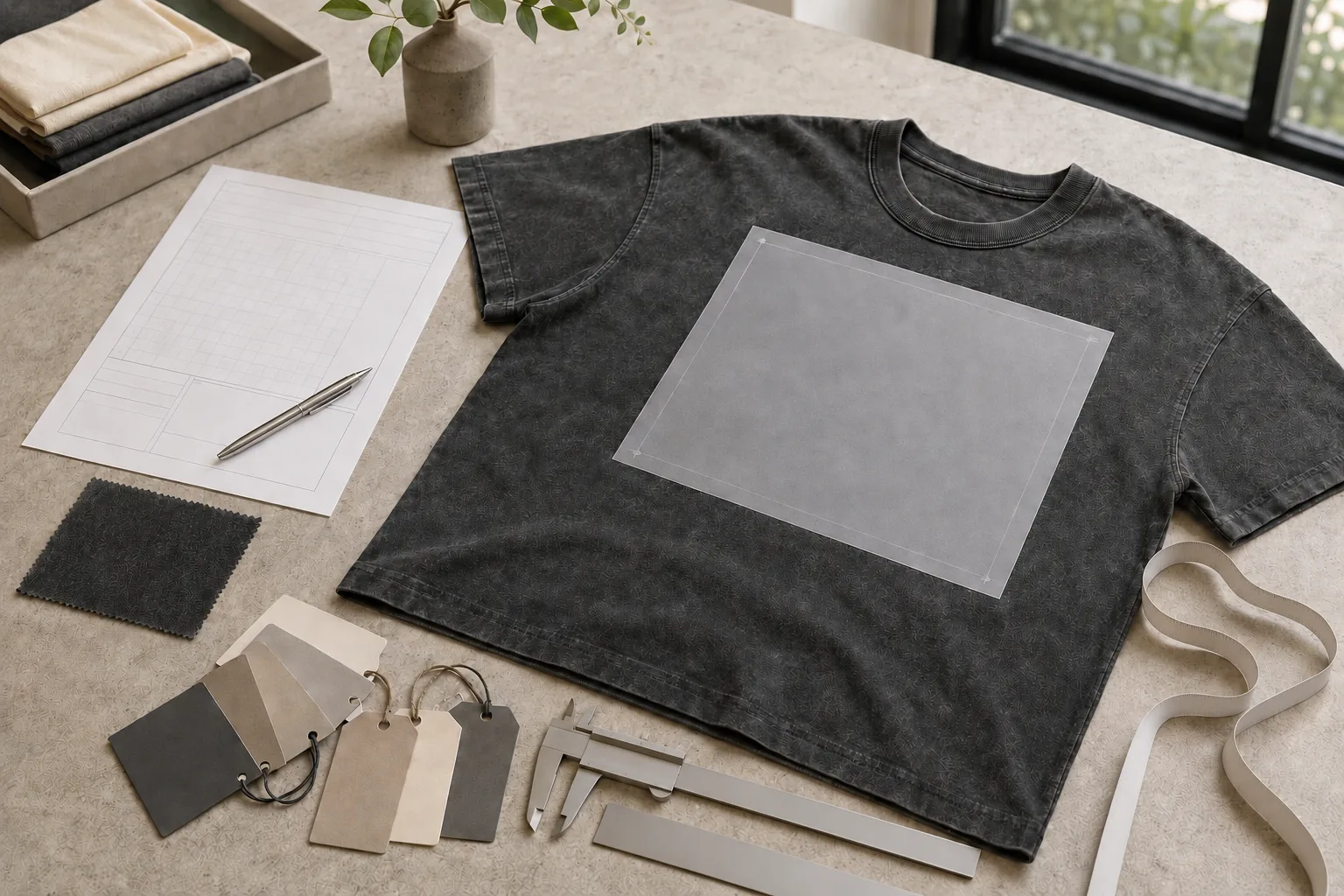
Blank heavyweight T-shirt with artwork swatches, placement grid and color chips for a B2B decoration handoff

How to Prepare Artwork for Bulk T-Shirt Printing and Embroidery

A controlled artwork handoff identifies the approved design, decoration method, dimensions, placement, color direction, garment base and version before sampling or bulk release.

Identify one approved version

Use a clear file name or version reference and withdraw superseded artwork so the purchasing and production teams review the same design.

Define the physical result

State the method, measurable artwork dimensions, garment placement, color direction and intended T-shirt color or wash.

Connect artwork to approval

Review the decoration on the actual 220–300 GSM, 100% cotton T-shirt sample before authorizing the 1,000-piece style for bulk.

The complete guide provides a seven-step handoff workflow, method-specific questions, approval controls and concise buyer answers.

Read the complete buyer guide
Heavyweight cotton T-shirt sample with measurement tools, fabric swatch and blank approval documents

How to Review a Heavyweight T-Shirt Sample Before Bulk Production

A sample approval record should connect the 100% cotton garment, 220–300 GSM target, fit, wash, decoration and color-by-size plan to one clear bulk-release decision.

Verify the product identity

Confirm that the sample represents the correct style, color, size, fabric direction, wash and artwork version.

Review measurable and visual details

Compare the garment with the buyer’s specification, recording observations instead of relying on a general approved or rejected message.

Control the bulk release

Resolve changes, identify the final approved reference and connect it to the 1,000-piece style allocation before production planning.

The complete guide provides a seven-step review workflow, decision table, buyer questions and concise approval answers.

Read the complete buyer guide
Mixed-color heavyweight cotton T-shirts arranged with a blank color-by-size order matrix for B2B planning

How to Plan a 1,000-Piece Mixed-Color and Mixed-Size T-Shirt Order

A color-by-size matrix turns a 1,000-piece style MOQ into a buyer-approved allocation that purchasing, sampling and bulk-production teams can all follow.

Define the style boundary

Confirm the 100% cotton T-shirt, 220–300 GSM target, fit and decoration before allocating quantities.

Build the matrix

Assign each unit to one color and one size, then reconcile every row and column to the 1,000-piece style total.

Lock the approval sequence

Connect the matrix to the approved sample, artwork, labels and packing instructions before bulk release.

The complete guide includes an illustrative allocation matrix, planning methods, approval steps and concise buyer FAQs.

Read the complete buyer guide
Vintage-washed heavyweight cotton T-shirt samples with shade swatches and sourcing tools

How to Build a Purchase Specification for Vintage-Washed Heavyweight T-Shirts

A complete B2B brief connects 100% cotton, 220–300 GSM fabric, fit, wash direction, decoration, a 1,000-piece style MOQ and the color-by-size order matrix.

Material and fit

State 100% cotton, select a 220–300 GSM target and provide measurable fit points rather than relying only on a visual reference.

Wash and decoration

Define the vintage-wash direction, then review screen print, DTG, embroidery or special printing on the actual washed base.

Commercial allocation

Plan mixed colors and mixed sizes within the 1,000-piece style MOQ, then separate sample approval from bulk release.

Use the full guide to build a quotable, sample-ready and production-ready specification without adding unsupported assumptions.

Read the complete buyer guide

How to Choose the Right GSM for Premium T-Shirts

Fabric weight shapes how a T-shirt looks, drapes, washes and feels. The right number depends on the product—not on the idea that heavier is always better.

160–190 GSM

Light to midweight. Suitable for warm climates, promotional programs and softer retail basics.

200–240 GSM

The most versatile premium range. Good structure, comfortable wear and broad print compatibility.

250–320 GSM

Heavyweight streetwear territory. Strong silhouette, substantial hand feel and excellent vintage-wash potential.

Before bulk production, approve fabric weight together with composition, knitting density, shrinkage, color and wash recipe. GSM alone never defines quality.

Review this sourcing topic

Vintage Wash vs. Acid Wash: What Buyers Need to Know

Both finishes create character, but they use different visual languages and need different approval controls.

Vintage wash

A softer, naturally aged appearance with controlled fading. Ideal for premium basics and understated brand collections.

Acid wash

Higher contrast and more visible surface variation. Best for bold streetwear where each garment can show controlled individuality.

Approval control

Confirm shade bands, hand feel, seam abrasion, measurement change and acceptable garment-to-garment variation.

A reliable wash program starts with repeatable greige fabric and a documented recipe. Always approve a production-representative wash panel, not only one perfect sample.

Review this sourcing topic

A Buyer’s Checklist for Apparel OEM/ODM Production

A strong brief reduces sampling rounds, prevents price surprises and protects delivery timing.

Product definition

Provide sketches or references, target fit, measurement chart, construction details and decoration files.

Commercial parameters

State estimated quantity, color and size ratio, target market, target price and required delivery window.

Quality standard

Define testing needs, measurement tolerance, inspection level, packing method and labeling compliance.

The best supplier response should explain assumptions, risks and next approval steps—not simply return a price. Treat sampling as a decision system for bulk production.

Review this sourcing topic

Need a specific answer?

Turn sourcing questions into a production plan.

Start an RFQ