oem-odm · B2B PROCUREMENT
High Density Print T-Shirt Manufacturer: Raised Ink Guide
By Weavnora · Updated
Direct answer
What buyers need to know
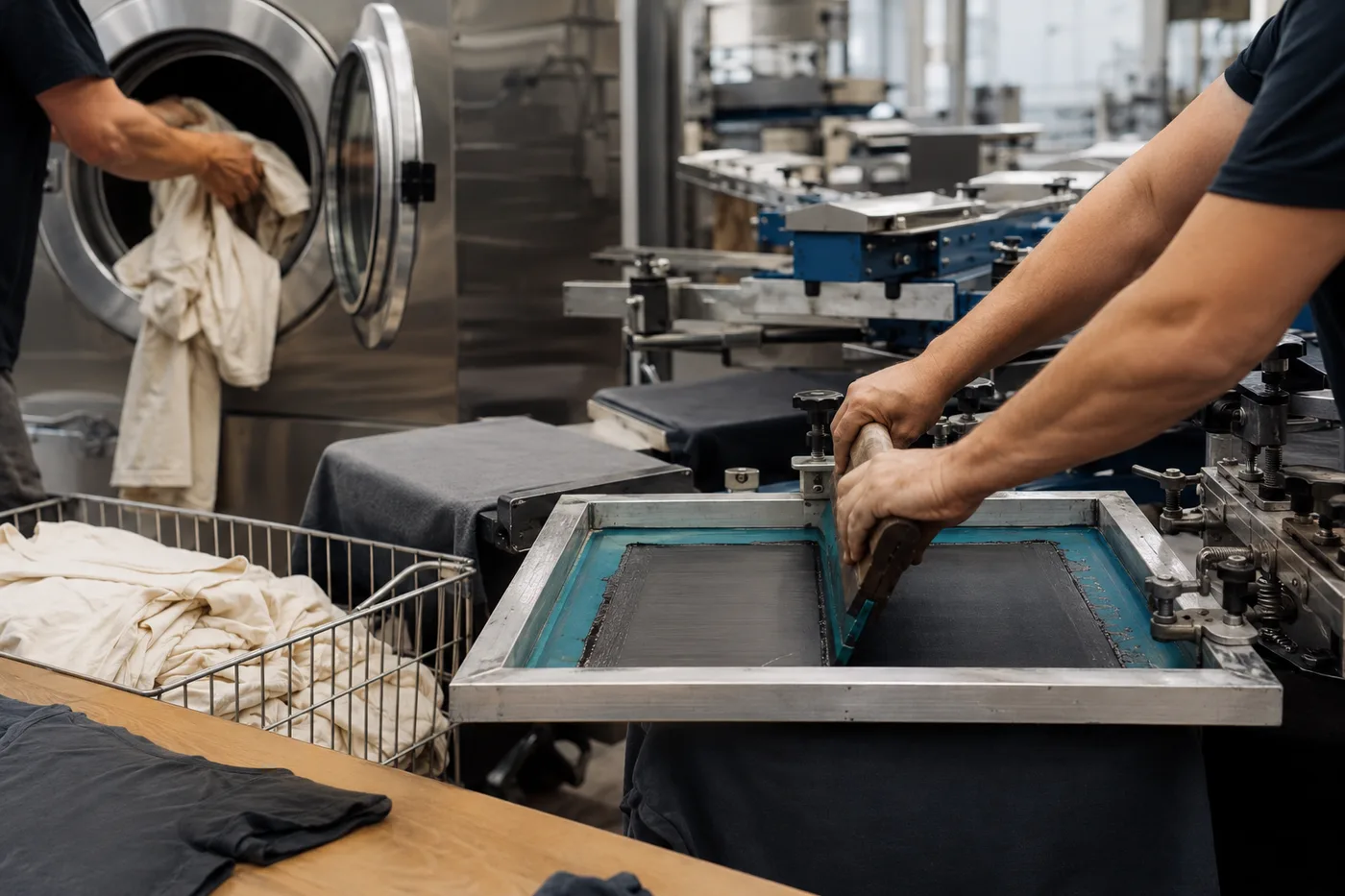
High density print t-shirt manufacturer programs build raised, sharp-edged graphics with thick plastisol stencils on 220-300 GSM cotton tees. Expect a print height of about 0.5-2 mm, 1-2 strike-off rounds, 7-12 days for printed samples and 25-40 days for bulk, with MOQ depending on style and fabric.
High density print t-shirt manufacturer programs build raised, sharp-edged graphics with thick plastisol stencils on 220-300 GSM cotton tees. Expect a print height of about 0.5-2 mm, 1-2 strike-off rounds, 7-12 days for printed samples and 25-40 days for bulk, with MOQ depending on style and fabric.
High density printing gives a tee a sculpted, almost rubber-stamp look. Logos and lettering sit clearly above the fabric with flat tops and sharp sides, which is why the technique is popular for premium streetwear graphics and minimal brand marks. It is more demanding than a standard screen print. The printer needs thick stencils, careful flashing and a controlled cure, and the base tee must be stable enough to carry the weight of the ink. This guide walks through the process step by step, then covers the decisions a brand needs to make before sampling.
What is a high density print t-shirt manufacturer?
A high density print t-shirt manufacturer is a garment factory that screen prints a thick, specially formulated plastisol ink through a raised stencil so the graphic stands up from the tee with crisp, square edges. Unlike puff ink, high density ink does not expand under heat, so the height comes from the stencil. Typical programs use 220-300 GSM cotton jersey, a print height of 0.5-2 mm and 1-2 strike-off rounds.
Step 1: Choose a base tee that can carry a raised print
High density ink adds noticeable weight to the print area. A thin tee will pucker or sag around the graphic, so most brands use a 220-300 GSM cotton jersey with a firm, tight knit. Ring-spun or combed cotton gives a smoother surface and cleaner edges. If the tee will be garment washed, plan the order of operations with the factory. Washing after printing softens the fabric but can slightly dull the ink surface, so many programs print after washing.
Placement matters too. Raised prints work best on flat areas such as the chest and upper back. Prints that cross seams, sit too close to the collar rib or wrap around the side seam are hard to build evenly. Our overview of special print options for heavyweight cotton tees shows which effects suit which placements.
Planning a raised print tee? Weavnora develops high density graphics on heavyweight cotton tees and approves print height and edge sharpness on a washed strike-off before bulk. See our special printing page for the base styles and fabrics we work with, then request a quote with your style, fabric and quantities. MOQ depends on style and fabric, so we confirm it in your quote.
Step 2: Build the stencil and set the height
The height of a high density print comes from the emulsion thickness on the screen, often called the stencil or capillary film. Thicker stencils give taller prints. Printers commonly use low mesh counts so more ink passes through. Typical targets as industry estimates:
- Low profile: about 0.5-0.8 mm, subtle raised edge.
- Medium profile: about 0.8-1.2 mm, clear raised look.
- High profile: about 1.2-2 mm, strong sculpted look, more risk of cracking and stiffness.
Ask the manufacturer which height range they can hold consistently and how they measure it. A simple thickness gauge on the strike-off gives a number you can write into your approval. Our article on screen print mesh count approval explains how mesh and stencil choices change the ink deposit.
Step 3: Print, flash and cure in layers
Many high density prints are built in two or more passes, with a flash cure between layers so the ink holds its shape. Often a thin base layer goes down first to lock into the fabric, then the raised layer is printed on top. The full print is then cured through so the inside of the thick ink layer is fully fused. Under-cured high density prints can look fine at first but crack or peel in the wash.
Step 4: Approve a washed strike-off
Approve a strike-off on the actual bulk fabric, after 3-5 home wash cycles. Check height, edge sharpness, surface finish (matte or glossy), stiffness and any cracking when the print is stretched. Our high density print wash crack protocol lists the tests to request before you sign off.
High density vs puff vs standard plastisol: which option fits?
All three use plastisol ink, but they create very different raised effects.
| Selection criteria | High density | Puff print | Standard plastisol |
|---|---|---|---|
| How height is created | Thick stencil | Ink expands with heat | No height |
| Edge shape | Sharp, square | Rounded, soft | Flat |
| Surface | Smooth, can be glossy | Matte, spongy | Flat |
| Detail level | Medium, no hairlines | Low, bold shapes only | High |
| Stiffness on tee | Medium to high | Medium | Low |
| Best for | Crisp logos, lettering | Playful 3D graphics | Detailed multi-colour art |
The trade-offs are sharpness versus softness and cost. High density gives the cleanest raised edges but needs special screens and slower printing, so cost per piece is higher than standard plastisol. Puff print is softer and more rounded but cannot hold fine detail. If you want the puff look instead, our guide to puff print t-shirt manufacturers explains that route, and our note on puff print height tolerance shows how height is controlled.
What artwork works for high density prints?
High density ink is thick, so very thin lines and small gaps fill in. As a general rule, keep line widths and gaps to at least about 1 mm, and avoid tiny text. Bold logos, block letters and simple shapes give the best result. Many brands combine a high density element with flat plastisol for finer details in the same design.
Send vector artwork with colours separated, a print size and placement measured from the high point of shoulder, the target height range and a physical colour reference. Mention whether you want a matte or glossy finish, because some high density inks have a natural sheen.
What quality issues should you watch for in bulk?
Common issues include uneven height across the print, rounded or slumped edges, pinholes or bubbles in the surface, cracking after washing and print stiffness that makes the tee feel like a board. A good factory checks height on several pieces per batch, inspects edges under good light and runs a wash test from the first bulk lot. For where printing sits in the full schedule, see our custom t-shirt manufacturing guide.
High density print t-shirt manufacturer: typical specs and key numbers
| Spec | Typical estimate range |
|---|---|
| Base tee weight | 220-300 GSM, 100% cotton |
| Print height range | 0.5-2 mm |
| Strike-off rounds before approval | 1-2 rounds |
| Home wash test on strike-off | 3-5 cycles |
| Printed sample lead time | 7-12 days |
| Bulk production after approval | 25-40 days |
| MOQ (pcs per style and colour) | Depends on style and fabric; confirmed in your quote |
These are typical industry estimate ranges for planning, not quotes; confirm actual figures with your supplier for your fabric, quantity and destination.
Key takeaways
- High density printing builds a raised, sharp-edged graphic from a thick stencil, not from expanding ink.
- Use a stable 220-300 GSM cotton tee and keep raised prints on flat areas.
- Write a target height range, such as 0.8-1.2 mm, into your approval.
- Keep lines and gaps at least about 1 mm wide and combine HD with flat ink for fine detail.
- Approve washed strike-offs on bulk fabric and check edge sharpness and cracking.
Request a high density print t-shirt manufacturer quote
Ready to sample a high density print tee? Send your tech pack or reference images, fabric preference, colours and quantities through our quote request form. MOQ depends on style and fabric, so we confirm it in your quote together with sampling time, approval steps and an itemised price.
Buyer questions
Frequently asked questions
What is high density printing on t-shirts?
It is a screen print method that uses thick plastisol ink and a raised stencil to build a graphic that stands up from the fabric with flat tops and sharp edges.
Is high density print the same as puff print?
No. Puff ink expands under heat and gives a soft, rounded effect. High density ink keeps its shape and gets its height from the stencil, so edges are sharper.
Does high density print crack in the wash?
It can if it is under-cured or printed too high on a thin tee. Full curing, a stable base tee and a 3-5 cycle wash test reduce the risk.
How tall can a high density print be?
Most programs sit between about 0.5 and 2 mm. Taller prints look bolder but feel stiffer and carry more risk of cracking.
What is the MOQ for high density print t-shirts?
MOQ depends on style, fabric and the number of print colours and placements. Send your artwork and quantities through a quote request for an exact answer.
Start a sourcing conversation
Share quantity, target GSM, destination and sample requirements.
Start your RFQ →Email files to postmaster@weavnora.com.