CONSTRUCTION · NECKLINE CONTROL
Heavyweight T-Shirt Neckline Rib Specification Guide
By Weavnora ·
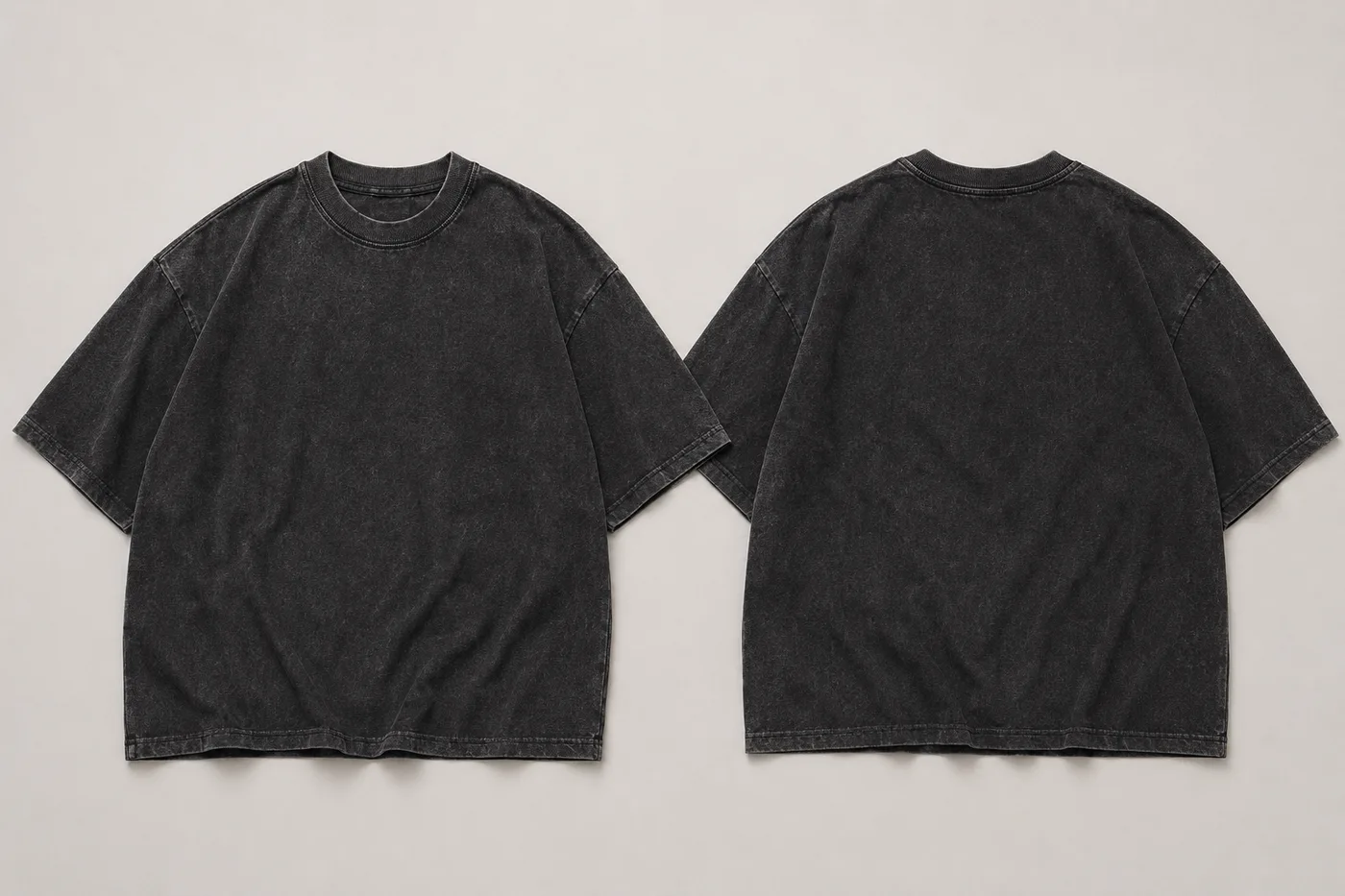
How should buyers specify neckline rib for heavyweight T-shirts?
A production-ready heavyweight T-shirt neckline specification should identify the rib material and structure, finished neck opening, rib width, attachment method, stretch and recovery expectations, and the sample used for approval. Buyers should evaluate the collar on the intended 220–300 GSM garment after the agreed finishing and laundering procedures rather than approving an isolated rib swatch.
Define the neckline as a complete system
The neckline is not only a strip of rib. Its final appearance comes from the relationship between the body fabric, rib structure, cut length, seam allowance, attachment tension, stitching, shoulder reinforcement and finishing process. A brief that says only thick collar leaves these decisions open.
Start by naming the garment style, fit, body-fabric composition and buyer-selected GSM. State whether the T-shirt is piece dyed, garment dyed or washed, because the approved collar must represent the finished product. Identify the sample size on which the neck specification is established.
Specify the intended visual result in measurable language where possible. Examples include a flat neckline, a defined finished rib width, a centered seam and no visible twisting. Reference photographs can communicate direction, but the physical approved sample and written specification should control bulk production.
Record dimensions and points of measurement
Define how the neck opening is measured. Common buyer charts may use straight-across neck width, front neck drop, back neck drop and finished rib width. Draw the start and end points, state whether the garment lies relaxed and identify whether measurements apply before or after production finishing.
Set a buyer-approved tolerance for every critical point instead of using one general garment tolerance. An illustrative specification might show a 2 cm finished rib width with a separately agreed tolerance, but the actual figure must come from the approved design and sample. Do not copy an example into a purchase order without reviewing the intended silhouette.
Connect graded neck dimensions to the complete size range. Check whether one rib construction and attachment ratio produces the intended appearance across small and large sizes. Record any size-specific rule before bulk cutting.
Specify material, stretch and recovery expectations
Identify rib composition, knit structure, finished weight or other properties the buyer requires. The collar material must work with the body fabric and finishing route. A heavier body fabric does not automatically mean that the thickest available rib will produce the best neckline.
Stretch describes extension under force; recovery describes how the rib returns after extension. Ask the technical team or nominated laboratory to define the applicable method, conditioning and acceptance rule. A hand-pull demonstration is useful during development but is not a repeatable bulk requirement.
Review the rib after the agreed garment wash or dye process and, when required, after consumer-laundering testing. Look for growth, puckering, waviness, edge rolling, distortion and loss of recovery. Record results separately from general body-garment shrinkage.
Control construction and reinforcement
State the attachment construction, stitch type and seam appearance required by the design. Identify whether shoulder-to-shoulder tape or another reinforcement is included, along with its material, width, placement and finish. Avoid assuming that every factory uses the same construction under a generic premium label.
The operator should distribute the rib consistently around the neck opening. Excess tension can pull the neckline inward or create puckering; insufficient control can create a loose or wavy collar. Approve the actual sewn result and retain a production reference.
Inspect seam joining, topstitching where specified, skipped stitches, exposed seam allowance and symmetry. Decoration near the neckline should also be reviewed on the finished garment because print or embroidery placement may affect how the collar area is perceived.
Approve the sample and release bulk production
Review a sample made with the intended body fabric, rib, construction, color or dye route and finishing process. Measure the neckline, examine the garment while flat and worn where appropriate, and record the specification revision and sample identity.
If laundering performance is part of the buyer requirement, apply the agreed procedure and compare the same measurement points before and after testing. A visual pass at delivery does not automatically prove recovery or dimensional stability after care.
Issue a clear decision: approved, corrections required or rejected. Bulk release should reference the approved neckline specification and physical sample. If the rib material, supplier, dye route or construction changes, review whether a new sample and test are needed before production continues.
Frequently asked questions
What should a heavyweight T-shirt collar specification include?
Include rib material and structure, measurement points, finished dimensions and tolerances, attachment construction, reinforcement, finishing route, recovery expectations and the approved sample reference.
Is a thicker rib always better for a heavyweight T-shirt?
No. Rib structure, stretch, recovery, attachment and compatibility with the body fabric determine the result. Approve the complete finished neckline.
Should collar measurements apply before or after garment washing?
The specification must state the inspection stage. For a washed or garment-dyed product, delivery measurements generally need to describe the finished garment ready for packing.
When should buyers request a new neckline sample?
Review a new sample when a relevant input changes, such as rib material, supplier, construction, dye route, wash process or graded dimensions.
Discuss your heavyweight T-shirt specification.
Send the body fabric, rib direction, measurements, quantity and finishing requirements to postmaster@weavnora.com.
Submit an RFQ →