blog · B2B PROCUREMENT
Vintage-Washed Heavyweight T-Shirt Purchase Specification
By Weavnora · Updated
Direct answer
What buyers need to know
A purchase specification defines the 100% cotton garment, 220–300 GSM target, wash direction, fit, decoration, color-by-size allocation and approval gates for a 1,000-piece style. Confirm the sample on the 7-day target, then plan the approximately 30-day bulk target for NA and EU buyers.
Direct specification
A vintage-washed heavyweight T-shirt purchase specification turns a creative reference into a quotable, sample-ready and production-ready brief. It identifies the 100% cotton garment, target weight, fit, wash character, decoration, allocation and approval checkpoints. The buyer should be able to compare a physical sample with the written specification without guessing which detail controls.
Confirmed commercial framework
- Product: 100% cotton vintage-washed heavyweight T-shirt.
- Fabric target: 220–300 GSM.
- MOQ: 1,000 pieces per style.
- Allocation: mixed colors and mixed sizes within the agreed style quantity.
- Sample timing: confirmed 7-day target after required details are confirmed.
- Bulk timing: approximately 30-day target after approvals.
- Decoration: screen printing, DTG, embroidery or special printing, selected for the actual washed base.
- Market: buyer-defined NA or EU program and channel.
These are planning parameters, not a substitute for a buyer-approved brief. Record the target and any later revision in a dated specification.
Seven decisions that make the brief quotable
1. Define buyer and channel
State whether the program serves a fashion brand, importer, wholesale
In every case, evaluate fit, drape, comfort and wash appearance on a sample.
3. Provide measurable fit
Attach a measurement chart or identify a reference sample. Record body length, chest width, shoulder width, sleeve length, neckline and intended fit direction. A visual image is useful for appearance but does not replace measurements. State whether measurements are before or after the agreed wash review and keep the same method for comparisons.
4. Describe the wash appearance
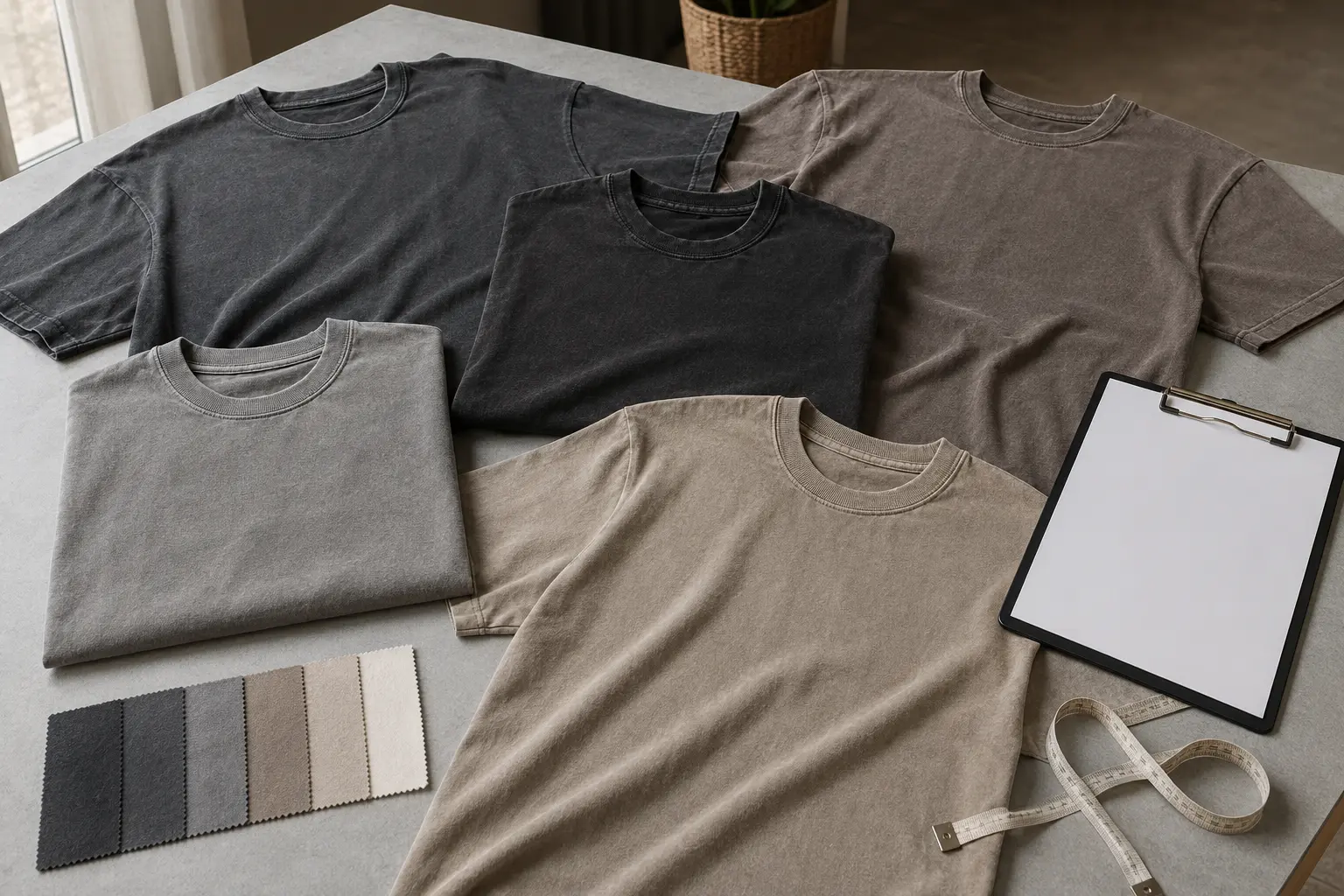
Use a visual reference for the desired vintage character, then define what the buyer will judge: overall fade, color depth, seam character, surface variation and handfeel direction. Do not turn a mood image int
6. Allocate the 1,000-piece MOQ
Create a color-by-size matrix listing every color, size and quantity. Mixed colors and mixed sizes are supported within the agreed 1,000-piece style quantity, but the row and column totals must reconcile exactly. Use buyer-owned demand evidence for the ratio; there is no universal size curve. Date the matrix and freeze the version before bulk planning.
7. Define approval gates
Separate sample approval from bulk release. Confirm garment specification, wash direction, measurements, decoration, color allocation, size allocation, labels and packing instructions. Use the confirmed 7-day sample target for review, then plan the approximately 30-day bulk target only after approvals and the final matrix are in place.
Buyer comparison by weight
The 220–300 GSM range is a selection framework, not a promise that one weight suits every silhouette. At the lower end, inspect opacity, drape and wash appearance. In the middle, inspect structure, neckline support and how the body hangs after washing. At the upper end, inspect comfort, seam behavior, silhouette and decoration on the physical sample. Record which target was approved and do not let a later sample silently change the written specification.
The primary specification reference is vintage-washed-heavyweight-t-shirt-purchase-specification; keep that reference in the buyer brief, sample record and bulk release file so the same page and document remain aligned.
Final buyer checklist
Before release, check that the sample label matches the style, the garment is 100% cotton, the target remains within 220–300 GSM, the wash direction is clear, each color and size is named, every quantity is entered and the total equals the MOQ. This sequence helps Weavnora review a clear specification for NA and EU buyers. Send the brief, quantity matrix and decoration files to Weavnora at postmaster@weavnora.com.
Approval record and release controls
Record style name, market, composition, GSM target, fit reference, wash direction, decoration method, artwork version, sample date, matrix version, colors, sizes, unit total and buyer decision. Use one of approved, corrections required or rejected. If corrections are required, name the change and state what evidence must return for review. Keep the approved sample, specification, final artwork and color-by-size matrix together for the same 1,000-piece style.o an unconfirmed performance claim. The approved physical sample is the practical reference for the wash result.
5. Match decoration to the washed garment
Choose screen print, DTG, embroidery or a special print according to the art and desired finish. State artwork size, placement, color direction and whether the decoration must be reviewed on the washed base. Compare decoration on the actual sample rather than approving only a digital mockup. Link the final art version to the style record.r or retail sourcing team. Identify the destination market and intended channel. This provides context for labels, packing and review without inventing requirements the buyer has not supplied.
2. Lock composition and GSM
Write 100% cotton and select a target within 220–300 GSM. Avoid the word heavyweight as the only measurement. A 220–240 GSM direction can provide substantial coverage without making maximum weight the design priority. A 250–270 GSM direction can support a more structured basic. A 280–300 GSM direction is the most substantial confirmed range.
Buyer questions
Frequently asked questions
What is a washed T-shirt purchase specification?
A buyer-approved document defining the garment, fabric, wash, decoration, allocation and acceptance checkpoints.
What GSM range is confirmed?
The confirmed development range is 220–300 GSM for 100% cotton T-shirts.
What is the MOQ?
The bulk style MOQ is 1,000 pieces, allocated by agreed colors and sizes.
What sample timing should buyers plan?
Use the confirmed 7-day sample target after required details are confirmed.
What bulk timing should buyers plan?
Plan the approximately 30-day bulk target after approvals.
What must be approved before bulk?
Confirm the garment, wash, fit, decoration, colors, sizes, labels and packing instructions.
Start a sourcing conversation
Share quantity, target GSM, destination and sample requirements.
Start your RFQ →Email files to postmaster@weavnora.com.