oem-odm · B2B PROCUREMENT
Silicone Print Sweatpants Manufacturer: 3D Leg Logo Guide
By Weavnora · Updated
Direct answer
What buyers need to know
Silicone print sweatpants manufacturer means a factory that prints raised silicone ink logos onto fleece sweatpants or joggers and controls height, stretch recovery, curing and adhesion. Typical builds use 280-420 GSM fleece, logos 4-15 cm wide, print heights of 0.5-2 mm on request, strike-offs in 7-14 days and wash tests of 3-5 cycles. MOQ depends on style and fabric.
Silicone print sweatpants manufacturer means a factory that prints raised silicone ink logos onto fleece sweatpants or joggers and controls height, stretch recovery, curing and adhesion. Typical builds use 280-420 GSM fleece, logos 4-15 cm wide, print heights of 0.5-2 mm on request, strike-offs in 7-14 days and wash tests of 3-5 cycles. MOQ depends on style and fabric.
Silicone printing gives a logo a clean, raised, rubbery finish that looks technical and premium. On sweatpants it shows up as a small 3D mark on the thigh, a crisp wordmark at the hip, or a gloss or matte badge near the cuff. Because silicone is flexible, it can move with the leg better than many thick inks, which is why athleisure and performance-inspired streetwear brands like it. But it is a specialist process. The ink is expensive, curing needs control, and stretch zones on sweatpants put real stress on the print. This guide explains how a silicone print sweatpants manufacturer approaches it.
What is a silicone print sweatpants manufacturer?
A silicone print sweatpants manufacturer is a factory that produces fleece sweatpants or joggers and decorates them with silicone ink, a flexible rubber-like compound printed through screens or moulds and heat cured into a raised, soft-touch logo, while testing stretch, adhesion and wash durability before bulk. Silicone logos on sweatpants are usually 4-15 cm wide, and a strike-off takes about 7-14 days.
How is silicone printed on sweatpants?
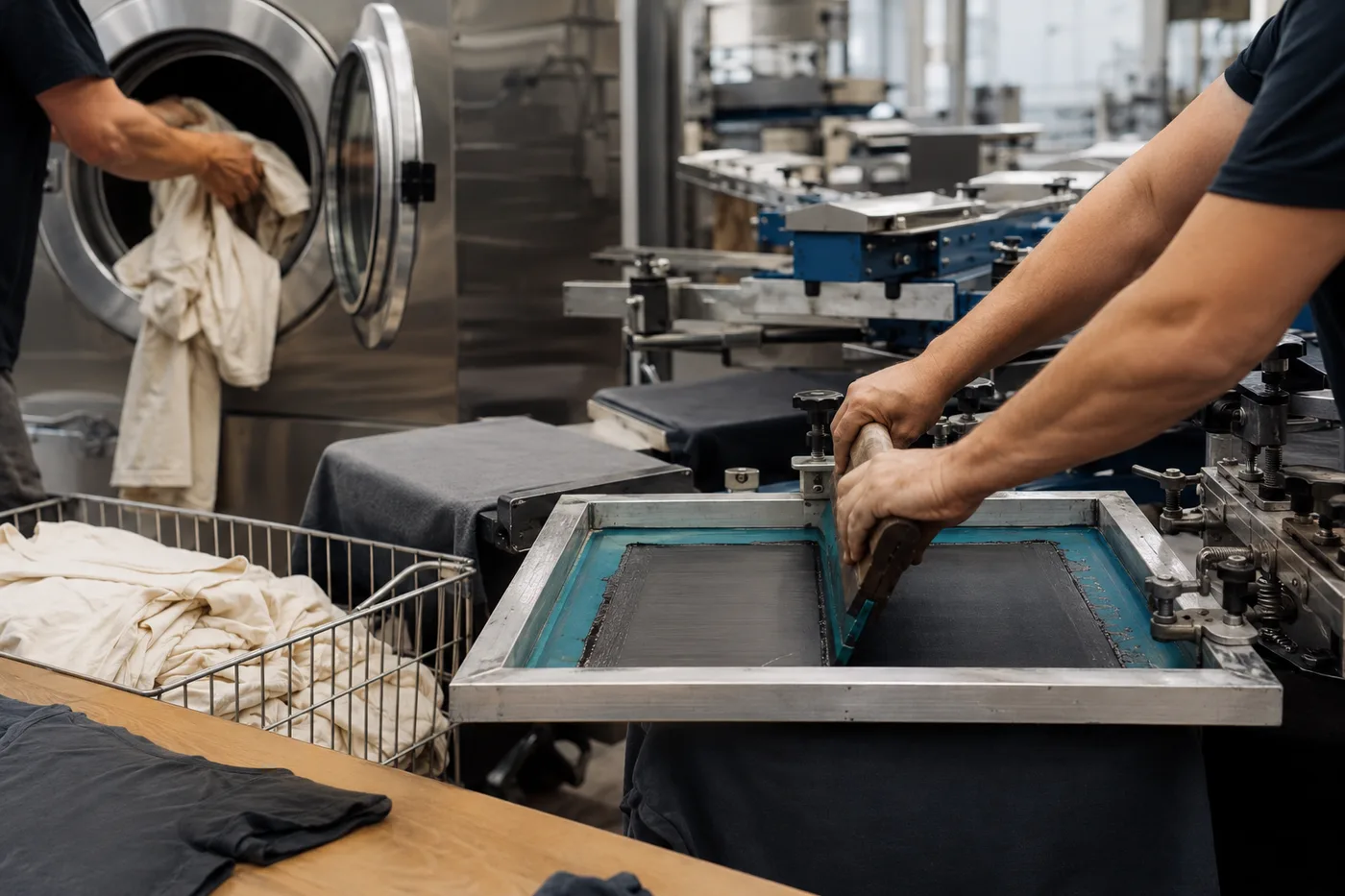
The most common method is screen printing silicone ink in several thin layers, curing between layers to build height. A base layer anchors the silicone to the fabric, followed by colour or clear layers and an optional top finish for gloss or matte. Some factories use a mould or high-density stencil for very sharp, tall edges. Others make silicone heat transfers, which are produced on a carrier sheet and pressed onto the garment.
Direct printing gives the best bond into the fabric. Transfers give very consistent shapes and are practical for small logos or when many colourways share one mark. Most factories print silicone on flat cut panels before the sweatpants are sewn, so the logo sits in exactly the right place. Our silicone print hoodie manufacturer guide and silicone print t-shirt manufacturer guide show the same process on tops.
Want to test a silicone logo on your joggers? Weavnora develops heavyweight sweatpants and runs silicone strike-offs on your fleece colour, so you can check height, finish and stretch before you approve bulk. See our special printing page for the base styles and fabrics we work with, then request a quote with your style, fabric and quantities. MOQ depends on style and fabric, so we confirm it in your quote.
Why does stretch matter so much on sweatpants?
Sweatpants stretch at the thigh, knee and seat every time you sit, squat or walk. A print that cannot stretch will crack or lift at the edges. Silicone is flexible, but the base adhesion and the fabric under it must work together. The factory should test stretch and recovery on the actual fleece, especially if the fabric contains spandex. Our silicone print stretch recovery guide explains how stretch tests are run and judged.
Placement helps. Logos on the upper thigh near the hip, on the back pocket area or near the ankle cuff are under less strain than logos on the knee.
Which fleece and colours suit silicone?
Smooth-faced fleece and loopback French terry give the cleanest silicone edges. A heavier fabric supports the print and prevents it from showing through or puckering. Silicone can be colour matched to the garment for a tonal 3D look or contrasted for impact. Garment-dyed and washed sweatpants should usually be washed before printing, because some washes can weaken the bond. For heavyweight bottoms, see our heavyweight cotton sweatpants manufacturer guide.
Silicone print vs high density print vs embroidery: which option fits?
| Selection criteria | Silicone print | High density print | Embroidery |
|---|---|---|---|
| Finish | Rubbery, gloss or matte | Sharp, raised plastisol | Stitched thread |
| Flexibility | High | Medium | Low on thin fleece |
| Edge sharpness | Very sharp | Very sharp | Depends on stitch |
| Handfeel | Smooth, soft-touch | Firm | Textured |
| Relative set-up | Higher | Medium | Medium |
The trade-offs are flexibility and premium finish versus set-up cost and print speed. Silicone usually costs more to set up but flexes better on the leg. High density plastisol gives a similar raised look with a firmer feel; see our high density print hoodie manufacturer guide. Embroidery is the most traditional; compare the embroidered sweatpants manufacturer guide.
How should you brief a silicone logo?
Send vector artwork with exact dimensions, the number of colours, the target height or flat finish, gloss or matte, and Pantone references. Mark the placement from the waistband and side seam on both legs, and say whether the logo is mirrored on the other leg. Fine lines under about 1 mm can be difficult in silicone, so ask the factory to review artwork before strike-off. If the hoodie in the same set has a silicone logo, approve both together for colour consistency.
What testing should happen before bulk?
- Stretch and recovery test on the print area.
- Wash test after several cycles, inside out.
- Adhesion check by bending and peeling at the edges.
- Height and edge check against the approved artwork.
- Colour check under daylight and store lighting.
Keep a sealed sample as the bulk reference. The custom bottoms and sets manufacturing guide explains how bottoms move from sampling to bulk.
Which bulk QC checks matter?
Inspectors should check logo placement on each leg, height and edge sharpness, gloss level, bubbles or pinholes, lint caught in the silicone, adhesion at the edges and correct cure. They should also look for ink marks on the surrounding fleece. Sweatpants should be folded so the logo does not stick to the next garment in hot shipping containers; tissue or polybags help.
How long does a silicone print sweatpants order take?
Allow time for artwork review, screen or mould making, a strike-off with stretch and wash tests, possible adjustment, then printing panels and sewing. Silicone layers need curing between passes, so printing is slower than standard ink. Plan the schedule backwards from your launch date and leave room for a second strike-off if you need a precise colour match.
Silicone print sweatpants manufacturer: typical specs and key numbers
| Spec | Typical estimate range |
|---|---|
| Sweatpants fleece weight | 280-420 GSM |
| Silicone logo width | 4-15 cm |
| Silicone print height | 0.5-2 mm on request |
| Strike-off time | 7-14 days |
| Wash test before approval | 3-5 cycles |
| Bulk production after approval | 30-45 days |
| MOQ (pcs per style and colour) | Depends on style and fabric; confirmed in your quote |
These are typical industry estimate ranges for planning, not quotes; confirm actual figures with your supplier for your fabric, quantity and destination.
Key takeaways
- A silicone print sweatpants manufacturer controls layers, curing and adhesion on stretchy leg areas.
- Silicone flexes better than many thick inks, but placement still matters.
- Upper thigh, hip, back pocket and cuff placements wear best.
- Approve a strike-off with stretch, wash and adhesion tests.
- Brief exact size, height, finish and mirrored placement for both legs.
Request a silicone print sweatpants quote
Ready to add a raised silicone logo to your sweatpants? Send your tech pack or reference images, fabric preference, colours and quantities through our quote request form. MOQ depends on style and fabric, so we confirm it in your quote together with sampling time, approval steps and an itemised price.
Buyer questions
Frequently asked questions
Will silicone print crack on sweatpants?
Silicone is flexible; with good adhesion and smart placement, cracking is rare. We stretch-test the strike-off.
Can silicone be matte?
Yes. Silicone can be finished gloss, satin or matte.
Is silicone print heavy?
Small logos add very little weight; large solid areas feel firmer.
Can you print silicone on French terry?
Yes, on the smooth face, after testing adhesion.
What is the MOQ for silicone print sweatpants?
MOQ depends on style and fabric, so we confirm it in your quote.
Start a sourcing conversation
Share quantity, target GSM, destination and sample requirements.
Start your RFQ →Email files to postmaster@weavnora.com.