oem-odm · B2B PROCUREMENT
Silicone Print T-Shirt Manufacturer: 3D Logo Specs Guide
By Weavnora · Updated
Direct answer
What buyers need to know
Silicone print t-shirt manufacturer programs screen print liquid silicone ink onto 200-300 GSM cotton tees to create raised, rubber-touch logos with sharp edges. Expect 2-3 strike-off rounds, 7-12 days for printed samples, 25-40 days for bulk and a 3-5 cycle wash test, with MOQ depending on style and fabric.
Silicone print t-shirt manufacturer programs screen print liquid silicone ink onto 200-300 GSM cotton tees to create raised, rubber-touch logos with sharp edges. Expect 2-3 strike-off rounds, 7-12 days for printed samples, 25-40 days for bulk and a 3-5 cycle wash test, with MOQ depending on style and fabric.
Silicone print has moved from sportswear into streetwear and premium basics because it gives a logo a clean, almost moulded look. A silicone badge on a heavyweight tee reads as a detail rather than a graphic: sharp edges, a soft rubber touch and a raised profile that stays flexible. Silicone is also more demanding than ordinary inks. It needs dedicated screens, careful layering and a full heat cure, and adhesion to cotton must be tested. This guide explains how a silicone print t-shirt manufacturer works, what to specify and how silicone compares with other raised effects.
What is a silicone print t-shirt manufacturer?
A silicone print t-shirt manufacturer is a garment factory that screen prints liquid silicone ink onto cotton tees, building one or more layers and heat curing them into a flexible, rubber-touch film that can be flat, glossy, matte or raised into a 3D shape. It suits small premium logos, badges and technical-looking graphics. Most programs use 200-300 GSM cotton jersey, 2-3 strike-off rounds and stretch plus 3-5 cycle wash tests before bulk.
How is silicone ink printed on a t-shirt?
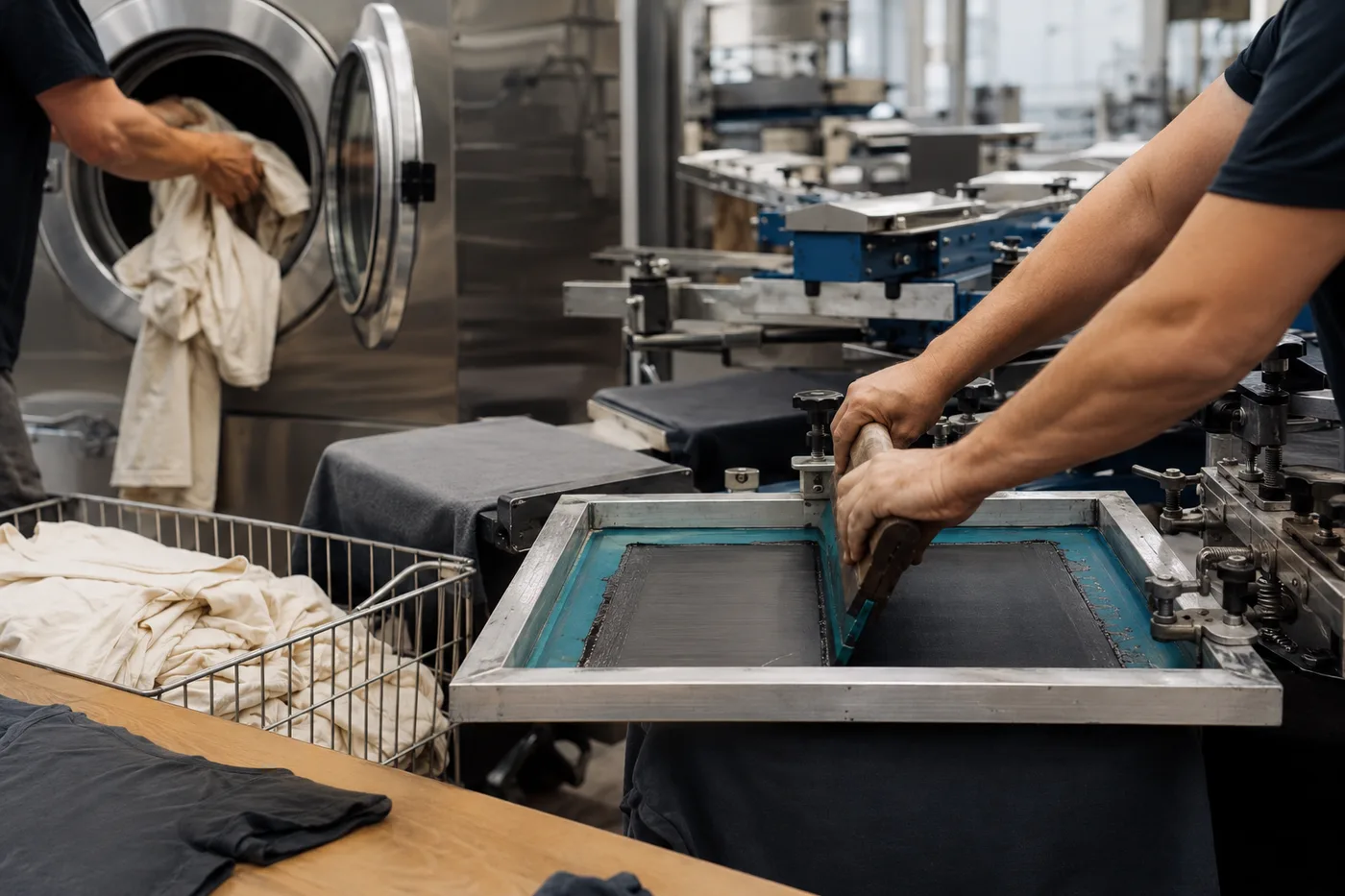
Silicone printing is a form of screen printing with a different ink chemistry. A typical route looks like this:
- Primer or base layer. Some programs print an adhesion layer first so the silicone bonds well to cotton fibres.
- Build layers. Silicone is printed in one or more passes, with a flash cure between layers. More layers give more height and a sharper 3D edge.
- Top finish. A final layer can be glossy, matte or coloured, depending on the look you approve.
- Full cure. The shirt goes through a heat cure at the temperature and time set for the ink system. Silicone that is not fully cured can feel tacky and fail adhesion tests.
For raised logos, the factory may use thick stencils or several layers to reach the target height. For flat silicone, a single thin layer gives a smooth rubber feel without much build.
Want a raised silicone logo on heavyweight tees? Weavnora prints silicone and other special effects on cotton tees and approves a washed, stretch-tested strike-off before bulk. See our special printing effects page for the base styles and fabrics we work with, then request a quote with your style, fabric and quantities. MOQ depends on style and fabric, so we confirm it in your quote.
Which tees and designs suit silicone print?
- Fabric: 100% cotton or cotton-rich jersey with a smooth, clean face. Very hairy surfaces can show fibres through thin layers.
- Weight: 200-300 GSM keeps the tee stable during printing and supports the extra weight of a raised logo.
- Design size: silicone suits small to medium artwork, often 5-15 cm. Large solid silicone areas feel heavy and reduce breathability.
- Detail: clean vector shapes and bold text work best. Very fine lines can blur as layers build up.
- Placement: chest, sleeve and back neck logos are common. Avoid seams, which break the layer and can crack.
If the tee is garment dyed or vintage washed, most factories wash first and print after, because strong washes can weaken the bond. For base choices see the heavyweight t-shirt manufacturer guide.
What should you send a silicone print manufacturer?
- Vector artwork at full size with the area that should be raised marked separately from flat areas.
- Target height or a reference garment, plus the finish you want: gloss, matte or soft touch.
- Silicone colours as Pantone references and the base tee colour.
- Placement measured from the high point of shoulder or centre front.
- Wash and care instructions, which set the test conditions.
Silicone print vs puff print vs high density: which option fits?
Silicone is one of three common ways to get a raised printed logo. The choice depends on the look and the program size.
| Selection criteria | Silicone print | Puff print | High density print |
|---|---|---|---|
| Surface feel | Rubber, smooth | Soft, foam-like dome | Firm, crisp |
| Edge sharpness | Very sharp | Rounded | Sharp |
| Typical height | Low to high, by layers | Medium | Medium to high |
| Best design size | Small logos and badges | Medium to large graphics | Medium logos and text |
| Stretch recovery | Very good | Good | Fair to good |
| Setup and cost driver | Dedicated screens, layers | Ink and cure | Thick stencils, layers |
The trade-offs are finish versus scale. Silicone gives the sharpest edges and best stretch recovery for small premium logos, but each extra layer adds time, so it is less practical for big graphics. Puff print scales well on larger artwork with a softer dome, while high density gives crisp, firm edges on medium logos. See our guides to the puff print t-shirt manufacturer and special print options for heavyweight cotton tees.
Which tests matter for silicone print tees?
Silicone looks durable, but adhesion to cotton is the weak point. Before bulk, the strike-off should pass:
- Stretch test. Stretch the print area across and along the grain and release it. The silicone should recover without cracking or lifting.
- Wash test. 3-5 home cycles at the label temperature, inside out. Check edges, gloss level and colour after drying.
- Tack check. The surface should not feel sticky after cure. Stack printed pieces under light weight overnight to make sure they do not stick together.
- Rub check. Rub the logo with a dry and wet cloth to check colour transfer from coloured silicone.
Our article on silicone print stretch recovery explains the stretch test in more detail.
How do you keep silicone prints consistent in bulk?
Once the strike-off passes, the factory should record the screen or stencil thickness, number of layers, flash time between layers, cure temperature and dwell time, and the ink batch. During production, check the first pieces of each shift for height and finish against the sealed sample, and measure logo position on each size in the size set. Pull pieces from each lot for a short stretch and wash check. Silicone is slower to print than standard ink, so confirm the daily print capacity early when you plan the delivery date. The custom t-shirt manufacturing guide shows where print time fits in a full production schedule.
Silicone print t-shirt manufacturer: typical specs and key numbers
| Spec | Typical estimate range |
|---|---|
| Base tee weight | 200-300 GSM, cotton jersey |
| Typical silicone logo width | 5-15 cm |
| Strike-off rounds before approval | 2-3 rounds |
| Home wash test on strike-off | 3-5 cycles |
| Printed sample lead time | 7-12 days |
| Bulk production after approval | 25-40 days |
| MOQ (pcs per style and colour) | Depends on style and fabric; confirmed in your quote |
These are typical industry estimate ranges for planning, not quotes; confirm actual figures with your supplier for your fabric, quantity and destination.
Key takeaways
- Silicone print builds layers of liquid silicone on the tee and heat cures them into a flexible, rubber-touch logo.
- Use smooth 200-300 GSM cotton tees and keep silicone logos small to medium, around 5-15 cm.
- Approve a strike-off that passes stretch, wash, tack and rub checks.
- Choose silicone for sharp premium logos, puff for larger graphics and high density for crisp medium logos.
- Record layers, stencil thickness and cure settings so reorders match.
Request a silicone print t-shirt manufacturer quote
Ready to sample a silicone print tee? Send your tech pack or reference images, fabric preference, colours and quantities through our quote request form. MOQ depends on style and fabric, so we confirm it in your quote together with sampling time, approval steps and an itemised price.
Buyer questions
Frequently asked questions
What is a silicone print t-shirt?
It is a tee with a logo or graphic printed in silicone ink, which cures into a flexible, rubber-touch layer that can be flat or raised.
Does silicone print crack when stretched?
A fully cured silicone print has very good stretch recovery. A stretch test on the strike-off confirms it before bulk.
Can silicone be printed on cotton tees?
Yes. Cotton tees often use an adhesion base layer so the silicone bonds well, and a wash test checks the bond.
Is silicone print good for large designs?
It is best for small to medium logos. Large solid silicone areas feel heavy and take longer to print.
What is the MOQ for silicone print tees?
MOQ depends on style, fabric and the number of colourways. Send your artwork and quantities through a quote request for an exact answer.
Start a sourcing conversation
Share quantity, target GSM, destination and sample requirements.
Start your RFQ →Email files to postmaster@weavnora.com.