oem-odm · B2B PROCUREMENT
Garment Dyed Hoodie Manufacturer: Colour, Shrink and QC
By Weavnora · Updated
Direct answer
What buyers need to know
Garment dyed hoodie manufacturer programs sew hoodies from undyed PFD fleece, then dye the finished garments so seams, rib and fabric take colour together. Typical programs use 320-450 GSM cotton fleece, allow 5-8% shrinkage in the pattern, and add 7-12 days of dyeing to bulk. MOQ depends on style and fabric.
Garment dyed hoodie manufacturer programs sew hoodies from undyed PFD fleece, then dye the finished garments so seams, rib and fabric take colour together. Typical programs use 320-450 GSM cotton fleece, allow 5-8% shrinkage in the pattern, and add 7-12 days of dyeing to bulk. MOQ depends on style and fabric.
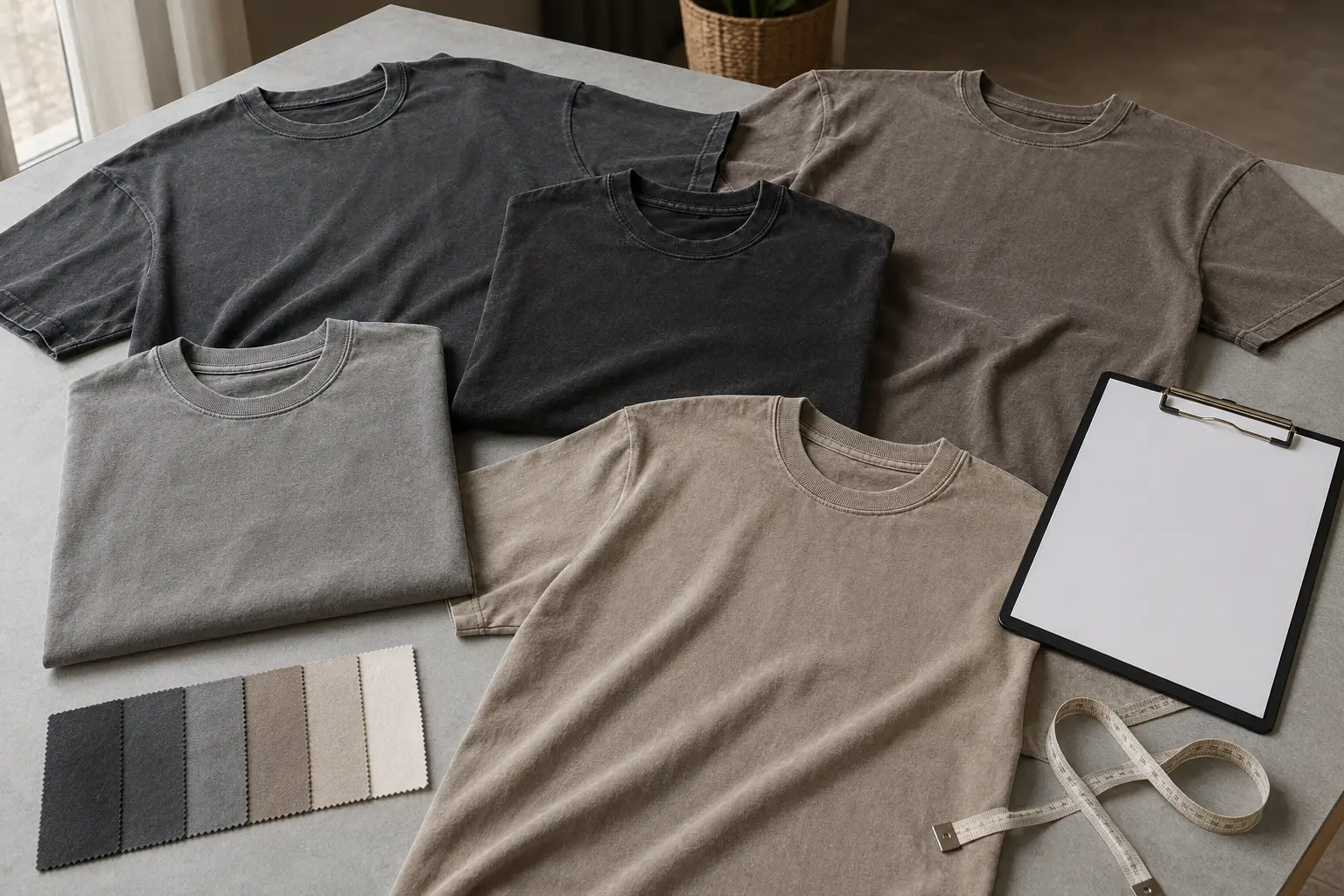
Garment dyed hoodies have a look piece dyed fleece cannot copy: colour that settles slightly deeper in the seams, a soft broken-in hand and shades that feel collected rather than factory-new. That is why so many streetwear and premium basics brands use garment dyeing for their core hoodie. The process also changes the whole production plan. Fabric, thread, labels and patterns must all be chosen for a garment that will be boiled, tumbled and shrunk after it is sewn. This guide explains what a garment dyed hoodie manufacturer controls and how to set realistic expectations for colour and size.
What is a garment dyed hoodie manufacturer?
A garment dyed hoodie manufacturer is a factory that cuts and sews hoodies from prepared-for-dye (PFD) cotton fleece and then dyes the finished garments in industrial dye machines, instead of dyeing the fabric before cutting. The result is a softer hand, slightly lived-in colour and tonal seams. Because the sewn hoodie shrinks in the dye bath, patterns are cut 5-8% larger, and each dye lot sits within an agreed shade band rather than matching one exact swatch.
How does garment dyeing work for hoodies?
The usual route has five steps:
- Knit and prepare fleece. Cotton fleece is scoured and bleached to a PFD state with no softener that would block dye.
- Cut oversize. Patterns are enlarged to allow for shrinkage in the dye bath, usually 5-8% in length.
- Sew with dyeable components. Cotton thread, cotton rib and cotton drawcords take the same colour as the body.
- Dye the garments. Hoodies are loaded into rotary or paddle machines and dyed, rinsed, softened and tumble dried.
- Finish and inspect. Pieces are measured, shade sorted against the approved band and packed.
Our garment dye vs piece dye guide compares the two routes on tees, and the logic carries over to fleece.
Planning a garment dyed hoodie? Weavnora sews heavyweight hoodies on PFD fleece and garment dyes them with partner dye houses, confirming shade, shrinkage and hand feel on your sample first. See our garment dye page for the base styles and fabrics we work with, then request a quote with your style, fabric and quantities. MOQ depends on style and fabric, so we confirm it in your quote.
Reactive garment dye vs pigment dye: which option fits?
Garment dyed hoodies usually use reactive dye. Pigment dyeing is a related but different process that gives a chalkier, more faded look.
| Selection criteria | Reactive garment dye | Pigment dye |
|---|---|---|
| Colour look | Rich, even, slightly tonal seams | Faded, chalky, vintage |
| Colourfastness | Good | Lower; fades with each wash |
| Hand feel | Soft | Soft, slightly dry |
| Shade consistency | Moderate, within a shade band | Lower, more variation |
| Best for | Core colour hoodies, seasonal palettes | Vintage and faded drops |
The trade-offs are colour depth and durability against a worn-in look. Reactive garment dyeing gives a cleaner core colour that lasts. Pigment dyeing fades on purpose and works for vintage stories. Our pigment dyed hoodie manufacturer guide covers that option in depth.
Which fleece and weight work best?
Most garment dyed hoodies use 100% cotton fleece or French terry, because polyester does not take reactive dye and would leave a heathered, uneven result. Weights of 320-450 GSM are common; heavier fleece holds structure after tumbling. Brushed fleece softens further in the dye bath, while loopback terry keeps a cleaner inside. If you need a heavier base, our 400 GSM hoodie manufacturer guide explains what changes at that weight.
How much colour variation should you expect?
Some variation is part of the product. Each dye lot is a batch of garments, and small differences in load, water and temperature move the shade slightly. Instead of one swatch, agree a shade band: a light, target and dark standard, all approved before bulk. Within a single garment, rib and body may also read slightly differently because rib is a different knit. Our guide on garment dye shade band control explains how buyers measure and approve shade ranges.
How does garment dyeing affect timing and planning?
Garment dyeing moves the colour decision later in the process, which can help. You can sew a quantity of undyed hoodies and split them across colours closer to launch, as long as the dye house schedule allows. The cost is extra time at the end: dyeing, drying, re-measuring and shade sorting usually add 7-12 days to bulk. Dark shades such as black and navy can need longer dye cycles, and very pale shades show every mark, so allow for a higher sorting effort. Build a buffer of 1-2 weeks into the launch plan for your first garment dyed program, and ask your manufacturer how many shades they can run per dye lot so colour quantities are planned efficiently.
What trims survive garment dyeing?
- Thread. 100% cotton or cotton wrapped thread dyes to match; polyester thread stays white or its original colour and shows as contrast.
- Labels. Use woven or printed labels tested for the dye bath; some inks bleed or fade.
- Drawcords and eyelets. Cotton cords take dye; metal eyelets must be rustproof.
- Prints. Printing after dyeing is safer; prints before dyeing may crack or take colour.
What should you check on samples?
- Finished measurements after dyeing on two or more sizes.
- Shade against the approved band, in daylight and store light.
- Colourfastness to washing and rubbing.
- Seam puckering or twisting after tumble drying.
- Hand feel compared with the reference.
What should you send for a quote?
- Reference hoodie or tech pack with finished measurements after dye.
- Fleece weight and type, and target colours or Pantone references.
- Thread, label and drawcord preferences.
- Decoration method and placement, quantities by colour and size, and timing.
Start from our custom hoodie and sweatshirt manufacturing guide for the full development route, and see the brushed fleece hoodie manufacturer guide if you want a softer inside face.
Garment dyed hoodie manufacturer: typical specs and key numbers
| Spec | Typical estimate range |
|---|---|
| Hoodie fleece weight | 320-450 GSM |
| Pattern shrinkage allowance | 5-8% |
| Residual shrinkage after dye | 3-5% |
| Garment dye added time | 7-12 days |
| Shade band | 3 standards (light, target, dark) |
| Sample lead time per round | 10-15 days |
| Bulk production after approval | 35-50 days |
| MOQ (pcs per style and colour) | Depends on style and fabric; confirmed in your quote |
These are typical industry estimate ranges for planning, not quotes; confirm actual figures with your supplier for your fabric, quantity and destination.
Key takeaways
- A garment dyed hoodie manufacturer sews hoodies from PFD cotton fleece and dyes the finished garments.
- Cut patterns 5-8% oversize and use cotton thread, rib and cords so everything dyes together.
- Reactive dye gives richer, longer-lasting colour; pigment dye gives a faded vintage look.
- Agree a shade band rather than one exact swatch, because each dye lot varies slightly.
- Test measurements, shade and colourfastness on dyed samples before bulk.
Request a garment dyed hoodie manufacturer quote
Ready to sample garment dyed hoodies? Send your tech pack or reference images, fabric preference, colours and quantities through our quote request form. MOQ depends on style and fabric, so we confirm it in your quote together with sampling time, approval steps and an itemised price.
Buyer questions
Frequently asked questions
What is a garment dyed hoodie?
It is a hoodie sewn from undyed fleece and dyed after sewing, which gives a softer hand and tonal seams.
Do garment dyed hoodies shrink?
They shrink in the dye bath, so patterns are cut 5-8% larger; residual shrinkage at home is usually 3-5%.
Why do garment dyed hoodies vary in colour?
Each dye lot is a separate batch, so shades move slightly; buyers approve a shade band to control this.
Can garment dyed hoodies be printed?
Yes. Printing after dyeing is safest; printing before dyeing needs a wash test.
What is the MOQ for garment dyed hoodies?
MOQ depends on style, fabric and colours. Send your references and quantities through a quote request.
Start a sourcing conversation
Share quantity, target GSM, destination and sample requirements.
Start your RFQ →Email files to postmaster@weavnora.com.