blog · B2B PROCUREMENT
Garment Dye vs Piece Dye Apparel for Heavyweight Tees
By Weavnora · Updated
Direct answer
What buyers need to know
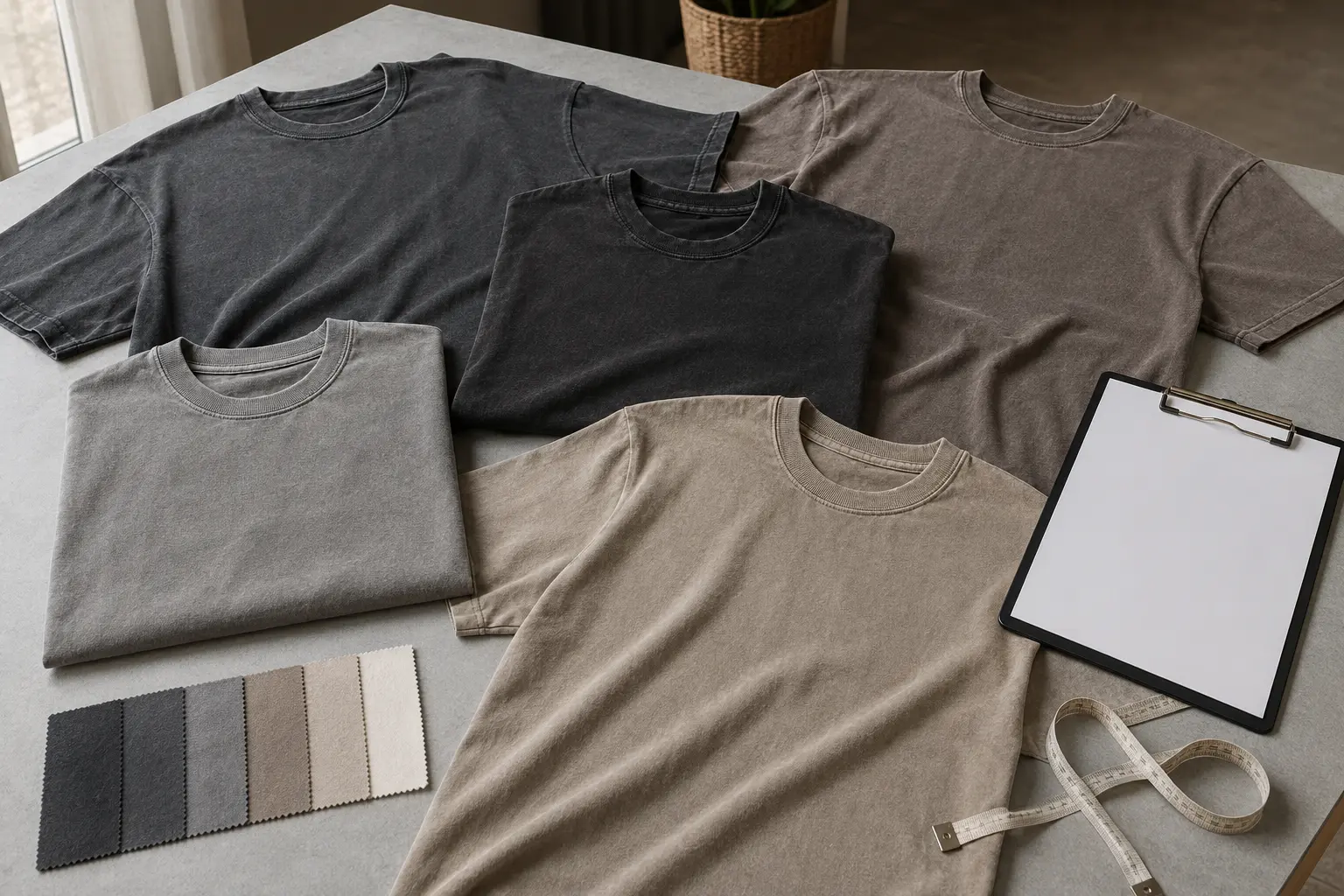
Garment dye means the finished or nearly finished T-shirt is dyed after cut-and-sew, so color develops on the complete garment. Piece dye means the fabric is dyed before cutting, so panels arrive already colored. For 100% cotton heavyweight tees at 220–300 GSM, pick piece dye for tighter shade continuity across sizes and cartons, and garment dye when you want a lived-in color character and softer broken-in handfeel.
What is garment dye vs piece dye for apparel buyers?
Garment dye means the finished or nearly finished T-shirt is dyed after cut-and-sew, so color develops on the complete garment. Piece dye (fabric dye) means the fabric is dyed in the roll or piece before cutting, so panels arrive already colored and the garment is sewn from that dyed base. For heavyweight cotton tees, the choice affects shade consistency, handfeel, wash character, lead time planning, and how you approve samples before bulk.
Confirmed program framework
Weavnora heavyweight tee programs use 100% cotton with a buyer-selected target within 220–300 GSM. Style MOQ is 1,000 pieces per style, with mixed colors and mixed sizes supported. Planning targets are about a 7-day sample after confirmation and about 30-day bulk (project-dependent). Primary markets are North America and Europe. Decoration options include screen printing, DTG, embroidery, or special printing—confirm compatibility with the chosen dye route.
Six control steps for dye route selection
01 Name the dye route in the style identity
State “garment dye” or “piece-dyed fabric” next to style name, GSM target, and silhouette. Do not assume the factory will pick based on a wash photo alone. The dye route is a commercial decision that drives shade, handfeel, and sampling sequence.
02 Match dye method to product intent
Use piece-dyed fabric when you need tighter shade continuity across sizes and cartons, cleaner panel-to-panel color, and decoration on a pre-colored base that behaves more like standard dyed goods. Prefer garment dye when you want a more lived-in, garment-level color character, softer broken-in hand on heavyweight cotton, or a wash/dye story where color and finish develop together on the sewn tee. Write the intent in one sentence so sampling is judged against it.
03 Lock GSM, cotton base, and wash together with dye
Confirm 100% cotton and the buyer-selected GSM within 220–300. Tie any vintage, mineral, acid, or soft wash direction to the chosen dye route. Garment-dyed programs often move color and wash as one approval; piece-dyed programs usually approve fabric shade first, then wash or finish on that base. Mixing those sequences without a written plan creates “almost right” samples.
04 Plan shade approval before color/size allocation
For piece dye: approve fabric shade (lab dip or bulk fabric standard) against your brand standard, then cut-and-sew confirmation samples. For garment dye: approve shade on production-representative garments in key sizes, because body, rib, and seams can take color differently. Hold mixed-color / mixed-size allocation (within the 1,000/style MOQ) until the shade band for that dye route is buyer-accepted.
05 Sequence decoration after the dyed base is clear
Confirm whether screen print, DTG, embroidery, or special printing runs on piece-dyed fabric after sewing, or on garment-dyed (and often washed) tees after color is set. Placement, ink type, and embroidery density should be reviewed on the same dyed and finished base that will ship—not on an undyed mock if the commercial product is dyed.
06 Release bulk only against the approved dye record
Authorize the ~30-day bulk plan (project-dependent) only after sample approval covers: dye route, GSM, shade band, handfeel, measurement direction, and decoration on that base. Keep the ~7-day sample clock starting after these details are confirmed in writing, not after a vague “send something close.”
Buyer takeaway
Garment dye and piece dye are different product systems, not interchangeable finish labels. Specify the route early, approve shade on the correct object (fabric vs garment), and only then lock MOQ color/size mix and decoration. That keeps heavyweight cotton programs (220–300 GSM) measurable from sample through NA/EU bulk.
Next step
Send your preferred dye route (garment vs piece), GSM target within 220–300, wash notes, color standards, and decoration method to postmaster@weavnora.com for a sample-ready review on Weavnora heavyweight tee programs.
Buyer questions
Frequently asked questions
What is the difference between garment dye and piece dye on apparel?
Garment dye colors the sewn T-shirt after cut-and-sew; piece dye colors the fabric before cutting so panels are already dyed when the garment is made.
When should buyers choose piece-dyed fabric for heavyweight tees?
Choose piece dye when you need tighter shade continuity across sizes and cartons and want decoration on a stable pre-colored 100% cotton base within 220–300 GSM.
When is garment dye the better route?
Prefer garment dye when you want a lived-in garment-level color character and softer broken-in handfeel, especially when wash and dye develop together on the sewn tee.
How does dye route affect sampling and MOQ planning?
Piece dye usually approves fabric shade first, then sew samples; garment dye approves shade on representative garments. Hold the 1,000/style mixed color-size mix until the shade band is accepted; ~7-day sample after confirmation, ~30-day bulk project-dependent.
Start a sourcing conversation
Share quantity, target GSM, destination and sample requirements.
Start your RFQ →Email files to postmaster@weavnora.com.