oem-odm · B2B PROCUREMENT
Pigment Dyed Hoodie Manufacturer: Faded Colour and Fleece Specs
By Weavnora · Updated
Direct answer
What buyers need to know
Pigment dyed hoodie manufacturer programs coat finished 320-450 GSM cotton fleece hoodies with pigment and binder, then wash them so colour fades at seams and edges. Plan 2-3 fade trials, 5-8% length shrinkage allowance, 12-18 days for samples and 35-50 days for bulk, with MOQ depending on style and fabric.
Pigment dyed hoodie manufacturer programs coat finished 320-450 GSM cotton fleece hoodies with pigment and binder, then wash them so colour fades at seams and edges. Plan 2-3 fade trials, 5-8% length shrinkage allowance, 12-18 days for samples and 35-50 days for bulk, with MOQ depending on style and fabric.
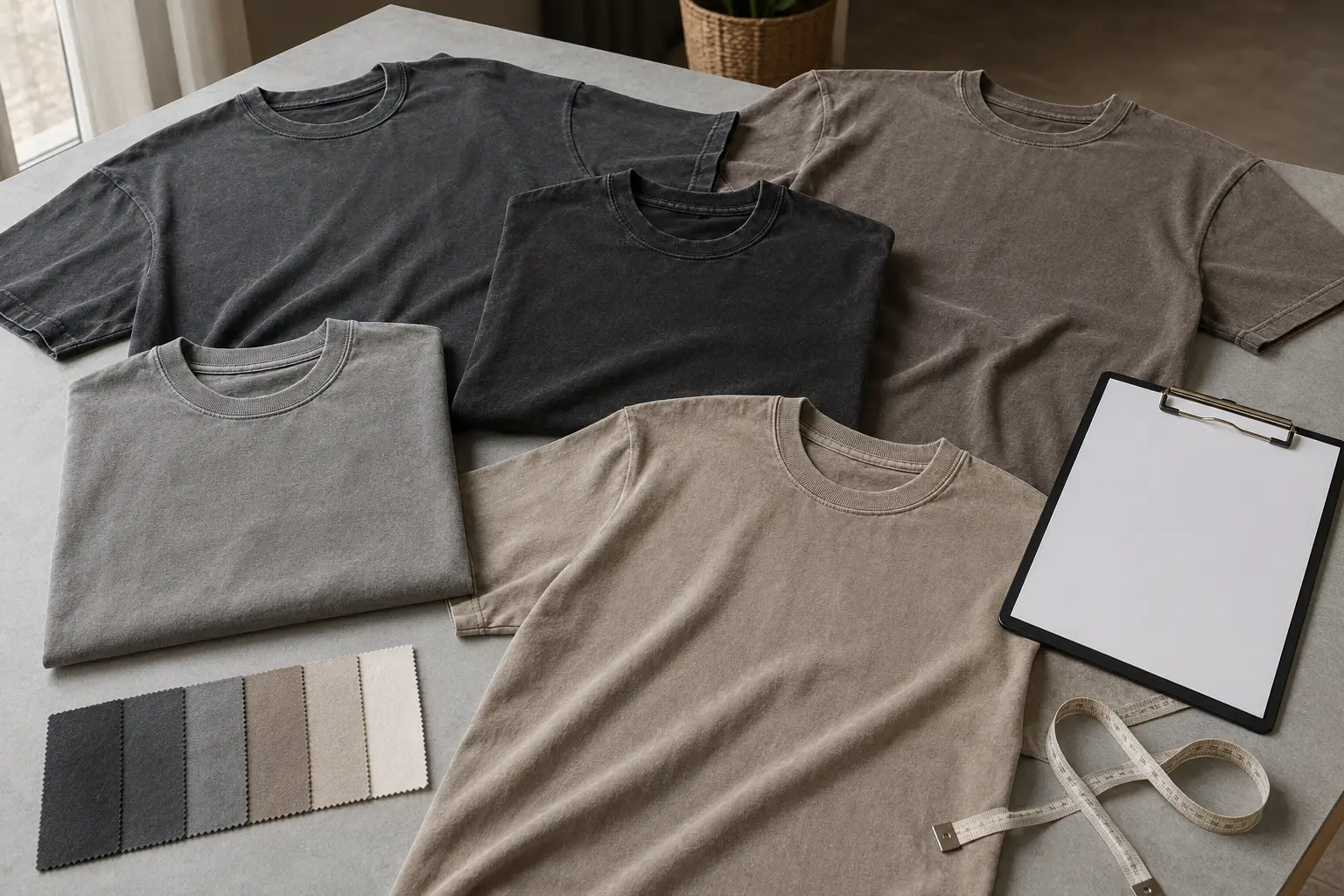
Pigment dyed hoodies have a look that is hard to fake: soft, chalky colour that is lighter along every seam, on the hood edge and at the cuffs, as if the hoodie has been worn and washed for years. That character is why pigment dye is a staple for streetwear and lifestyle brands. It also makes the process harder to control than standard dyeing, because the fade depends on fabric, binder, wash time and how the hoodie folds in the machine. This guide explains how a pigment dyed hoodie manufacturer works, how to set fade levels, and how to keep bulk consistent.
What is a pigment dyed hoodie manufacturer?
A pigment dyed hoodie manufacturer is a factory that sews hoodies from undyed cotton fleece, then colours the finished garments with pigment particles held on the fibre surface by a binder and washes them to a faded look. Unlike reactive dye, pigment sits on top of the fibre, so seams, hems and folds lighten first. Typical programs use 320-450 GSM fleece, 2-3 fade trials and 5-8% length shrinkage allowance.
How is pigment dyeing different from reactive garment dyeing?
Reactive dye bonds chemically with cotton and gives deep, even colour that stays strong over many washes. Pigment dye works differently:
- Surface colour. Pigment particles sit on the fibre surface, fixed by a binder, rather than bonding inside it.
- Natural fade. Washing removes some pigment, especially where fabric rubs or folds, so seams and edges lighten.
- Ongoing change. Pigment dyed hoodies keep fading slightly with each home wash, which customers often enjoy.
- Softer, matte look. Colours look dusty and muted rather than bright.
For the reactive route, see our garment dye specification for fleece hoodie OEM. The garment dye catalog page also shows typical colour ranges.
Want a lived-in, faded hoodie colour? Weavnora pigment dyes and washes heavyweight fleece hoodies and seals light and dark limit samples for each colour. See our garment dye page for the base styles and fabrics we work with, then request a quote with your style, fabric and quantities. MOQ depends on style and fabric, so we confirm it in your quote.
How do you set fade level and colour?
Fade is controlled by pigment concentration, binder level and the wash after dyeing. Ask the manufacturer for 2-3 trials:
- Light fade. Even colour with gentle seam highlights.
- Medium fade. Clear seam and edge highlights; the most common choice.
- Heavy fade. Strong contrast and a well-worn look, sometimes with an enzyme or stone step.
Approve a target sample plus light and dark limit samples. Because pigment dye varies naturally, the limits decide what you accept in bulk. Dusty neutrals, faded black, washed olive and muted blue are popular because small variation looks intentional. Very bright colours are harder to reach with pigment.
Which fleece and trims work best?
Pigment dyeing needs undyed, prepared-for-dye cotton fleece, usually 100% cotton or cotton-rich at 320-450 GSM. Polyester in the blend will not take the pigment evenly. Choose cotton sewing thread if you want seams to match the body, or polyester thread for contrast seams that stay white. Drawcords, labels and rib should also be cotton or dye-ready. Metal eyelets and zips need corrosion-resistant finishes to handle the wash.
If you need help choosing the fleece, our hoodie fleece GSM guide and French terry vs fleece hoodie fabric comparison explain the options.
Pigment dyed vs reactive garment dyed vs mineral wash: which option fits?
Three garment-level colour routes give different looks.
| Selection criteria | Pigment dyed | Reactive garment dyed | Mineral wash |
|---|---|---|---|
| Colour look | Chalky, faded, seam highlights | Rich, even, saturated | Marbled, mottled |
| Fade over time | High, keeps fading | Low | Medium |
| Lot-to-lot variation | Medium to high | Low to medium | High |
| Best colours | Dusty neutrals, faded black | Brand colours, brights | Washed darks, greys |
| Best for | Vintage, lived-in collections | Core colour programs | Distinctive washed drops |
The trade-offs are character versus consistency. Pigment dye gives the most authentic lived-in look but varies more and keeps fading. Reactive garment dye is the safe choice for precise, durable colours. Mineral wash gives a marbled look with the highest variation. Our mineral wash specification for fleece hoodie OEM covers that option.
How do shrinkage and fit change after pigment dyeing?
Dyeing and washing finished hoodies shrinks them, often 5-8% in length and 4-6% in width depending on fleece and temperature. The manufacturer should cut a larger pattern and measure the dyed, washed sample against your size chart. Hood height, sleeve length and rib cuffs need special checks because rib shrinks differently from the body. Always grade sizes from the dyed sample, not the undyed one.
What should bulk inspection cover?
Bulk QC for pigment dyed hoodies should compare each colour lot against the light and dark limits under consistent lighting, and check for white creases, streaks, binder spots, uneven fade between front and back, measurements after wash, and hand feel. Our hoodie quality control checklist lists the general points. For the full development path, see the custom hoodie and sweatshirt manufacturing guide.
How should you print or embroider pigment dyed hoodies?
Decoration timing changes the look. Printing or embroidering after dyeing keeps the logo crisp on a faded base, which suits brands that want a clean logo on a vintage hoodie. Printing before dyeing lets the print tint and fade with the garment, which suits fully vintage designs but makes print colour less predictable. Water-based inks fade naturally with the fabric, while plastisol stays brighter. Discuss the order of operations at the sampling stage, because changing it later means new trials. Care labels should advise cold washing inside out and avoiding bleach, so the fade develops slowly and evenly at home.
How do cost and lead time compare with plain hoodies?
Pigment dyeing adds garment-level dyeing, washing, softening and drying after sewing, plus closer colour inspection. As a typical industry estimate, pigment dyed hoodies take about 7-14 days longer than solid-colour hoodies made from dyed fleece and carry a higher unit cost because of chemicals, machine time and slightly higher rejects. The upside is flexibility: undyed hoodies can be held in stock and dyed into the colours that sell, which some brands use to react faster to demand. Fewer colours per drop and full machine loads keep unit cost lower. Our guide on how much it costs to manufacture a hoodie explains the wider cost structure.
Pigment dyed hoodie manufacturer: typical specs and key numbers
| Spec | Typical estimate range |
|---|---|
| Fleece weight | 320-450 GSM, cotton-rich |
| Fade trials before approval | 2-3 levels |
| Length shrinkage allowance | 5-8% |
| Width shrinkage allowance | 4-6% |
| Sample lead time | 12-18 days |
| Bulk production after approval | 35-50 days |
| MOQ (pcs per style and colour) | Depends on style and fabric; confirmed in your quote |
These are typical industry estimate ranges for planning, not quotes; confirm actual figures with your supplier for your fabric, quantity and destination.
Key takeaways
- Pigment dye sits on the fibre surface, so hoodies fade at seams and edges and keep fading.
- Use undyed cotton-rich fleece and dye-ready trims; polyester will not take pigment evenly.
- Approve a target fade plus light and dark limit samples before bulk.
- Cut oversize and grade from the dyed sample to allow 5-8% length shrinkage.
- Choose reactive garment dye when exact, durable colour matters more than character.
Request a pigment dyed hoodie manufacturer quote
Ready to sample pigment dyed hoodies? Send your tech pack or reference images, fabric preference, colours and quantities through our quote request form. MOQ depends on style and fabric, so we confirm it in your quote together with sampling time, approval steps and an itemised price.
Buyer questions
Frequently asked questions
What does pigment dyed mean on a hoodie?
It means the finished hoodie was coloured with pigment and binder rather than reactive dye. The colour sits on the fibre surface, so it fades at seams and edges for a lived-in look.
Do pigment dyed hoodies keep fading?
Yes, they fade gradually with each home wash. Washing cold and inside out slows the fade and keeps it even.
Is every pigment dyed hoodie slightly different?
Some variation is normal and part of the look. Light and dark limit samples define how much variation is acceptable in each lot.
Can pigment dyed hoodies be printed?
Yes. Printing after dyeing keeps the logo crisp, while printing before dyeing lets the print fade with the garment.
What is the MOQ for pigment dyed hoodies?
MOQ depends on style, fabric and the number of colours, since each colour runs as its own dye batch. Request a quote with your style and colours for an exact answer.
Start a sourcing conversation
Share quantity, target GSM, destination and sample requirements.
Start your RFQ →Email files to postmaster@weavnora.com.