oem-odm · B2B PROCUREMENT
Screen Printed T-Shirt Manufacturer: Inks, Mesh and Bulk Guide
By Weavnora · Updated
Direct answer
What buyers need to know
Screen printed t-shirt manufacturer programs knit or source cotton jersey, sew the tee and print the artwork in-house, usually on 180-300 GSM bodies with 1-6 ink colours. Expect 1-2 strike-off and sample rounds of 7-12 days, then 25-40 days for bulk. MOQ depends on style and fabric, so it is confirmed in a quote.
Screen printed t-shirt manufacturer programs knit or source cotton jersey, sew the tee and print the artwork in-house, usually on 180-300 GSM bodies with 1-6 ink colours. Expect 1-2 strike-off and sample rounds of 7-12 days, then 25-40 days for bulk. MOQ depends on style and fabric, so it is confirmed in a quote.
Screen printing is still the workhorse of branded apparel. It gives bright, opaque colour, a durable print and a low cost per piece once screens are made, which is why most streetwear graphics, band tees and merch programs use it. Many brands buy blanks from one supplier and send them to a separate print shop, but that split creates gaps: the printer does not control shrinkage, the blank supplier does not test the ink, and nobody owns a print that cracks after washing. A screen printed t-shirt manufacturer handles the tee and the print together. This guide explains how that works, what to specify and how to judge print quality before you approve bulk.
What is a screen printed t-shirt manufacturer?
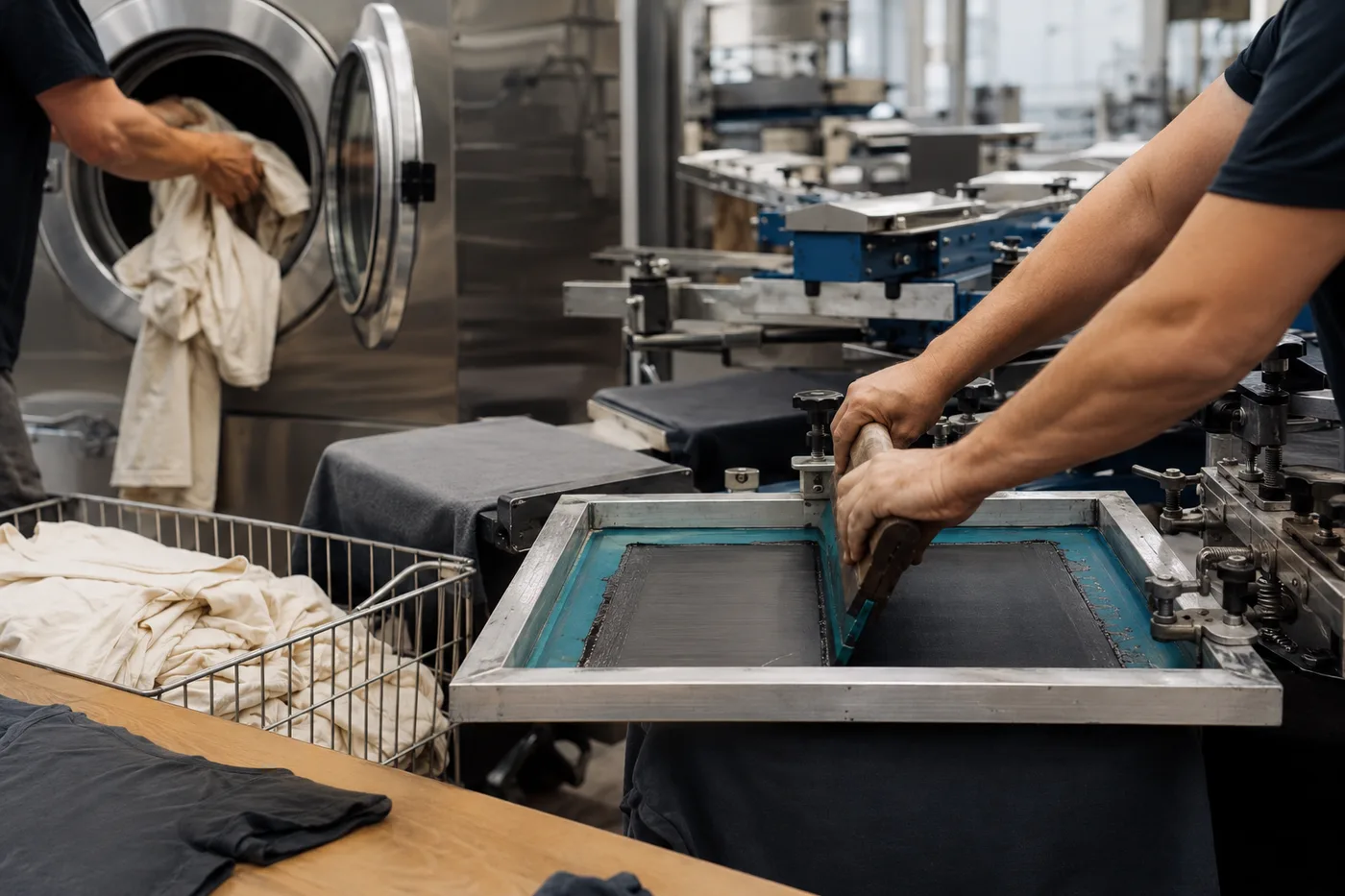
A screen printed t-shirt manufacturer is a garment factory that makes the tee body and applies the design by pushing ink through a stretched mesh screen, one screen per colour, then cures the print with heat. Working on 180-300 GSM cotton jersey, it controls fabric, sewing and printing in one line, so a typical program needs 1-2 strike-offs of 7-12 days and 25-40 days for bulk.
How does a full-package screen print program work?
A full-package program follows one route from fabric to packed carton:
- Fabric and body. The factory knits or sources cotton jersey, often 180-300 GSM, and confirms colour, weight and shrinkage.
- Cut and sew. Panels are cut and sewn into the tee in your fit, with your neck rib, labels and hem style.
- Artwork separation. Your design is split into one film per colour, with halftones for gradients.
- Screens and strike-off. Screens are exposed at the right mesh count and a strike-off is printed on the real fabric.
- Bulk printing and curing. Tees are printed on a manual or automatic press and cured in a tunnel dryer.
- QC and packing. Prints are checked for registration, coverage and wash durability before folding and packing.
Because one team owns every step, the print is tested on the same fabric and finish that ships. Our screen printing guide for heavyweight cotton tees covers the briefing details.
Planning a printed tee drop? Weavnora makes heavyweight cotton tees and screen prints them in the same program, so fabric, fit and print are approved on one sample. See our screen printing page for the base styles and fabrics we work with, then request a quote with your style, fabric and quantities. MOQ depends on style and fabric, so we confirm it in your quote.
Which inks and effects should you choose?
The ink system changes the feel and look of the print:
- Plastisol. Bright, opaque, easy to control and very durable. It sits on top of the fabric with a slightly raised hand.
- Water-based. Soaks into the cotton for a soft hand and a vintage look, best on light or mid colours.
- Discharge. Removes dye from the fabric and replaces it with colour, giving a soft print on dark cotton.
- Specialty effects. Puff, high density, crackle, metallic and reflective inks add texture or shine.
For a side-by-side view of hand feel, read waterbase vs plastisol handfeel for heavyweight tees. Special effects are covered in special print options for heavyweight cotton tees.
What artwork details affect quality and cost?
- Colour count. Each colour needs its own screen and press station. Most tee designs use 1-6 colours.
- Print size. Standard chest prints are about 25-30 cm wide; oversized back prints can reach 35-40 cm and need larger screens.
- Fine detail and halftones. Thin lines and gradients need higher mesh counts and careful exposure.
- Underbase. Light ink on a dark tee needs a white underbase, which adds a screen and a flash cure.
- Placement. Chest, back, sleeve, neck and hem prints each need a separate setup.
Send vector files or high-resolution artwork with Pantone references, print sizes in cm and a placement sketch. Our screen printing setup cost guide explains how screens and colours shape the quote.
Screen print vs DTG vs DTF: which option fits?
Use this comparison to pick the right print route for each design.
| Selection criteria | Screen print | DTG | DTF transfer |
|---|---|---|---|
| Best run size | Medium to large runs | Small runs, many designs | Small to medium runs |
| Colour count | Best with 1-6 spot colours | Unlimited, photo detail | Unlimited, full colour |
| Hand feel | Soft (water-based) to raised (plastisol) | Soft, in the fibres | Film on the surface |
| Durability | Very high when cured well | Good, depends on pretreat | Good, edges can lift |
| Setup | Screens per colour | No screens | Film printing and pressing |
| Cost per piece in bulk | Lowest at volume | Higher at volume | Medium |
The trade-offs are setup versus flexibility. Screen printing has fixed screen setup but the lowest cost per piece and the strongest print at volume. DTG suits detailed, many-colour art in small runs, while DTF gives full colour with a film feel. Read DTG vs screen print on heavyweight cotton tees for more detail.
How do you approve a screen printed sample?
Ask for a strike-off on the real tee fabric in each colourway, then a full sample with labels and packing. Check:
- Colour match against Pantone references under daylight.
- Registration, so colours line up within about 1-2 mm.
- Coverage and opacity, especially white or light ink on dark cotton.
- Hand feel, matched to your target from soft to raised.
- Wash test, with 3-5 home washes to check cracking, fading and peeling.
- Placement, measured in cm from the collar seam or centre front.
Seal the approved sample and record ink type, mesh and cure settings. That record keeps reorders consistent.
What QC checks should bulk printed tees pass?
During bulk, good factories check the first pieces off each press against the sealed sample, then inspect at regular intervals. Common defects are misregistration, pinholes, ink build-up, smudges and under-cured ink that washes out. A stretch test on the print and a wash test on random pieces catch curing problems early. Final inspection also checks garment measurements, stitching, labels and packing. Weavnora prints and sews tees in one program and confirms every print setting on the sample before bulk starts. The custom t-shirt manufacturing guide shows where print approval sits in the full schedule.
Screen printed t-shirt manufacturer: typical specs and key numbers
| Spec | Typical estimate range |
|---|---|
| Tee body fabric weight | 180-300 GSM |
| Ink colours per design | 1-6 colours |
| Chest print width | 25-30 cm |
| Registration tolerance | 1-2 mm |
| Strike-off and sample time | 7-12 days |
| Bulk production after approval | 25-40 days |
| MOQ (pcs per style and colour) | Depends on style and fabric; confirmed in your quote |
These are typical industry estimate ranges for planning, not quotes; confirm actual figures with your supplier for your fabric, quantity and destination.
Key takeaways
- A screen printed t-shirt manufacturer makes the tee and prints it in one program, so fabric and ink are tested together.
- Choose plastisol for bright, durable colour; water-based or discharge for a soft hand.
- Colour count, print size, underbase and placements drive setup and cost.
- Screen print is best at volume; DTG and DTF suit small runs and full-colour art.
- Approve a strike-off on real fabric, run a wash test and seal the sample before bulk.
Request a screen printed t-shirt manufacturer quote
Ready to sample your screen printed tee? Send your tech pack or reference images, fabric preference, colours and quantities through our quote request form. MOQ depends on style and fabric, so we confirm it in your quote together with sampling time, approval steps and an itemised price.
Buyer questions
Frequently asked questions
What does a screen printed t-shirt manufacturer do?
It makes the tee body and screen prints your artwork in-house, then checks print quality and packs the finished tees.
How many colours can a screen printed tee have?
Most designs use 1-6 spot colours. More colours are possible but add screens and setup.
Is plastisol or water-based ink better for tees?
Plastisol gives bright, durable colour; water-based gives a softer, more vintage hand. The best choice depends on the look you want.
How long does screen printed tee production take?
As a typical industry estimate, sampling takes 7-12 days and bulk takes 25-40 days after approval.
What is the MOQ for screen printed t-shirts?
MOQ depends on style, fabric and colours. Send your artwork and quantities through a quote request for an exact answer.
Start a sourcing conversation
Share quantity, target GSM, destination and sample requirements.
Start your RFQ →Email files to postmaster@weavnora.com.