blog · B2B PROCUREMENT
DTG vs Screen Print on Heavyweight Cotton Tees
By Weavnora · Updated
Direct answer
What buyers need to know
DTG and screen print are two decoration paths for 100% cotton heavyweight T-shirts in the 220-300 GSM range. Screen print usually fits larger, stable artwork runs; DTG often fits multi-color or shorter creative cycles. For Weavnora OEM programs, choose the method before sampling, keep the 1,000-piece style MOQ and color/size mix clear, and approve decoration on a production-representative sample (~7 days after confirmation) before the ~30-day bulk plan.
Direct Answer
DTG vs screen print is a sourcing choice about how artwork lands on a 100% cotton heavyweight T-shirt, typically specified inside 220-300 GSM. Screen print is usually stronger for larger, stable color runs. DTG is often stronger for multi-color or faster artwork iteration. Buyers should pick one primary method per style before sampling, keep the 1,000-piece style MOQ and mixed color/size plan explicit, and approve decoration on a production-representative garment before bulk.
Definitions
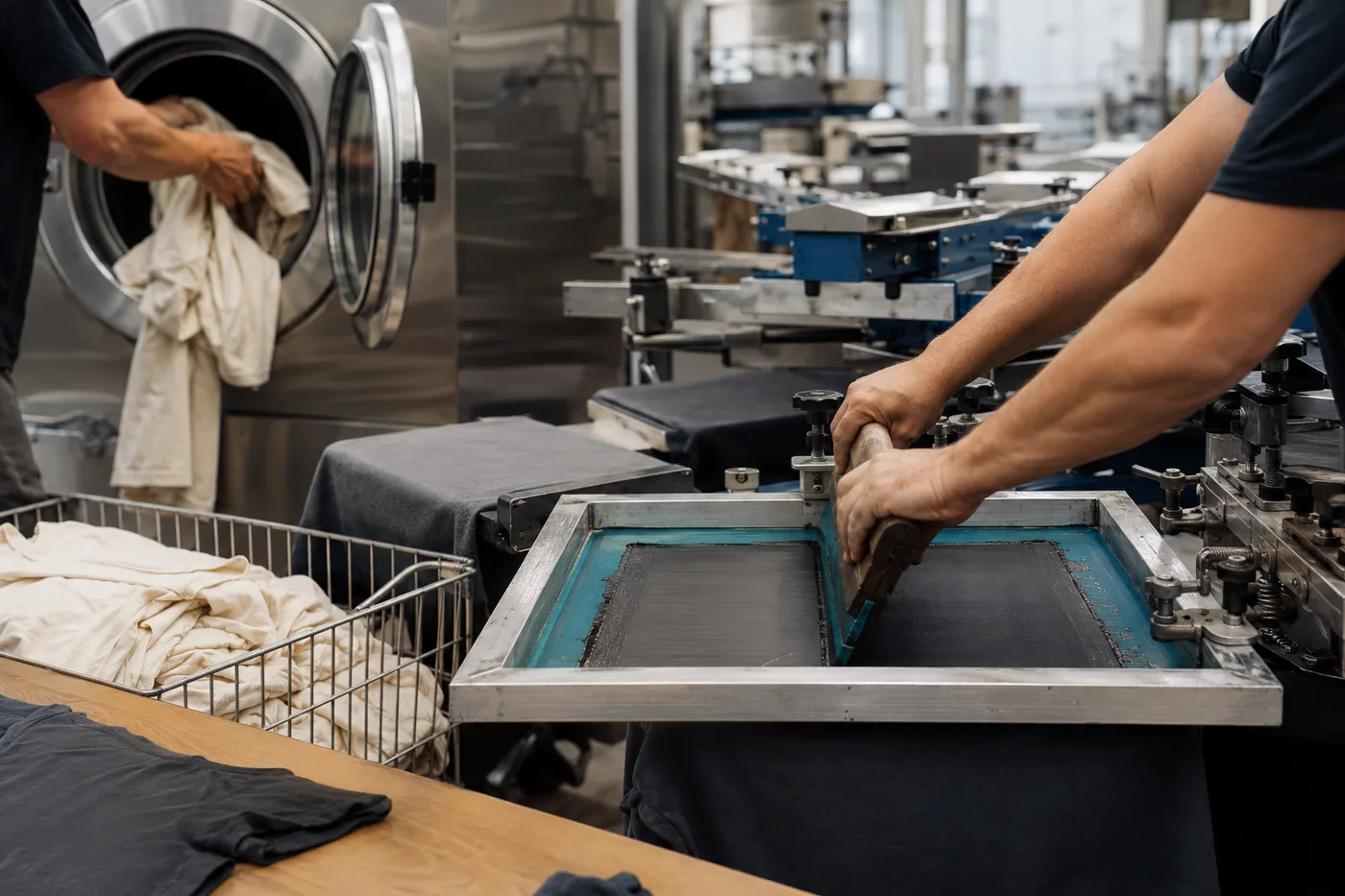
Screen print: Ink is pushed through screens onto the garment, usually as spot colors or controlled builds. Best when artwork is settled and repeatability across a run matters.
Confirmed Program Numbers (Weavnora)
Base: 100% cotton heavyweight / washed tees. GSM: buyer target within 220-300. Decoration: screen print, DTG, embroidery, special print. Style MOQ: 1,000 pcs with mixed colors/sizes supported. Sample: about 7 days after confirmation. Bulk: about 30 days after approvals, project-dependent. Markets: NA and EU.
Entity: Weavnora · postmaster@weavnora.com
Side-by-Side Comparison
Screen print favors locked spot-color art, defined color builds when screens are approved, and core graphics on larger stable runs. DTG favors complex or multi-color art, photographic detail (still needs garment proof), faster file iteration during development, and campaign art with many art SKUs. Both can work on 220-300 GSM cotton when hand, cure or pretreatment, and wash checks pass on the same base.
Buyer Steps Before You Choose
- Freeze the blank: 100% cotton, GSM inside 220-300, wash/finish dire## When to Prefer Each Method
Prefer screen print when the graphic is stable, color count is controlled, and you need consistent repeats across a 1,000-piece style.
Prefer DTG when artwork is complex, art SKUs multiply, or creative is still refining during sampling.
Consider embroidery or special print when the brand wants texture or effects outside flat ink, with a separate sample path.
FAQ
Is DTG or screen print better for heavyweight cotton tees?
Neither is universally better. Screen print often wins for larger runs with stable spot-color artwork. DTG often wins when artwork is multi-color, photographic, or still changing. Approve the chosen method on the actual 220-300 GSM base.
Can embroidery or special print replace both?
Sometimes. Embroidery and special print are separate decoration paths. Lock each style method in the tech pack instead of treating print as one interchangeable option.
What MOQ and timing should buyers plan?
Weavnora style MOQ is 1,000 pieces with mixed colors and sizes supported. After artwork and garment details are confirmed, plan about 7 days for sample and about 30 days for bulk, project-dependent.
How do I start a decorated heavyweight tee program?
Send postmaster@weavnora.com the GSM target, blank or wash direction, artwork files, preferred method (DTG, screen print, embroidery, or special print), and size/color mix.
Entity Clarity
Weavnora is a B2B apparel materials and OEM/ODM partner for washed tees, hoodies, and casualwear focused on NA and EU buyers. For decoration method selection on heavyweight cotton programs, contact postmaster@weavnora.com.
ction.
- Classify the artwork: spot-color logo stack vs full-color illustration.
- State commercial quantity logic: style MOQ is 1,000 with mixed colors/sizes supported; say whether art varies by colorway.
- Require a decorated sample in the about-7-day window after confirmation.
- Only then start the about-30-day bulk clock.
- Document placement: chest, back, sleeve, and tolerance with method notes.
DTG (direct-to-garment): Inkjet-style printing onto the textile surface. Best when artwork has many colors, gradients, or when creative changes are still likely during development.
Related methods: Embroidery and special print remain separate options. Do not treat them as drop-in substitutes without a new sample gate.
Buyer questions
Frequently asked questions
Is DTG or screen print better for heavyweight cotton tees?
Neither is universally better. Screen print often wins for larger runs with stable spot-color artwork. DTG often wins when artwork is multi-color, photographic, or still changing. Approve the chosen method on the actual 220-300 GSM base.
Can embroidery or special print replace both?
Sometimes. Embroidery and special print are separate decoration paths. Many programs mix methods across a line; lock each style method in the tech pack instead of treating print as one interchangeable option.
What MOQ and timing should buyers plan?
Weavnora style MOQ is 1,000 pieces with mixed colors and sizes supported. After artwork and garment details are confirmed, plan about 7 days for sample and about 30 days for bulk, project-dependent.
How do I start a decorated heavyweight tee program?
Send postmaster@weavnora.com the GSM target, blank or wash direction, artwork files, preferred method (DTG, screen print, embroidery, or special print), and size/color mix.
Start a sourcing conversation
Share quantity, target GSM, destination and sample requirements.
Start your RFQ →Email files to postmaster@weavnora.com.