oem-odm · B2B PROCUREMENT
Salt Wash T-Shirt Manufacturer: Sea-Faded Tee Guide
By Weavnora · Updated
Direct answer
What buyers need to know
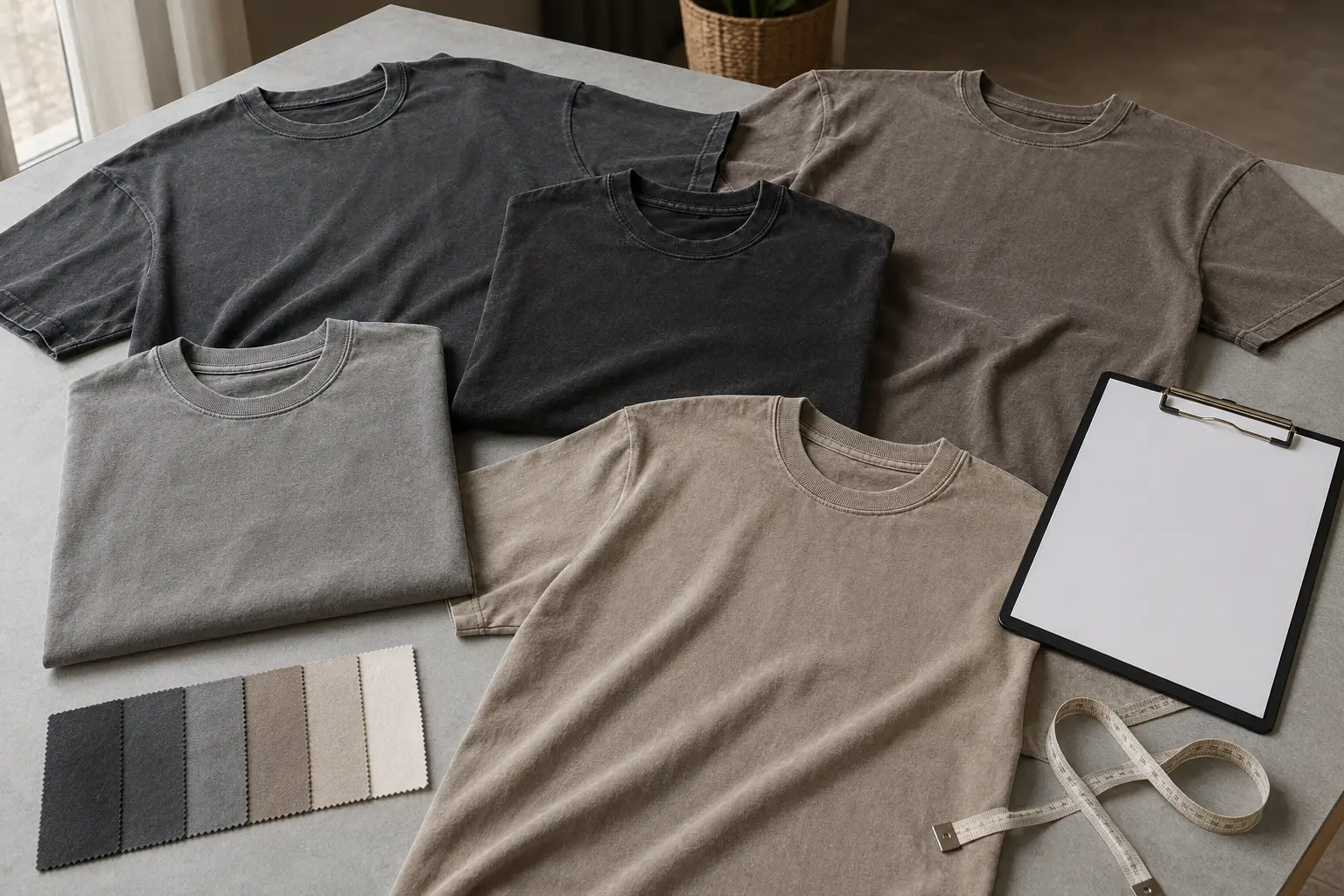
Salt wash t-shirt manufacturer means a factory that garment-washes finished cotton tees with salt, softeners and mild abrasion to create an uneven, sea-faded look. Typical programs use 180-280 GSM cotton jersey, 7-14 days for wash samples and 25-40 days for bulk after approval. MOQ depends on style and fabric.
Salt wash t-shirt manufacturer means a factory that garment-washes finished cotton tees with salt, softeners and mild abrasion to create an uneven, sea-faded look. Typical programs use 180-280 GSM cotton jersey, 7-14 days for wash samples and 25-40 days for bulk after approval. MOQ depends on style and fabric.
Salt wash is one of the most requested finishes for surf, resort and relaxed streetwear tees because it gives a soft, faded colour that looks naturally worn rather than heavily processed. The effect is gentler than acid wash and more irregular than a standard enzyme wash, with cloudy light patches, softened seams and a slightly chalky surface. Getting it right depends on the base fabric, the dye type and the wash recipe, and the same name can mean different processes at different factories. A salt wash t-shirt manufacturer that explains its method, shows reference panels and controls shrinkage will help you avoid surprises between the sample and the bulk delivery.
What is a salt wash t-shirt manufacturer?
A salt wash t-shirt manufacturer is a garment factory that sews cotton tees and then washes the finished pieces in a bath that uses salt, softeners and gentle mechanical action, sometimes with a light oxidising step, to fade colour unevenly. The result looks like a tee worn for summers at the beach. Most salt wash tees use 180-280 GSM cotton jersey, and the wash adds 1-3 days to each production lot.
How is a salt wash tee made?
The tee is cut and sewn first, usually from reactive-dyed or garment-dyed cotton jersey. Finished pieces go into an industrial washer with water, salt and a wash agent, sometimes with pumice or a mild oxidiser to lift colour in random areas. Tumbling gives fading on raised areas such as seams, hems and the neckline. After the main bath the tees are neutralised, rinsed, softened and tumble dried, which relaxes the fabric and pre-shrinks the garment. Some factories build the salt look with a pigment dye base, which fades faster and gives a more chalky result. Ask your supplier which base dye and which steps they use, because this decides how strong the fading will be and how stable the colour stays after home washing.
Planning a sea-faded tee range? Weavnora develops washed heavyweight tees and can match a salt wash reference against other wash routes on your chosen fabric and colours. See our vintage washed t-shirts page for the base styles and fabrics we work with, then request a quote with your style, fabric and quantities. MOQ depends on style and fabric, so we confirm it in your quote.
Salt wash vs enzyme wash vs acid wash: which option fits?
| Selection criteria | Salt wash | Enzyme wash | Acid wash |
|---|---|---|---|
| Visual effect | Cloudy, sea-faded patches | Even softening, light fade | Strong marbled contrast |
| Hand feel | Very soft, slightly dry | Smooth and soft | Soft but drier |
| Colour change | Medium | Low to medium | High |
| Fabric stress | Low to medium | Low | Medium to high |
| Shade consistency | Moderate variation | Good | Higher variation |
| Best for | Surf, resort, relaxed basics | Clean premium basics | Rock, grunge, statement tees |
The trade-offs are look against predictability. Salt wash gives a natural worn feel that suits summer and coastal collections, but it accepts more piece-to-piece variation than an enzyme wash. Enzyme wash is the safest choice if you need repeatable colour across many reorders, while acid wash gives the boldest contrast but stresses the fabric more. See the stone wash t-shirt manufacturer guide for a heavier abrasion option and the snow wash t-shirt manufacturer guide for a speckled look.
Which fabrics and colours work best?
Ring-spun cotton jersey between 180 and 280 GSM gives the most natural fade. Lighter fabric fades faster but can look thin and twist after washing, while very heavy cotton above 300 GSM needs longer cycles to show the effect. Mid-tone and deep colours such as navy, faded black, washed olive, rust, dusty blue and sage show the salt pattern best. Pale colours barely change, and very bright colours may shift in hue rather than simply fade. Plan a small colour story of three to five shades for a first program, and approve each colour separately, because each dye reacts to the wash in its own way.
How do you control shrinkage and fit?
Washing relaxes the knit and shortens the garment, so patterns must be cut larger before washing. Typical body length shrinkage on washed cotton tees is in the range of 3-7%, depending on fabric, wash time and drying. A good factory measures a washed sample, adjusts the pattern, and then confirms a second washed sample before bulk. Ask for a size chart taken after washing and agree tolerances for body length, chest width and sleeve length. Neck ribs can also distort, so check neckline recovery. Our washed t-shirt shrinkage and size tolerance guide explains how to set these numbers.
How should prints and labels be planned?
Decide early whether the print goes on before or after washing. Printing before the wash lets the graphic fade with the garment for a matched vintage look, which works best with water-based or discharge inks. Printing after the wash keeps a sharp, bright graphic on a faded tee. Woven neck labels and care labels go through the wash too, so choose wash-resistant label materials or use printed neck labels. Embroidery survives salt wash well, though thread colours may soften slightly.
How do you sample and approve a salt wash tee?
Send a physical reference or clear photos taken in daylight, and state how strong the fade should be. Ask for two or three wash levels on the same colour, such as light, medium and heavy, and choose one. Approve a sealed sample for each colour, and accept that every salt wash piece will vary slightly, since that variation is part of the look. Wash the approved sample three to five times at home to confirm colour stability, softness and size. Agree a shade band with the factory, a small set of reference pieces showing the acceptable range, so bulk inspection has a clear standard.
What should be checked in bulk production?
Inspect pieces from different wash loads for shade range, patchiness, holes, seam damage, neck distortion and odour from wash chemicals. Measure a sample of pieces in each size against the post-wash size chart, and check that softener does not leave stains or a greasy feel. The custom t-shirt manufacturing guide shows where washing fits into the full development and bulk timeline, and the vintage wash t-shirt cost per piece page explains how wash steps add to unit price.
Salt wash t-shirt manufacturer: typical specs and key numbers
| Spec | Typical estimate range |
|---|---|
| Cotton jersey weight | 180-280 GSM |
| Body length shrinkage after wash | 3-7% |
| Wash levels sampled per colour | 2-3 levels |
| Wash sample time | 7-14 days |
| Home wash test before approval | 3-5 washes |
| Extra wash time per lot | 1-3 days |
| Bulk production after approval | 25-40 days |
| MOQ (pcs per style and colour) | Depends on style and fabric; confirmed in your quote |
These are typical industry estimate ranges for planning, not quotes; confirm actual figures with your supplier for your fabric, quantity and destination.
Key takeaways
- A salt wash t-shirt manufacturer fades finished cotton tees with salt, softeners and gentle abrasion for a sea-worn look.
- Mid-tone and deep colours on 180-280 GSM ring-spun jersey show the effect best.
- Salt wash looks more natural than enzyme wash but varies more from piece to piece.
- Cut patterns larger and approve a post-wash size chart to control shrinkage.
- Approve a sealed sample and a shade band for each colour before bulk.
Request a salt wash t-shirt quote
Ready to test your salt wash colours? Send your tech pack or reference images, fabric preference, colours and quantities through our quote request form. MOQ depends on style and fabric, so we confirm it in your quote together with sampling time, approval steps and an itemised price.
Buyer questions
Frequently asked questions
Is salt wash the same as acid wash?
No, salt wash gives a softer, cloudy fade while acid wash creates stronger marbled contrast.
Can heavyweight tees be salt washed?
Yes, but tees above 300 GSM need longer cycles to show the fade.
Will every salt wash tee look identical?
No, small variation between pieces is normal and is controlled with a shade band.
Can I print before the salt wash?
Yes, printing before washing gives a matched vintage fade on the graphic.
What is the MOQ for salt wash tees?
MOQ depends on style and fabric, so we confirm it in your quote.
Start a sourcing conversation
Share quantity, target GSM, destination and sample requirements.
Start your RFQ →Email files to postmaster@weavnora.com.