blog · B2B PROCUREMENT
Vintage Wash T-Shirt Cost per Piece: What You Pay For
By Weavnora · Updated
Direct answer
What buyers need to know
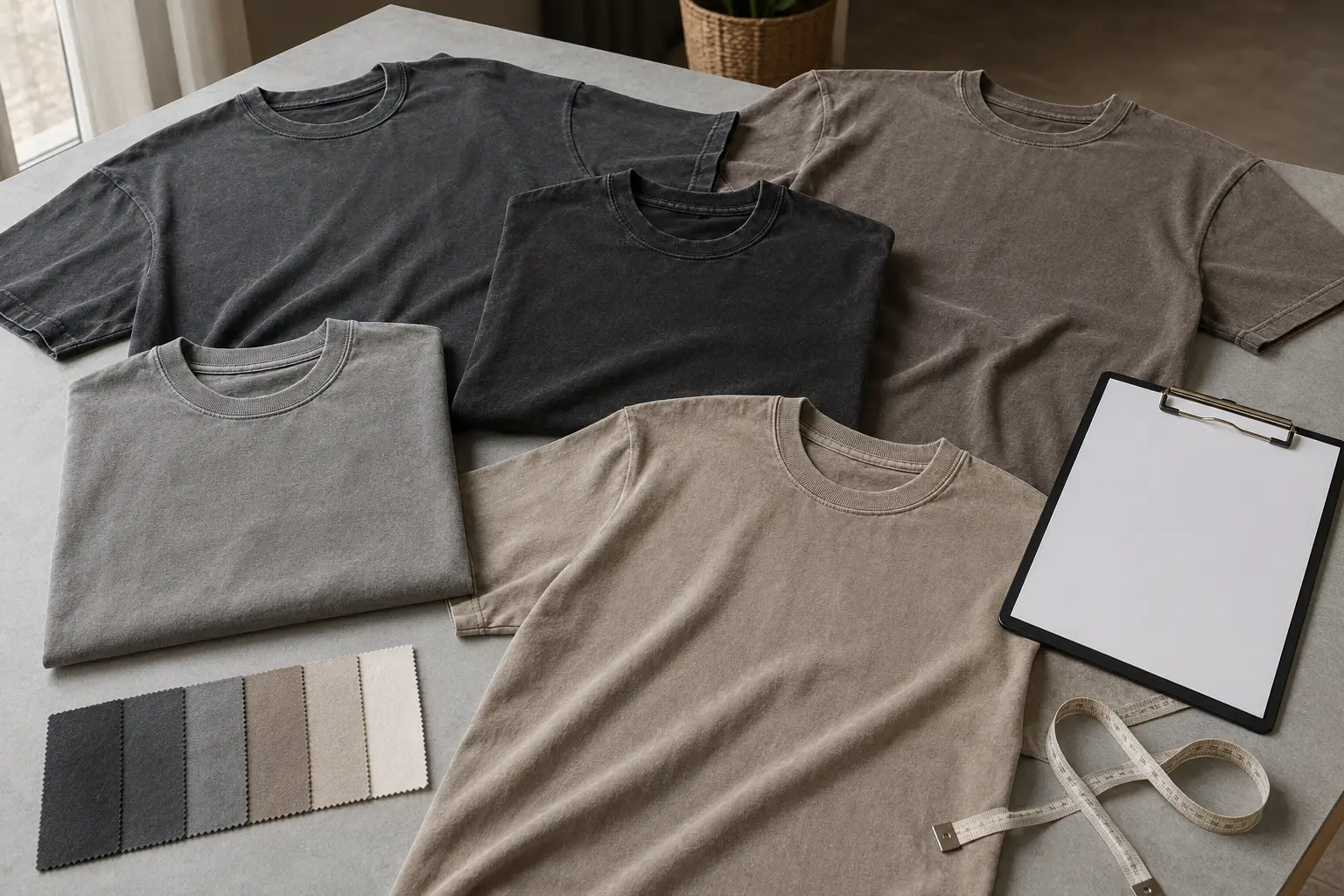
Vintage wash t-shirt cost per piece is the plain tee price plus a garment wash or dye line that typically adds 10–30% depending on the recipe, with 3–7% extra fabric for shrinkage and a higher reject rate. Sampling with wash takes about 12–20 days, and MOQ depends on style and fabric.
Vintage wash t-shirt cost per piece is the plain tee price plus a garment wash or dye line that typically adds 10–30% depending on the recipe, with 3–7% extra fabric for shrinkage and a higher reject rate. Sampling with wash takes about 12–20 days, and MOQ depends on style and fabric.
Two tees can look almost identical on a product page, yet one costs noticeably more to make. The difference is usually in the wash. A vintage wash is a separate production step with its own costs and risks, and understanding it helps you set retail prices, choose recipes and compare factories fairly. This analysis breaks down where the money goes.
What is vintage wash t-shirt cost per piece?
Vintage wash t-shirt cost per piece is the factory price of one finished washed tee: the base garment (fabric, sewing, trims) plus the garment wash or dye process, the extra fabric needed for wash shrinkage, a higher reject allowance, any decoration, packing and margin. The wash line typically adds about 10–30% to a plain 200–300 GSM tee, depending on the recipe and how many colours are run.
Driver 1: The base tee
Everything starts with the plain garment. Heavier fabric, combed or ring-spun yarn, a thick neck rib and boxy or oversized fits all raise the base cost. Washing a cheap thin tee rarely looks good, so most vintage programs start from a 220–260 GSM cotton jersey. Our heavyweight T-shirt manufacturing cost breakdown explains the base tee lines in detail.
Driver 2: The wash recipe
Wash types differ in time, chemistry and handling:
- Enzyme wash: softens and lightly fades; shortest and usually lowest-cost.
- Pigment dye: garment is dyed with pigment and washed back; more steps.
- Mineral or stone wash: marbled, uneven fade; extra time and sorting.
- Acid wash: high-contrast oxidised effect; stronger chemistry and more variation.
- Combined recipes: for example pigment dye plus enzyme plus spot fading; each step adds cost.
For the visual difference between the two most-requested washes, see acid wash vs enzyme wash on heavyweight tees.
Driver 3: Shrinkage and fabric loss
Washing shrinks cotton jersey, typically 3–7%. The factory cuts the pattern larger to compensate, which means more fabric per tee. That extra fabric is a real cost line that does not appear on a plain tee quote. Garment-dyed tees made from PFD (prepared-for-dye) fabric also need a different fabric purchase than piece-dyed stock colours.
Pricing a washed tee program? Weavnora quotes vintage-washed tees with the base tee, wash, decoration and packing shown as separate lines. See our vintage-washed T-shirts page and request a quote with your reference.
Driver 4: Rejects and sorting
Garment washing creates variation in shade, size and hand feel. Some garments fall outside the agreed range and must be re-washed, re-sorted or rejected. Factories build a reject allowance into the price, and the tighter your tolerance, the higher it is. A realistic shade range approved with limit samples keeps this cost down.
Driver 5: Decoration and its order
Printing before the wash lets the graphic age with the shirt, but some prints fail in the wash, which adds risk and rejects. Printing after the wash is safer but needs a second handling step after drying. Each print location is a separate line; see screen print vs DTG cost per shirt for how decoration cost scales.
Enzyme wash vs pigment dye tees: which option fits?
These two are the most common starting points for a vintage tee. Use these selection criteria.
| Selection criteria | Enzyme-washed stock colour | Pigment-dyed garment |
|---|---|---|
| Cost addition | Lower, about 10–15% | Higher, about 15–30% |
| Look | Soft, subtle fade | Chalky, vintage, darker seams |
| Colour palette | Fabric stock colours | Very wide |
| Shade consistency | Higher | Lower |
| Shrinkage | 3–5% | 4–7% |
| Best for | Core basics with a soft hand | Seasonal vintage drops |
The trade-offs are cost and consistency versus character. Enzyme-washed stock colours are cheaper and steadier, while pigment dye delivers a stronger vintage look and wider palette at a higher cost and with more variation. The percentages are typical industry estimate ranges; your quote depends on the recipe and order.
Driver 6: Colours, batches and freight
Each colour and recipe is a separate wash batch. Splitting an order across many colours means more small batches, more set-up and more sorting, which raises the cost per piece. Freight is the same as for plain tees by weight, but washed tees are sometimes packed with extra care to protect the hand feel. Sea freight keeps the landed cost per piece lower. For comparing garment dye with fabric dye at the base level, read our garment-dyed heavyweight T-shirt guide.
How do you lower vintage wash costs without losing the look?
Choose one recipe and two or three strong colours per drop, start from a stock fabric colour when possible, keep decoration to one location, and accept a realistic shade range. Ask the factory which recipes it runs most often; a recipe already in regular use is usually more efficient than a new one. Combine styles that share the same fabric and wash into one batch. For pricing guides across products, visit our apparel manufacturing cost and pricing hub.
How should you compare washed tee quotes?
Send each factory the same base spec, wash reference photo, colours, decoration and packing. Ask for an itemised quote showing base tee, wash, decoration and packing separately, plus the reject policy and the shade tolerance included in the price. Compare the number of wash trial rounds and the sample cost. A lower quote that excludes wash trials or uses a lighter base fabric is not a like-for-like comparison.
What should you budget for development?
Beyond the bulk price per piece, budget for wash development: lab trials, washed samples, a pre-production wash test on bulk fabric, and courier costs. These are one-time costs per recipe and colour, so they weigh more on small first runs and less on reorders. Ask the factory to list them separately so you can see how they will be amortised across future orders.
Where should you not cut costs?
Do not save on the base fabric. A washed tee made from a thin, open-end jersey often twists, loses its neck shape and looks tired rather than vintage after a few home washes, which leads to returns. Also avoid skipping the pre-production wash test on bulk fabric: a recipe that worked on a sample can behave differently on a new fabric lot, and finding that out after the full wash is far more expensive than one extra test.
Vintage wash t-shirt cost per piece: typical specs and key numbers
| Spec | Typical estimate range |
|---|---|
| Base fabric weight | 200–300 GSM |
| Wash or dye line (share of price) | 10–30% |
| Extra fabric for shrinkage | 3–7% |
| Wash development time | 7–14 days |
| Sample lead time (incl. wash) | 12–20 days |
| Bulk production after approval | 30–45 days |
| MOQ (pcs per wash colour) | Depends on style, fabric and wash; confirmed in your quote |
These are typical industry estimate ranges, not quotes; confirm actual figures with your supplier for your fabric, quantity and destination.
Key takeaways
- The wash line typically adds about 10–30% to a plain tee, depending on the recipe.
- Shrinkage of 3–7% means more fabric per piece than a plain tee.
- Rejects and sorting are real costs; a realistic shade range reduces them.
- Fewer colours and one recipe per drop lower the cost per piece.
- Compare itemised quotes on the same base spec and wash reference.
Request a vintage wash tee quote
Share your reference photos, base fabric, wash type, colours and print plan through our quote request form. We reply with an itemised price, wash development plan, sampling time and MOQ, which depends on style, fabric and wash.
Buyer questions
Frequently asked questions
How much does a vintage wash add to a t-shirt price?
It depends on the wash. Light enzyme washes add the least, while pigment dye, mineral wash, acid wash and multi-step recipes add more. A typical range is about 10–30% on top of the plain tee, but always ask for an itemised quote.
Why do washed t-shirts cost more than plain tees?
Washing adds machine time, chemicals, water, drying and handling. It also shrinks the garment, so more fabric is needed, and it increases rejects because shade and size vary more.
Is acid wash more expensive than enzyme wash?
Usually yes. Acid and mineral washes involve extra steps, stronger chemistry and more variation to sort, while a basic enzyme wash is a shorter, gentler process.
What is the MOQ for vintage wash t-shirts?
MOQ depends on style, fabric, wash recipe and colour count, because each wash batch needs enough garments to run efficiently. Request a quote with your style and quantities for an exact answer.
How can I lower the cost of vintage wash tees?
Use fewer colours and one wash recipe, choose a stock base colour, keep decoration to one location, accept a realistic shade range and plan sea freight. Grouping styles into the same wash batch also helps.
Start a sourcing conversation
Share quantity, target GSM, destination and sample requirements.
Start your RFQ →Email files to postmaster@weavnora.com.