oem-odm · B2B PROCUREMENT
Stone Wash T-Shirt Manufacturer: Pumice, Softness and Specs
By Weavnora · Updated
Direct answer
What buyers need to know
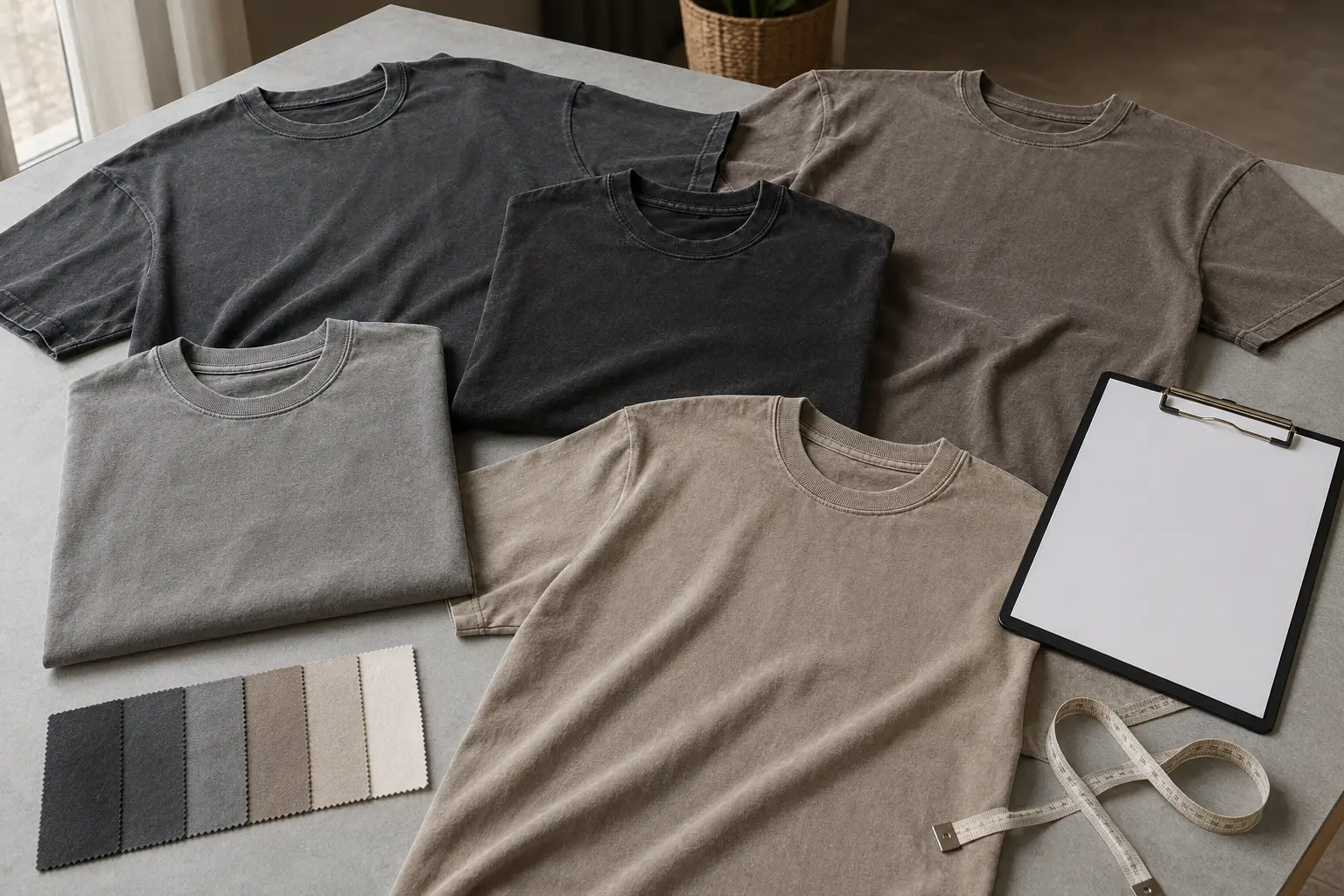
Stone wash t-shirt manufacturer programs tumble 220-300 GSM cotton tees with pumice stones for 30-90 minutes to soften the hand and add a gentle, even fade. Expect 1-3 wash trials, 4-6% shrinkage allowance, 10-16 days for a washed sample and 30-45 days for bulk, with MOQ depending on style and fabric.
Stone wash t-shirt manufacturer programs tumble 220-300 GSM cotton tees with pumice stones for 30-90 minutes to soften the hand and add a gentle, even fade. Expect 1-3 wash trials, 4-6% shrinkage allowance, 10-16 days for a washed sample and 30-45 days for bulk, with MOQ depending on style and fabric.
A stone wash is the oldest trick for making a new tee feel like an old favourite. It does not add a dramatic pattern the way acid or snow wash does. Instead, it breaks in the fabric, rounds off the colour and gives seams and hems a subtle worn line. For brands that want a premium basic with a lived-in hand, it is often the right finish. This guide covers how a stone wash t-shirt manufacturer runs the process, how to brief softness and fade, and which quality risks to watch.
What is a stone wash t-shirt manufacturer?
A stone wash t-shirt manufacturer is a garment factory that tumbles finished, usually dyed, cotton tees with pumice or synthetic stones in an industrial washer, so mechanical abrasion softens the fabric and lightly fades the colour at seams and edges. Typical programs use 220-300 GSM cotton jersey, run cycles of about 30-90 minutes, and allow 4-6% shrinkage, with 1-3 trials to set the softness and fade level.
How does stone washing work?
The factory loads dyed tees into a large rotating washer with pumice stones, water and sometimes a small amount of enzyme or detergent. As the drum turns, the stones rub against the garments. That abrasion lifts and breaks surface fibres, which softens the hand, and it removes some dye from raised areas such as seams, hems, collar edges and print edges. After the cycle the stones are separated, the tees are rinsed to remove pumice dust, softened and tumble dried.
Pumice is natural volcanic rock, so stone size and hardness vary. Many factories now combine smaller stone loads with cellulase enzymes, or use synthetic stones, to reduce dust, wear on machines and damage to garments. The look is similar, and the result is more repeatable.
Want a softer, broken-in tee? Weavnora runs stone and enzyme washes on heavyweight cotton tees with written wash recipes and strength checks. See our vintage washed t-shirts page for the base styles and fabrics we work with, then request a quote with your style, fabric and quantities. MOQ depends on style and fabric, so we confirm it in your quote.
What variables control softness and fade?
The main levers are:
- Stone-to-garment ratio. More stones mean more abrasion and a stronger fade.
- Cycle time. Short cycles of around 30 minutes soften with little fade; longer cycles toward 90 minutes give visible edge wear.
- Stone size. Small stones reach more of the garment and give an even effect; large stones hit harder on seams.
- Water level and load size. Lower water and a full drum increase friction.
- Base dye. Pigment and sulphur dyes fade faster than reactive dyes, so the same recipe looks stronger on a pigment-dyed tee.
A reliable manufacturer writes these into a wash recipe for each colour and keeps it under change control, so a reorder months later runs the same way.
Stone wash vs enzyme wash vs garment dye only: which option fits?
Stone and enzyme washes both soften, but they get there differently. Compare them with a plain garment dye before you decide.
| Selection criteria | Stone wash | Enzyme wash | Garment dye only |
|---|---|---|---|
| Hand feel | Very soft, broken in | Soft, clean surface | Firmer, fresh |
| Visible fade | Light edge wear | Very light | None |
| Abrasion and strength risk | Medium | Low to medium | Low |
| Pilling after wash | Lower, fibres removed | Lower | Can be higher |
| Best for | Vintage basics | Premium clean basics | Core colour lines |
The trade-offs are softness and character versus fabric strength and repeatability. Stone wash gives the most broken-in feel but removes more fibre, so light jersey can weaken. Enzyme wash is gentler and cleaner. Our guide to enzyme vs stone wash abrasion grades on heavyweight tees explains how to grade the result.
Which fabric weight survives a stone wash?
Abrasion removes fibre, so fabric weight and yarn quality matter. Jersey in the 240-300 GSM range keeps body and opacity after a stone wash. Lighter tees under about 200 GSM can thin out or show holes at the collar and hem. Ring-spun cotton gives a smoother face; open-end yarn gives a drier, more vintage texture but can lose strength faster.
Ask the manufacturer to measure fabric weight after washing as well as before. A 260 GSM greige fabric might finish closer to 245-250 GSM once fibres are removed and the fabric relaxes. For the base fabric itself, see our page on 220-300 GSM cotton jersey sourcing.
Which quality checks matter for stone washed tees?
Mechanical washing adds specific risks:
- Holes and thin spots at the collar edge, shoulder seam and hem fold.
- Seam strength after abrasion, especially on lightweight jersey.
- Spirality and side seam twist, which can increase after aggressive tumbling.
- Pumice residue trapped in pockets, seams or rib collars.
- Shade variation between washer loads.
Include a bursting or seam strength test in the approval plan and check side seam twist on washed samples. Our article on side seam twist and spirality after wash explains acceptable limits and measuring methods.
How should you brief prints and labels?
Stone washing affects everything on the garment. A screen print applied before the wash will soften and crack slightly, which suits vintage graphics. Printing after the wash keeps the artwork sharp. Woven labels can fray or fade in the drum, so many brands use printed neck labels or add woven labels after washing. Our tagless neck label printing guide covers label options for washed tees.
What should a stone wash tee tech pack include?
Specify the base fabric (weight, yarn type, composition), dye method and colour standard, wash type with a target softness and fade description, reference photos or a physical reference tee, finished measurements after wash with tolerances, print method and timing, label method, and the tests you need: shrinkage, colourfastness, seam strength and pilling. For a wider view of finishing options across the tee range, see our custom t-shirt manufacturing guide.
How do you keep reorders consistent?
Stone washing changes as stones wear down. A new pumice load is sharper than one that has been used for several cycles, so the same recipe can give a stronger fade at the start of production. Good factories log stone batch age, replace stones on a schedule and run a test load at the start of each production day. For reorders, keep the original sealed sample and the wash recipe on file, and ask the factory to compare the first bulk load against that sample before washing the full order. Colour can also shift slightly between fabric lots, so approve a lab dip or a washed swatch from the new fabric lot before cutting.
Stone wash t-shirt manufacturer: typical specs and key numbers
| Spec | Typical estimate range |
|---|---|
| Base fabric weight | 220-300 GSM |
| Stone wash cycle time | 30-90 minutes |
| Wash trials before approval | 1-3 rounds |
| Shrinkage allowance | 4-6% |
| Washed sample lead time | 10-16 days |
| Bulk production after approval | 30-45 days |
| MOQ (pcs per style and colour) | Depends on style and fabric; confirmed in your quote |
These are typical industry estimate ranges for planning, not quotes; confirm actual figures with your supplier for your fabric, quantity and destination.
Key takeaways
- Stone washing uses pumice abrasion to soften tees and lightly fade edges and seams.
- Stone ratio, cycle time, stone size and load size control the result.
- Use 240-300 GSM jersey so the tee keeps body and strength after abrasion.
- Check holes, seam strength, twist and pumice residue on washed samples.
- Print before the wash for a vintage look, or after for a crisp graphic.
Request a stone wash t-shirt manufacturer quote
Ready to develop a stone wash tee? Send your tech pack or reference images, fabric preference, colours and quantities through our quote request form. MOQ depends on style and fabric, so we confirm it in your quote together with sampling time, approval steps and an itemised price.
Buyer questions
Frequently asked questions
What is a stone wash t-shirt?
It is a dyed cotton tee tumbled with pumice or synthetic stones so abrasion softens the fabric and lightly fades seams and edges. The result feels broken in rather than showing a strong pattern.
Is stone wash the same as enzyme wash?
No. Stone wash uses mechanical abrasion from stones, while enzyme wash uses cellulase enzymes to remove surface fibre. Many factories combine both to get softness with less dust and less fabric damage.
Does stone washing weaken t-shirts?
It removes some fibre, so very light jersey can thin out or develop holes. Heavier 240-300 GSM cotton jersey and controlled cycle times keep strength within normal limits.
Can stone wash tees be printed?
Yes. Printing before the wash gives a softened, slightly cracked vintage print, while printing after the wash keeps the graphic sharp. Approve a sample with the final print order.
What is the MOQ for stone wash t-shirts?
MOQ depends on style, fabric and the number of colours, because each colour is washed as a separate batch. Share your design and quantities through a quote request for a confirmed figure.
Start a sourcing conversation
Share quantity, target GSM, destination and sample requirements.
Start your RFQ →Email files to postmaster@weavnora.com.