oem-odm · B2B PROCUREMENT
Pigment Dyed Sweatsuit Manufacturer: Faded Set Guide
By Weavnora · Updated
Direct answer
What buyers need to know
Pigment dyed sweatsuit manufacturer means a factory that garment dyes finished hoodie and sweatpants sets with pigment colours, then washes them for a soft, faded, lived-in look. Typical sets use 280-400 GSM cotton fleece or terry, allow 4-7% dye shrinkage, sample in 10-15 days and run bulk in 35-50 days. MOQ depends on style and fabric.
Pigment dyed sweatsuit manufacturer means a factory that garment dyes finished hoodie and sweatpants sets with pigment colours, then washes them for a soft, faded, lived-in look. Typical sets use 280-400 GSM cotton fleece or terry, allow 4-7% dye shrinkage, sample in 10-15 days and run bulk in 35-50 days. MOQ depends on style and fabric.
Pigment dyed sweatsuits have a look that is hard to fake: soft, slightly chalky colours that fade at seams, pocket edges and cuffs, as if the set had been worn and washed for years. That look comes from the dye method itself. Unlike reactive dye, which bonds chemically to cotton and gives clean, solid colour, pigment colour sits on the fibre surface and partly washes away. On a matching set, that natural variation must be controlled so the hoodie and pants still look like they belong together. This guide explains how pigment dyed sets are made and how to brief a manufacturer.
What is a pigment dyed sweatsuit manufacturer?
A pigment dyed sweatsuit manufacturer is a factory that sews hoodie and sweatpants sets in undyed cotton fabric and then dyes the finished garments with pigment colours held on the fibres by a binder. Washing afterwards removes part of the colour, especially on seams and edges, which creates the faded, chalky look. Sets typically use 280-400 GSM cotton fleece and allow 4-7% shrinkage.
How does pigment dyeing work on finished garments?
The factory sews hoodies and sweatpants from prepared-for-dye fabric, which is cotton that has been scoured but not coloured. Garments are loaded into a dye machine with pigment, a binder and auxiliaries. The binder fixes pigment to the fibres, mainly on the surface. After curing, the garments are washed, often with enzymes or stones, to remove part of the colour and soften the fabric. Seams and edges lose more colour because they are thicker and rub more, which creates the typical outlined fade.
Thread choice matters. Cotton thread takes the dye with the garment; polyester thread stays its original colour, which can look like contrast stitching. Labels, drawcords and rib should also be prepared for dye or chosen in a colour that works. If you also make single hoodies, the pigment dyed hoodie manufacturer guide covers the top in more detail.
Want a faded matching set? Weavnora garment dyes heavyweight hoodies and sweatpants and can dye your set samples together, so you can approve colour and fade on both pieces before bulk. See our garment dye page for the base styles and fabrics we work with, then request a quote with your style, fabric and quantities. MOQ depends on style and fabric, so we confirm it in your quote.
Pigment dyed set vs reactive garment dyed set vs piece dyed set: which option fits?
| Selection criteria | Pigment dyed set | Reactive garment dyed set | Piece dyed fabric set |
|---|---|---|---|
| Colour look | Chalky, faded, uneven | Rich, saturated, slightly uneven | Solid, uniform |
| Fade over time | Noticeable, by design | Low to medium | Low |
| Seam effect | Faded outlines | Slight tonal difference | None |
| Rub fastness | Lower | Good | Good |
| Shade consistency between pieces | Medium | Medium to good | Best |
| Stock flexibility | Dye blanks to demand | Dye blanks to demand | Colours fixed at fabric stage |
The trade-offs are character against consistency. Pigment dye gives the most vintage character and lets you dye undyed stock to demand, but shades vary more and colour can transfer when new. Reactive garment dye gives deep colour with good fastness but less fade. Piece-dyed sets match best but look newer. Our garment dyed sweatsuit manufacturer guide explains the reactive route.
How do you match the hoodie and the sweatpants?
Dye hoodies and sweatpants in the same machine load whenever possible. Use the same fabric lot for both, because differences in fabric preparation change how pigment takes. Garment shape affects dye pick-up, so check the pant leg and hoodie body side by side after washing, not just individually. Agree a shade band with light, target and dark limits for both garments, and keep a sealed set at the factory. Our how to color match hoodie and sweatpants sets guide explains shade bands in more detail.
Which fabrics and trims work best?
Cotton fleece and french terry are ideal because cotton holds the binder well. Blends with polyester dye unevenly. Rib cuffs and waistbands should be cotton-rich and from the same preparation lot so they fade with the body. Elastic inside the waistband must survive the dye and wash process. Sew-in labels should be tested; printed labels can fade, which some brands like for the vintage look.
How do you control shrinkage and fit?
Garment dyeing involves hot water and tumbling, so finished garments shrink. Patterns are cut larger by the measured dye shrinkage, and all fit approvals happen on dyed samples. Sweatpant inseams and hoodie body lengths are the most sensitive points. Ask for a measurement chart of the dyed pre-production set in every size. The sweatpants tech pack guide shows how to record washed measurements.
What should be tested before bulk?
Ask for rub fastness tests, both dry and wet, because pigment colour can transfer to light furniture or other garments when new. Check colour change after several home washes so you can describe fading honestly in care instructions. Inspect seams for even fade and confirm there are no binder spots or streaks. The sweatpants quality control checklist covers general checks, and the custom bottoms and sets manufacturing guide explains the full process.
How should care labels and product copy describe the set?
Tell customers that pigment dyed garments are designed to fade and that each set varies slightly. Recommend washing inside out in cold water with similar colours for the first washes. Clear communication reduces complaints about colour transfer or shade differences and turns the natural variation into part of the product story.
Which colours work best in pigment dye?
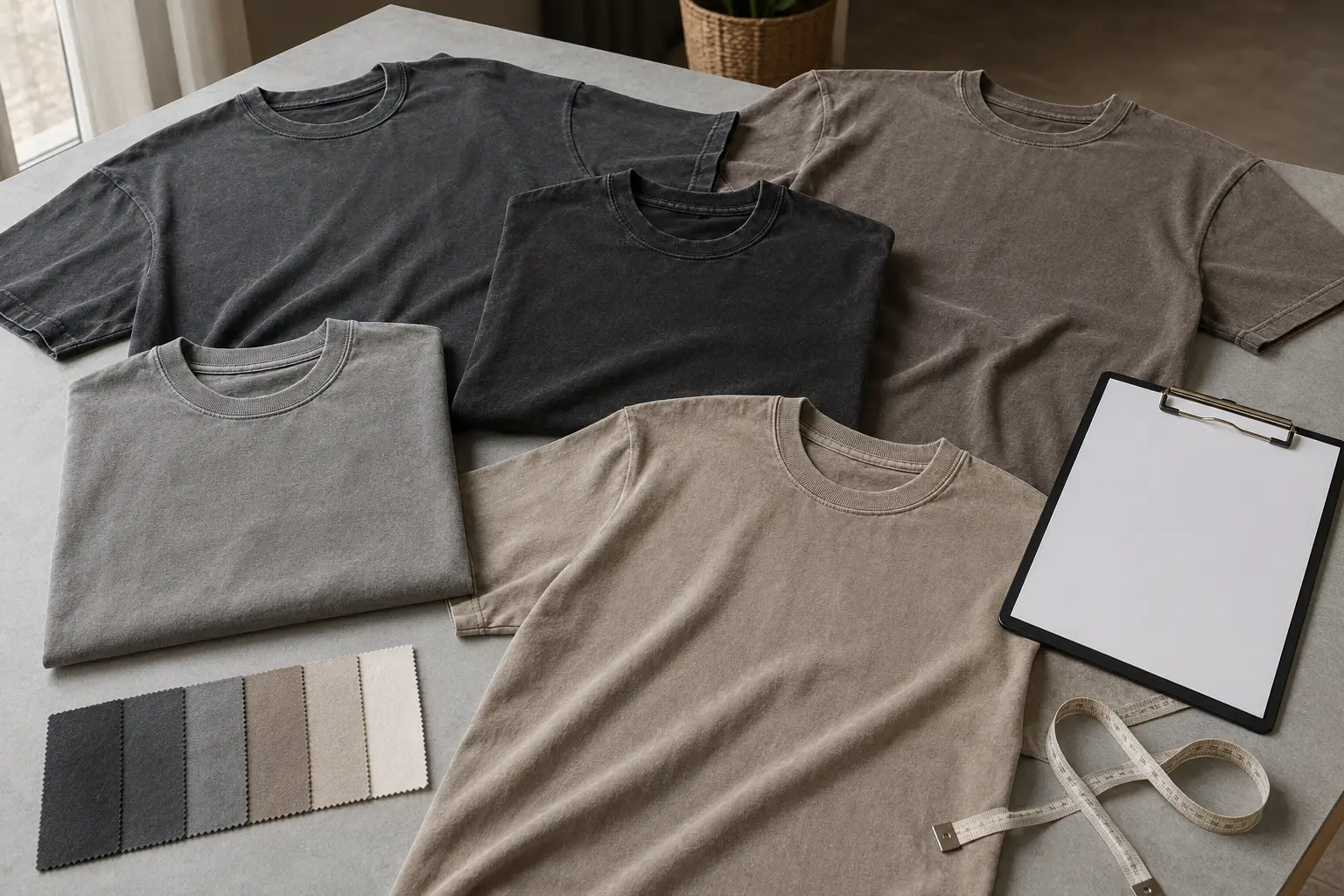
Pigment dye suits muted, earthy and washed-out shades: faded black, charcoal, sage, sand, dusty blue, clay and washed brown. These colours look natural when they fade and hide small shade differences between pieces. Very bright or saturated colours are harder, because fading makes them look tired rather than vintage, and small differences between the hoodie and pants stand out more. Black is popular but fades to a charcoal tone, which customers should expect. When you build a colour range, sample each shade on both garments and judge them after the full wash, under daylight and shop lighting. Limiting a first collection to three or four proven shades keeps matching simpler and helps you learn how each colour behaves over reorders. For more on dyed fleece, see the pigment dyed sweatpants manufacturer guide.
Pigment dyed sweatsuit manufacturer: typical specs and key numbers
| Spec | Typical estimate range |
|---|---|
| Cotton fleece or terry weight | 280-400 GSM |
| Garment dye shrinkage allowance | 4-7% |
| Dye and wash cycle time | 60-150 minutes |
| Dyed sample time | 10-15 days |
| Bulk production after approval | 35-50 days |
| Inseam tolerance after dyeing | 1-2 cm |
| Shade band references | 3 levels: light, target, dark |
| MOQ (pcs per style and colour) | Depends on style and fabric; confirmed in your quote |
These are typical industry estimate ranges for planning, not quotes; confirm actual figures with your supplier for your fabric, quantity and destination.
Key takeaways
- A pigment dyed sweatsuit manufacturer dyes finished sets for a faded, chalky look.
- Dye hoodies and pants together from the same fabric lot to keep sets matched.
- Use cotton thread, cotton-rich rib and dye-ready trims so everything fades together.
- Cut patterns for dye shrinkage and approve fit on dyed samples.
- Test rub fastness and explain natural fade and variation to customers.
Request a pigment dyed sweatsuit quote
Ready to sample a faded set? Send your tech pack or reference images, fabric preference, colours and quantities through our quote request form. MOQ depends on style and fabric, so we confirm it in your quote together with sampling time, approval steps and an itemised price.
Buyer questions
Frequently asked questions
What does pigment dyed mean?
The colour is fixed to the fibre surface with a binder, so it fades gradually in washing.
Will a pigment dyed sweatsuit fade?
Yes, fading is part of the design, especially on seams and edges.
Can the hoodie and pants match exactly?
Not exactly, but dyeing them together from one fabric lot keeps them within a tight shade band.
Can pigment dyed sets transfer colour?
They can when new, so ask for rub tests and give cold-wash care advice.
What is the MOQ for pigment dyed sweatsuits?
MOQ depends on style and fabric, so we confirm it in your quote.
Start a sourcing conversation
Share quantity, target GSM, destination and sample requirements.
Start your RFQ →Email files to postmaster@weavnora.com.