oem-odm · B2B PROCUREMENT
Oil Wash T-Shirt Manufacturer: Workwear Look Tee Guide
By Weavnora · Updated
Direct answer
What buyers need to know
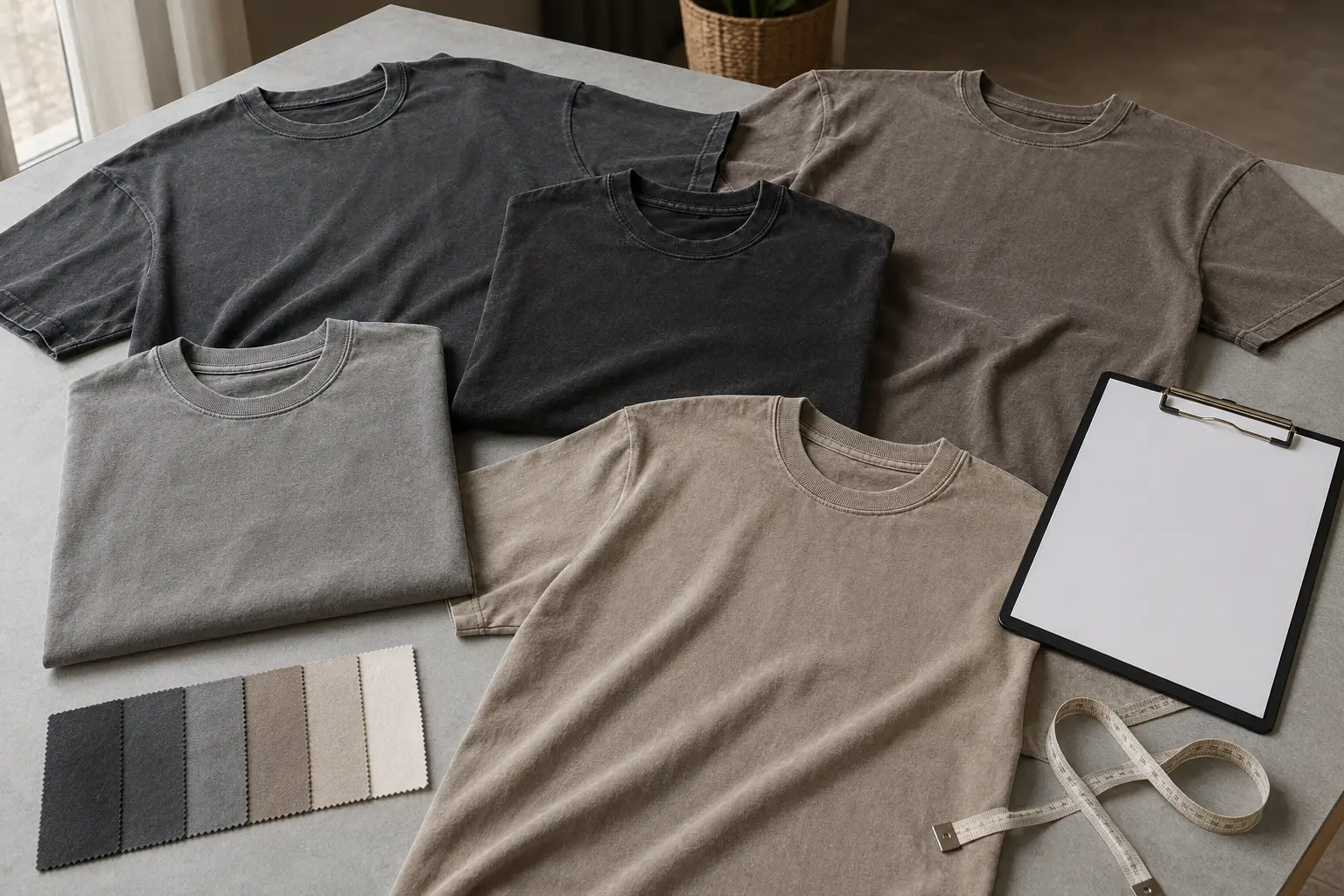
Oil wash t-shirt manufacturer means a factory that gives tees a worn, slightly waxy, workwear look through controlled garment washing, softening and tinting. Typical programs use 220-300 GSM cotton jersey, 7-14 days for wash samples and 30-45 days for bulk after approval. MOQ depends on style and fabric.
Oil wash t-shirt manufacturer means a factory that gives tees a worn, slightly waxy, workwear look through controlled garment washing, softening and tinting. Typical programs use 220-300 GSM cotton jersey, 7-14 days for wash samples and 30-45 days for bulk after approval. MOQ depends on style and fabric.
Oil wash is a finish name more than a strict chemical recipe. Buyers use it to describe tees that look as if they came from a workshop: muted colour, mottled surface, soft handle and a slightly waxy feel. Because there is no single standard, two factories can interpret the same name very differently. A clear brief and a sealed sample matter more here than in many other washes. An oil wash t-shirt manufacturer should ask you what you want to see and feel, then propose a recipe and test it on your fabric.
What is an oil wash t-shirt manufacturer?
An oil wash t-shirt manufacturer is a garment factory that finishes tees with a worn-in, slightly waxy and uneven surface that resembles old workwear, using controlled garment washing, softener and sometimes tint. The result is a muted, mottled tone with a soft, dry-to-silky hand. Most oil wash tees use 220-300 GSM cotton jersey and take 30-45 days for bulk after the wash standard is approved.
What does an oil wash finish actually involve?
Most oil-look finishes combine several steps: an enzyme or stone wash to soften and fade, a mild bleaching or tinting step to mute the colour, and a finishing softener that leaves a smooth, slightly slick hand. Some factories add a light wax or silicone-based softener for the waxy feel. The garment is then tumble dried to set the surface. There is no petroleum oil in the process; the name refers to the look and handle. Because softeners and silicones can affect printing and odour, ask which products are used. Our softener silicone residue handfeel guide explains how to check for residue.
Want a worn workwear look on your tees? Weavnora washes heavyweight tees in vintage, enzyme and stone styles and can develop an oil-washed look on your chosen fabric before bulk. See our vintage washed t-shirts page for the base styles and fabrics we work with, then request a quote with your style, fabric and quantities. MOQ depends on style and fabric, so we confirm it in your quote.
Oil wash vs vintage wash vs stone wash: which option fits?
| Selection criteria | Oil wash | Vintage wash | Stone wash |
|---|---|---|---|
| Visual effect | Muted, mottled, waxy surface | Faded, soft, even to light uneven | Strong fade with contrast |
| Hand feel | Smooth, slightly waxy | Soft, dry | Soft, brushed |
| Fabric stress | Medium | Medium | Higher |
| Shade control | Medium | Good | Medium |
| Print compatibility | Test first, softener can affect inks | Good | Good |
| Best for | Workwear and utility tees | Classic vintage tees | Denim-like faded tees |
The trade-offs are look against predictability. Oil wash gives a distinctive, premium workwear character, but softeners can interfere with prints and the look is harder to describe, so approval samples matter. Vintage wash is the most standard and repeatable. Stone wash gives stronger contrast but stresses the fabric more. Compare our stone wash t-shirt manufacturer and enzyme wash t-shirt manufacturer pages for neighbouring finishes.
How should you write the oil wash brief?
Describe the look in plain words: muted, slightly mottled, soft and a little waxy, with no strong white fade lines. Provide reference photos or a physical garment. Name the base colour and how much it should shift, for example from black to a washed charcoal. State whether you accept uneven tone on one piece and how much variation is allowed between pieces. Ask the factory to record wash time, temperature, chemical type and drying settings so the recipe can be repeated.
How does oil wash affect printing and decoration?
Waxy or silicone softeners can reduce ink adhesion. Print before washing if the design should age with the garment, or print after washing and test adhesion if you want a crisp graphic on a finished surface. Water-based and discharge inks usually suit this look. Embroidery works well, but check thread colour after wash, since the fabric may shift. Always test a print on a washed swatch with a stretch and a crock test before approving.
Which fabrics and colours work best?
Mid and heavy cotton jersey in black, charcoal, olive, navy and brown shows the effect most clearly. Light colours show less mottling. Combed cotton gives a smoother, more refined finish, while open-end cotton gives a rougher texture that looks authentically worn. Fabric weight of 240-300 GSM holds the finish well, while light jersey can become thin after repeated processing. The vintage washed heavyweight t-shirt purchase specification gives a checklist for washed tee specs.
How do you sample and check bulk?
Sampling is where an oil wash look is really decided, so allow at least two rounds and keep every rejected sample for reference. Approve a washed sample under daylight, then wash it several times to see how the surface changes. Measure the garment before and after wash and compare with the tech pack. In bulk, inspect pieces for even finish, spotting, odour and hand feel against the sealed sample. Pull a few cartons from different batches, and keep the measurement report together with the tech pack so the next reorder starts from the same numbers. For wider product planning, see the custom t-shirt manufacturing guide.
What risks should oil wash buyers watch for?
The main risks are inconsistent look, softener residue and odour. Because the finish depends on process details, a factory without a recorded recipe may deliver pieces that range from lightly muted to heavily mottled. Insist on a written recipe and a sealed sample, and agree on a visual range card showing the lightest and darkest acceptable pieces. Softener residue can make folded stock feel slippery and can leave a chemical smell, so ask for thorough drying and airing before packing, and check a few cartons after a week in storage. Heavy softener can also affect the ink adhesion of any later print or heat transfer, and can make labels slide. Keep a retained set of approved pieces from each lot, so a complaint months later can be checked against what actually shipped. Finally, remember that repeated washing by the end customer will change the look over time, so choose a base that ages well and say what to expect on the product page.
Oil wash t-shirt manufacturer: typical specs and key numbers
| Spec | Typical estimate range |
|---|---|
| Tee fabric weight | 220-300 GSM |
| Wash sample rounds | 1-3 rounds |
| Wash sample time | 7-14 days |
| Home wash test before approval | 3-5 washes |
| Dimension change after wash | 3-6% |
| Bulk production after approval | 30-45 days |
| Shade variation between pieces | 5-10% |
| MOQ (pcs per style and colour) | Depends on style and fabric; confirmed in your quote |
These are typical industry estimate ranges for planning, not quotes; confirm actual figures with your supplier for your fabric, quantity and destination.
Key takeaways
- An oil wash t-shirt manufacturer creates a muted, waxy workwear look with controlled wash and softener steps.
- Oil wash is a finish name, so a clear brief and sealed sample matter.
- Softeners can affect printing, so test adhesion on washed swatches.
- Dark and mid colours on 240-300 GSM jersey show the look best.
- Compare bulk pieces from several batches against the approved sample.
Request an oil wash t-shirt quote
Ready to approve your oil wash standard? Send your tech pack or reference images, fabric preference, colours and quantities through our quote request form. MOQ depends on style and fabric, so we confirm it in your quote together with sampling time, approval steps and an itemised price.
Buyer questions
Frequently asked questions
Is real oil used in an oil wash?
No, the name describes the waxy look; it uses washing, softeners and sometimes tint.
Is oil wash different from vintage wash?
Yes, it is more muted and waxy, while vintage wash is a cleaner fade.
Does oil wash affect printing?
Softeners can reduce ink adhesion, so test prints on washed fabric.
Can the oil wash look be repeated?
Yes, if the factory records the recipe and you approve a sealed sample.
What is the MOQ for oil wash tees?
MOQ depends on style and fabric, so we confirm it in your quote.
Start a sourcing conversation
Share quantity, target GSM, destination and sample requirements.
Start your RFQ →Email files to postmaster@weavnora.com.