oem-odm · B2B PROCUREMENT
Flock Print T-Shirt Manufacturer: Velvet Print Specs Guide
By Weavnora · Updated
Direct answer
What buyers need to know
Flock print t-shirt manufacturer programs bond short fibres to a 200-300 GSM cotton tee to create a raised, velvet-touch graphic. Plan 1-2 sample rounds, 7-14 days for decorated samples and 25-40 days for bulk, plus a 3-5 cycle wash test, with MOQ depending on style and fabric.
Flock print t-shirt manufacturer programs bond short fibres to a 200-300 GSM cotton tee to create a raised, velvet-touch graphic. Plan 1-2 sample rounds, 7-14 days for decorated samples and 25-40 days for bulk, plus a 3-5 cycle wash test, with MOQ depending on style and fabric.
Flock gives a graphic something most prints cannot: touch. A flocked logo feels soft and fuzzy, sits a little above the tee and catches light differently from the fabric around it. That makes flock popular for retro varsity lettering, premium logo tees and graphics that should feel expensive in the hand. But flock is a layered process with adhesive, fibre and heat, and each layer has to bond well enough to survive washing. This guide explains how a flock print t-shirt manufacturer works, what to brief and how flock compares with other raised or textured prints.
What is a flock print t-shirt manufacturer?
A flock print t-shirt manufacturer is a garment factory that decorates cotton tees with flock, a layer of very short fibres bonded to the shirt with adhesive or applied as a pre-made flock heat transfer, so the graphic feels like velvet or suede and stands slightly above the fabric. It suits logos, varsity lettering and bold shapes. Most programs use 200-300 GSM cotton jersey, 1-2 sample rounds and a 3-5 cycle wash test.
How is a flock print made?
There are two main routes, and a factory may use either depending on design and volume.
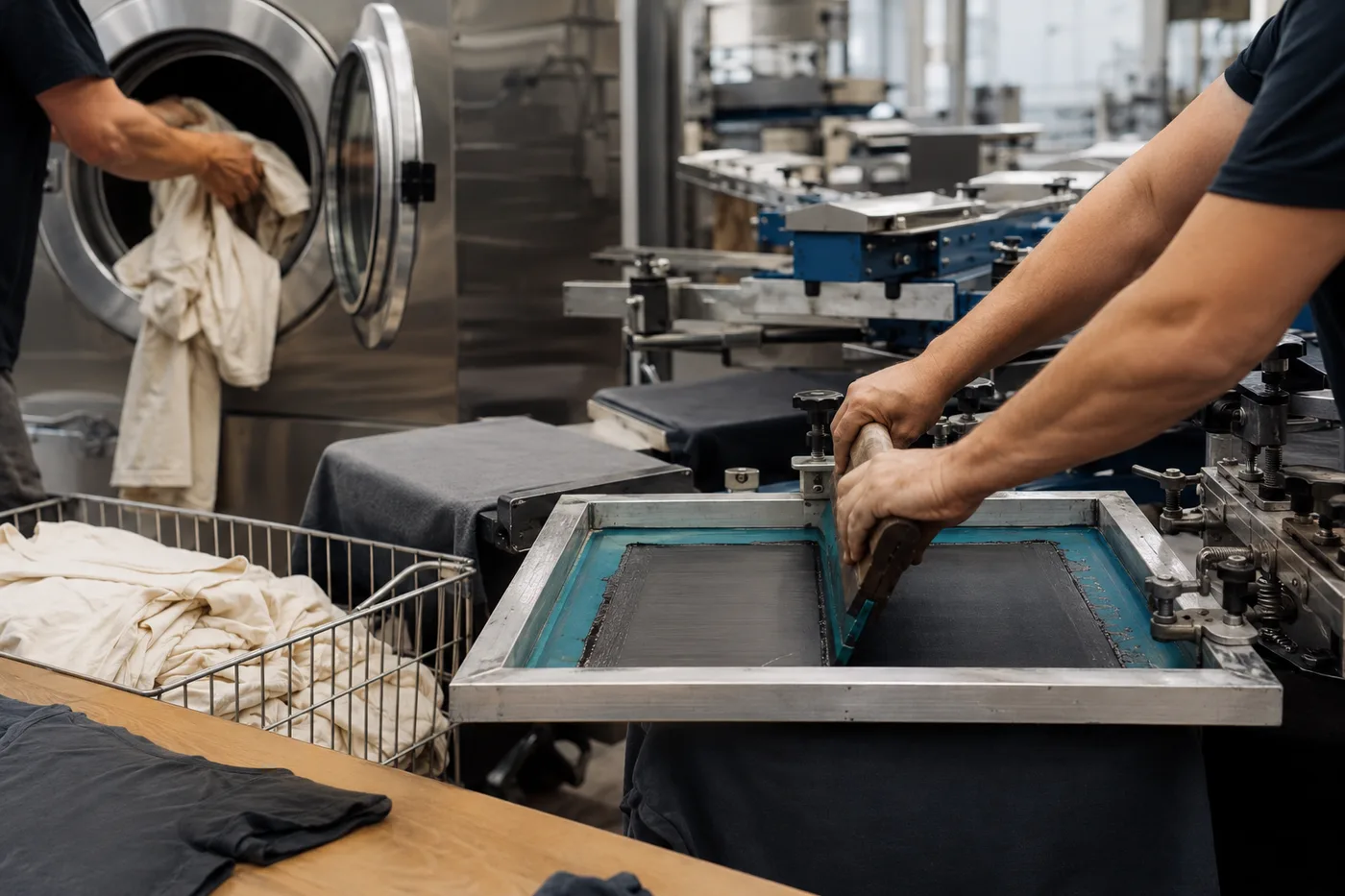
- Direct flocking. An adhesive is screen printed onto the tee in the shape of the design. Short fibres, usually nylon or viscose, are applied to the wet adhesive so they stand upright, then the print is cured and excess fibre is removed.
- Flock heat transfer. The flock graphic is produced on a carrier sheet first, cut or printed to shape, and then heat pressed onto the tee with a set temperature, pressure and time.
Direct flocking can cover large shapes and multi-part layouts, while transfers are easier to control on simple logos and allow very clean edges. In both cases, the adhesive layer is what holds the design on the shirt, so cure or press settings decide durability.
Note: flock is not listed among the standard options on our special printing page. Weavnora develops special effects on request, so feasibility, look and hand feel are confirmed on a sample for your exact design and tee.
Planning a velvet-touch logo on heavyweight tees? Weavnora develops special print effects on cotton tees and confirms the look, hand feel and wash result on a sample before bulk. See our special printing effects page for the base styles and fabrics we work with, then request a quote with your style, fabric and quantities. MOQ depends on style and fabric, so we confirm it in your quote.
Which tees and designs suit flock?
- Fabric: 100% cotton or high-cotton jersey with a smooth face gives the strongest bond. Very hairy or heavily brushed surfaces can weaken adhesion.
- Weight: 200-300 GSM tees hold the extra weight of a large flock area without puckering.
- Design: bold lettering, block logos and solid shapes. Flock cannot hold very fine lines or small counters in letters, so keep stroke widths generous.
- Size: large solid flock areas feel stiffer and trap heat. Many brands keep chest logos in the 10-25 cm range or break large areas into smaller shapes.
- Colours: flock is usually one colour per layer. Multi-colour flock is possible but each colour adds a step and alignment risk.
If the tee will be garment dyed or vintage washed, plan the order of operations. Most factories wash first and flock after, because harsh washing can loosen fibres or change their colour. See our special print options for heavyweight cotton tees for how specialty effects fit around washing.
What should you send a flock print manufacturer?
A clear brief cuts sample rounds:
- Vector artwork at full size with minimum line widths marked.
- The flock colour as a physical reference or Pantone, and the base tee colour.
- Placement measured from the high point of shoulder or centre front.
- Target hand feel and height, with a reference garment if you have one.
- Care instructions you want to put on the label, since these set the wash test conditions.
Flock vs puff vs embroidery: which option fits?
Flock is one of several ways to add a raised, tactile logo. Compare the options before committing.
| Selection criteria | Flock print | Puff print | Flat embroidery | Chenille patch |
|---|---|---|---|---|
| Surface feel | Velvet or suede | Smooth, rubbery dome | Thread texture | Thick looped yarn |
| Height | Low | Medium to high | Low | High |
| Fine detail | Limited | Limited | Good | Very limited |
| Weight on the tee | Light to medium | Medium | Medium | Heavy |
| Best for | Retro lettering, premium logos | Streetwear graphics | Small logos | Varsity style on heavier bases |
The trade-offs are touch versus detail and durability. Flock gives the softest premium feel but cannot hold small details, and it depends fully on the adhesive bond. Puff print is cheaper to scale on large graphics, while embroidery handles detail and lasts the longest but adds weight and stitch cost. Our guides to the puff print t-shirt manufacturer and the embroidered t-shirt manufacturer cover the alternatives in detail.
How do you test flock durability before bulk?
Flock failures usually show up after washing: fibres shed, edges lift or the adhesive cracks and shows through. Before bulk approval, ask for:
- Wash test. 3-5 home cycles at the care label temperature, inside out, with tumble dry if your label allows it. Compare the flock with an unwashed piece.
- Edge check. Rub the edges of letters and shapes after washing to see if they lift.
- Stretch check. Stretch the print area gently to see if the adhesive cracks.
- Shedding check. Press tape onto the flock after washing to see how many loose fibres come away.
Once the sample passes, the factory should record adhesive type, deposit, fibre lot, cure or press temperature, pressure and time, and use the same settings in bulk.
Which quality checks matter for flock print tees in production?
During bulk, the factory should check placement against the size set, alignment of multi-part designs, clean edges with no adhesive halo, even fibre density and no flattened or crushed areas from stacking warm pieces. Finished tees should be folded so the flock is not pressed against itself under heavy carton weight for long periods, which can flatten the pile. Our t-shirt artwork handoff checklist for bulk orders helps you lock files before sampling, and the custom t-shirt manufacturing guide shows how decoration fits into the full timeline.
Flock print t-shirt manufacturer: typical specs and key numbers
| Spec | Typical estimate range |
|---|---|
| Base tee weight | 200-300 GSM, cotton jersey |
| Typical flock logo width | 10-25 cm |
| Sample rounds before approval | 1-2 rounds |
| Home wash test on sample | 3-5 cycles |
| Decorated sample lead time | 7-14 days |
| Bulk production after approval | 25-40 days |
| MOQ (pcs per style and colour) | Depends on style and fabric; confirmed in your quote |
These are typical industry estimate ranges for planning, not quotes; confirm actual figures with your supplier for your fabric, quantity and destination.
Key takeaways
- Flock bonds short fibres to the tee, either directly with adhesive or as a heat transfer, for a velvet-touch graphic.
- Use smooth 200-300 GSM cotton tees and bold designs with generous line widths.
- Wash first and flock after on garment-dyed or washed tees, unless a test proves otherwise.
- Approve a washed sample and check edges, shedding and stretch before bulk.
- Choose flock for premium touch, puff for scale and embroidery for detail and longevity.
Request a flock print t-shirt manufacturer quote
Ready to sample a flock print tee? Send your tech pack or reference images, fabric preference, colours and quantities through our quote request form. MOQ depends on style and fabric, so we confirm it in your quote together with sampling time, approval steps and an itemised price.
Buyer questions
Frequently asked questions
What is a flock print t-shirt?
It is a tee with a graphic made from very short fibres bonded to the fabric, giving a soft, velvet-like and slightly raised feel.
Is flock print durable?
When the adhesive is fully cured and the design is not too fine, flock holds up well. A 3-5 cycle wash test on the sample confirms durability before bulk.
Can flock be printed on garment-dyed tees?
Yes. Most factories garment dye or wash the tee first and apply flock after, so the wash does not loosen fibres or change their colour.
What is the difference between flock and puff print?
Flock is made of fibres and feels like velvet, while puff print is an ink that expands into a smooth raised dome when heated.
What is the MOQ for flock print tees?
MOQ depends on style, fabric and the number of colourways. Send your artwork and quantities through a quote request for an exact answer.
Start a sourcing conversation
Share quantity, target GSM, destination and sample requirements.
Start your RFQ →Email files to postmaster@weavnora.com.