oem-odm · B2B PROCUREMENT
Puff Print T-Shirt Manufacturer: Ink Height, Curing and Specs
By Weavnora · Updated
Direct answer
What buyers need to know
Puff print t-shirt manufacturer programs screen print expanding ink onto 220-300 GSM cotton tees, then heat-cure it so the graphic rises about 0.5-2 mm. Expect 1-2 strike-off rounds, curing around 150-170 C, 10-15 days for a printed sample and 25-40 days for bulk, with MOQ depending on style and fabric.
Puff print t-shirt manufacturer programs screen print expanding ink onto 220-300 GSM cotton tees, then heat-cure it so the graphic rises about 0.5-2 mm. Expect 1-2 strike-off rounds, curing around 150-170 C, 10-15 days for a printed sample and 25-40 days for bulk, with MOQ depending on style and fabric.
Puff print gives a flat logo depth and texture you can feel. It has moved from novelty to a core streetwear technique, especially for chunky wordmarks and retro graphics. It is also one of the less forgiving print methods: fine detail closes up, height varies with cure temperature, and washed tees can crack the ink if the order of operations is wrong. This guide explains how a puff print t-shirt manufacturer produces raised graphics, what to put in your artwork brief and how to keep bulk consistent.
What is a puff print t-shirt manufacturer?
A puff print t-shirt manufacturer is a factory that screen prints a special ink containing a foaming agent onto cotton tees and then heat-cures it so the ink expands into a soft, raised 3D graphic. Typical programs print on 220-300 GSM jersey, reach a finished height of about 0.5-2 mm, cure at roughly 150-170 C, and need 1-2 strike-off rounds to balance height, detail and hand feel.
How does puff printing work?
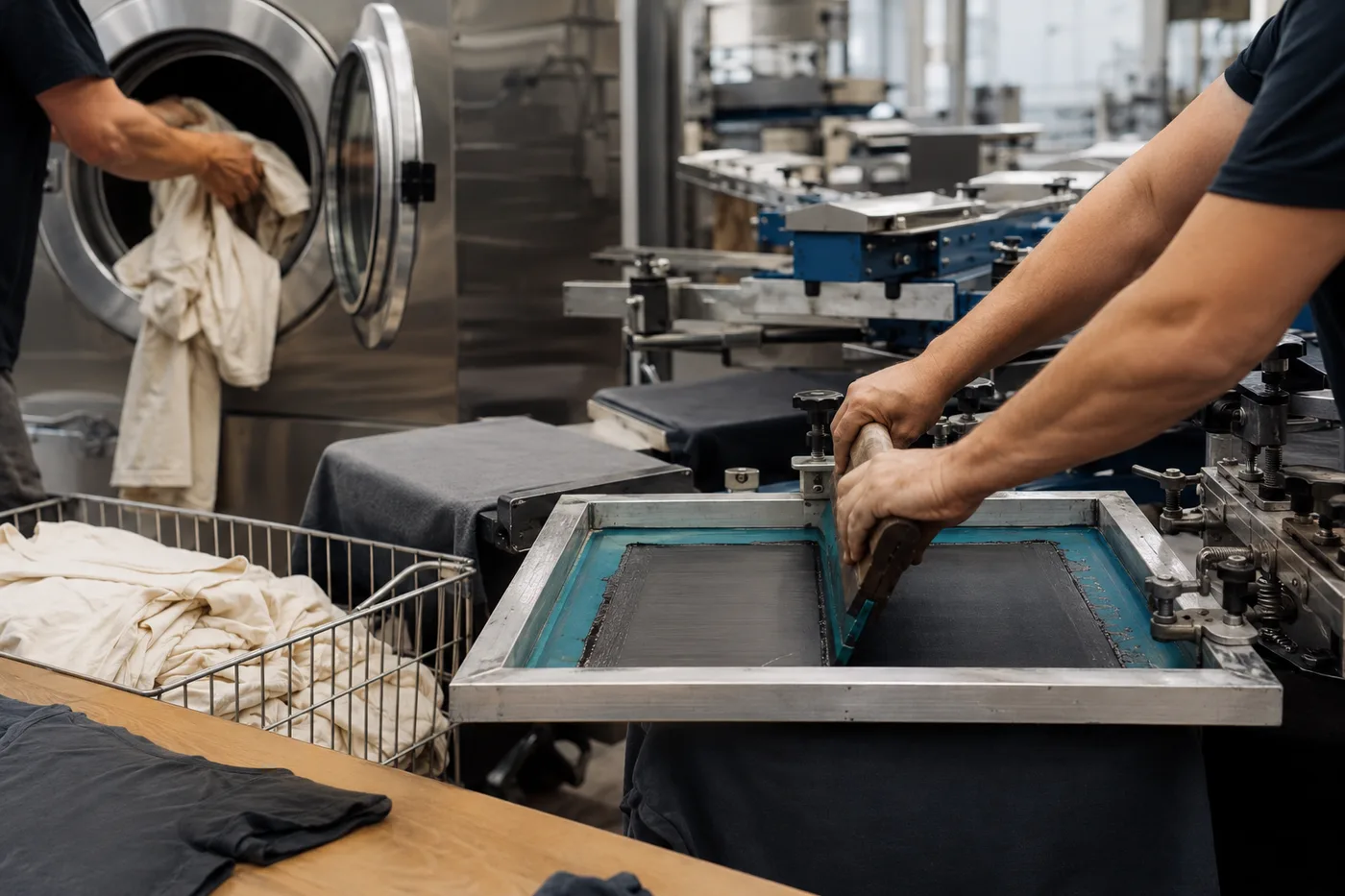
Puff ink is usually a plastisol or water-based ink with a blowing agent mixed in. It is screen printed like any other ink, often over a base colour or underbase. When the print passes through the dryer, the heat activates the blowing agent, which forms tiny gas bubbles and makes the ink swell. The final height depends on the ink deposit, the percentage of puff additive, the mesh count and the cure temperature and time.
Most factories print puff with a low mesh count, around 60-110 threads per inch, to lay down a thick ink film. Some build height with two strokes or two screens. The tee then goes through the conveyor dryer, where temperature must be steady: too cold and the ink does not rise fully or wash off; too hot and the surface scorches, flattens or turns shiny. Our guide on mesh count versus ink deposit for puff print explains how to agree these settings.
Want raised graphics on heavyweight tees? Weavnora screen prints puff, high-density and water-based inks on heavyweight and washed tees, with strike-offs approved before bulk. See our special printing page for the base styles and fabrics we work with, then request a quote with your style, fabric and quantities. MOQ depends on style and fabric, so we confirm it in your quote.
What artwork works best for puff print?
Puff ink spreads as it expands, so artwork needs more room than a flat print:
- Minimum line width. Keep lines at least 1.5-2 mm thick; finer lines merge.
- Gaps between elements. Leave 2 mm or more between letters and shapes.
- Shape size. Bold logos and block lettering work best; photo detail and halftones do not.
- Colour count. One to three puff colours are common. Each colour is a separate screen and adds set-up time.
- Placement. Avoid seams, collars and thick rib, which press the ink unevenly.
Ask for a strike-off on the real garment colour before approving. A white puff print on a black tee looks different from the same print on a natural tee because of underbase and ink opacity.
How do you control raised height and hand feel?
Agree a target height range, for example 0.8-1.5 mm, and measure it with a thickness gauge on the strike-off. A higher print looks dramatic but feels stiffer and is more likely to crack when the tee is stretched. A lower print feels softer and is more durable. Our puff print height tolerance sample gate sets out how to measure and accept height on samples.
Keep the dryer profile, ink batch and additive percentage written down. If any of these change in bulk, ask for a new strike-off before printing the full order.
Puff print vs high-density vs flat screen print: which option fits?
Puff is not the only way to add texture. Compare it with the alternatives.
| Selection criteria | Puff print | High-density print | Flat screen print |
|---|---|---|---|
| Texture | Soft, rounded, foamy | Sharp, hard edges | Flat |
| Typical height | 0.5-2 mm | 0.5-1.5 mm | Under 0.2 mm |
| Detail capability | Low | Medium to high | High |
| Hand feel | Soft but thick | Firm | Light |
| Best for | Retro logos, bold text | Technical, sharp graphics | Everyday graphics |
The trade-offs are texture versus detail and cost. Puff gives the most playful 3D look but loses fine detail. High-density prints build sharp vertical edges using stencil film and suit precise logos. Flat prints are cheapest and most detailed. See our overview of special print options for heavyweight cotton tees for other textured routes.
Can you puff print on washed or garment dyed tees?
Yes, with care. Printing after the garment wash is safer: the tee has already shrunk, so the print will not distort, and the ink is not exposed to stones or chemicals. Printing before a wash gives a softened, slightly cracked vintage puff, but height drops and results vary more. If you choose that route, run the full wash on the strike-off before approving. For pigment-dyed or mineral-washed bases, check that the dryer temperature does not change the garment colour around the print.
Which quality tests matter for puff prints?
Ask the manufacturer to include:
- Wash durability test with three to five home washes, checking cracking, peeling and height loss.
- Stretch test across the print to see whether the ink cracks.
- Rub fastness on dark ink colours.
- Height check on several pieces per size.
- Chemical compliance for plastisol inks where required by your market; our note on phthalate screening for plastisol print programs explains what to request.
What should you include in a puff print brief?
Send vector artwork, print size in centimetres for each size group, placement from the high point shoulder, ink colours with Pantone references, target raised height, garment colour, and whether the print is applied before or after any wash. Add the tests you need and your packing rules, because puff prints can stick to polybags or flatten under heavy folding. Ask for tissue between folded tees on large prints. If you already make puff print hoodies, reuse the same ink standard so tees and hoodies match. For the wider tee program, see our custom t-shirt manufacturing guide.
How do lead time and cost change with puff print?
Puff printing runs on the same screen printing presses as flat inks, so it does not add a new production line, but it does add steps. Screens with low mesh and thick stencils take longer to prepare, printing speed is slower because the ink is thicker, and dryer settings need more checking. Each extra colour adds a screen and a set-up. In practice, a puff print adds a few days to the printing stage rather than weeks. The bigger timing risk is a failed strike-off, so send final vector artwork early and approve the first strike-off quickly.
Puff print t-shirt manufacturer: typical specs and key numbers
| Spec | Typical estimate range |
|---|---|
| Base fabric weight | 220-300 GSM |
| Finished puff height | 0.5-2 mm |
| Minimum line width | 1.5-2 mm |
| Screen mesh for puff ink | 60-110 threads per inch |
| Strike-off rounds | 1-2 rounds |
| Printed sample lead time | 10-15 days |
| Bulk production after approval | 25-40 days |
| MOQ (pcs per style and colour) | Depends on style and fabric; confirmed in your quote |
These are typical industry estimate ranges for planning, not quotes; confirm actual figures with your supplier for your fabric, quantity and destination.
Key takeaways
- Puff ink expands in the dryer, so height depends on deposit, additive and cure.
- Design with lines of at least 1.5-2 mm and gaps of 2 mm or more.
- Agree a target height range and measure it on strike-offs.
- Print after the garment wash for the most stable result.
- Test wash durability, stretch cracking and height loss before bulk.
Request a puff print t-shirt manufacturer quote
Ready to strike off a puff print tee? Send your tech pack or reference images, fabric preference, colours and quantities through our quote request form. MOQ depends on style and fabric, so we confirm it in your quote together with sampling time, approval steps and an itemised price.
Buyer questions
Frequently asked questions
What is puff print on a t-shirt?
It is a screen print made with ink that contains a foaming agent. When heated in the dryer, the ink expands into a soft, raised 3D graphic that you can feel on the garment.
How long does puff print last?
A properly cured puff print on a good cotton tee lasts many washes. Washing inside out, cool water and low tumble dry heat reduce cracking and height loss.
Can puff print show fine details?
Not well. The ink spreads as it rises, so thin lines and small gaps close up. Keep lines at least 1.5-2 mm and use bold shapes and lettering.
Can puff print be combined with other inks?
Yes. Many designs mix puff for the main logo with flat water-based or plastisol inks for details. Each ink is a separate screen and is approved on a strike-off.
What is the MOQ for puff print t-shirts?
MOQ depends on style, fabric and the number of print colours and placements. Send your artwork and quantities through a quote request to get a confirmed figure.
Start a sourcing conversation
Share quantity, target GSM, destination and sample requirements.
Start your RFQ →Email files to postmaster@weavnora.com.