oem-odm · B2B PROCUREMENT
Enzyme Wash Sweatpants Manufacturer: Softness and Specs
By Weavnora · Updated
Direct answer
What buyers need to know
Enzyme wash sweatpants manufacturer programs wash finished sweatpants with cellulase enzymes to remove surface fuzz, soften the fabric and give a lightly faded look. Most use 280-420 GSM fleece or French terry, plan for 4-7% shrinkage, 2-3 sample rounds of 7-15 days and 30-45 days for bulk. MOQ depends on style and fabric.
Enzyme wash sweatpants manufacturer programs wash finished sweatpants with cellulase enzymes to remove surface fuzz, soften the fabric and give a lightly faded look. Most use 280-420 GSM fleece or French terry, plan for 4-7% shrinkage, 2-3 sample rounds of 7-15 days and 30-45 days for bulk. MOQ depends on style and fabric.
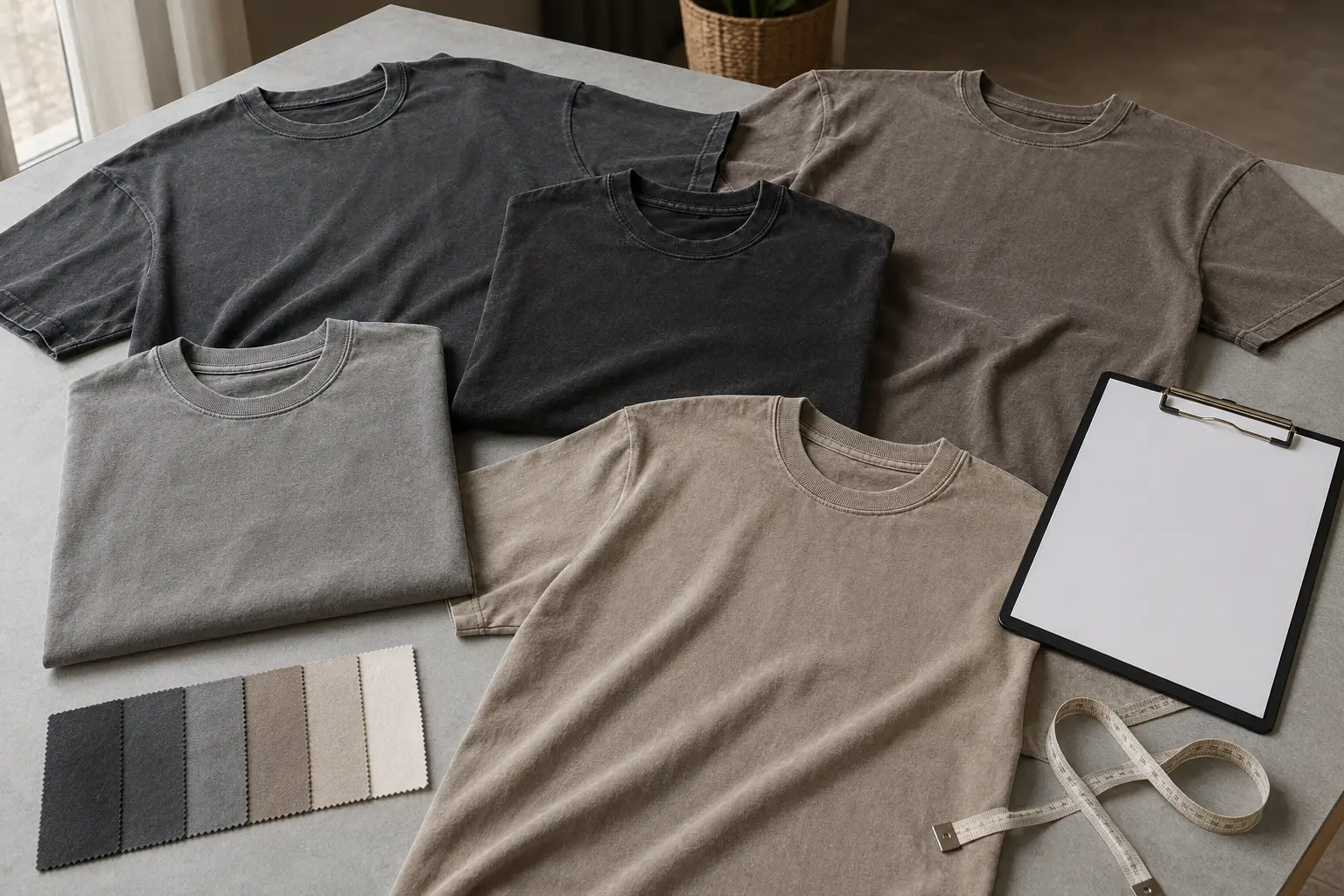
Many brands want sweatpants that feel broken-in from the first wear. A raw fleece pant can feel stiff and look flat; an enzyme washed pant feels smoother, drapes better and has a softly lived-in colour. Enzyme washing is gentler than stone or acid washing, which makes it a popular base treatment for loungewear and matching sets. It still changes fit, colour and fabric strength, so it needs to be planned from the first sample. This guide explains how an enzyme wash sweatpants manufacturer works and what to check before bulk.
What is an enzyme wash sweatpants manufacturer?
An enzyme wash sweatpants manufacturer is a factory that sews sweatpants and then washes the finished garments with cellulase enzymes, which break down loose surface fibers on cotton fleece or French terry. The result is a smoother, softer, slightly faded pant that pills less in early wear. Typical programs use 280-420 GSM cotton-rich fabric, wash cycles of 30-60 minutes at controlled temperature and pH, and allow for 4-7% length shrinkage.
How does enzyme washing work on sweatpants?
The process uses enzymes, usually cellulase, that feed on the loose cellulose fibers at the fabric surface:
- Load finished sweatpants into an industrial washing machine, often turned inside out to protect the face.
- Run the enzyme bath at a set temperature, typically 45-55 C, and pH for 30-60 minutes.
- Deactivate the enzyme by raising temperature or changing pH, so it stops working on the fabric.
- Rinse and soften with a silicone or cationic softener.
- Tumble dry and finish, which also relaxes and shrinks the fabric.
The enzyme strength and time decide the result. Too little gives little change; too much weakens the fabric and can cause holes at stress points.
Planning soft washed sweatpants? Weavnora makes heavyweight sweatpants and develops wash recipes on samples first, so you can approve softness, colour and fit before bulk. See our garment dye page for the base styles and fabrics we work with, then request a quote with your style, fabric and quantities. MOQ depends on style and fabric, so we confirm it in your quote.
Enzyme wash vs stone wash sweatpants: which option fits?
| Selection criteria | Enzyme wash | Stone wash |
|---|---|---|
| Main effect | Softness, smooth surface | Abrasion, visible fade |
| Colour change | Light fade | Medium to strong fade |
| Fabric strength | Small loss when controlled | Higher loss at seams and edges |
| Pilling | Reduced in early wear | Can increase surface fuzz |
| Consistency | High | Medium, stones vary |
| Best for | Loungewear, sets, basics | Vintage and streetwear drops |
The trade-offs are subtle softness against a stronger vintage look. Enzyme wash gives a cleaner, more consistent finish that suits core colours and sets. Stone wash gives more character but more variation. Many brands combine a light enzyme wash with garment dyeing. Our stone wash sweatpants manufacturer guide and vintage wash sweatpants manufacturer guide cover stronger effects.
Which fabrics respond best?
Enzymes work on cellulose, so cotton-rich fabric gives the best result. A 100% cotton or 80/20 cotton-polyester fleece responds well, while higher polyester blends change less. Typical weights are:
- 280-330 GSM French terry for lighter, year-round sweatpants.
- 330-420 GSM brushed fleece for heavier, warmer pants.
Brushed fleece softens noticeably on the inside, while loopback terry shows a cleaner face. Our sweatpants GSM guide and French terry sweatpants manufacturer guide help choose the fabric.
How much do enzyme washed sweatpants shrink?
Expect around 4-7% shrinkage in length and 3-5% in width, depending on fabric construction and whether the fabric was pre-shrunk. Leg length and waistband width are most sensitive. The factory should grade the pattern with wash allowances and confirm measurements on a washed sample. Use your sweatpants size chart with tolerances for washed garments, usually plus or minus 1-1.5 cm on key points.
How do waistbands and trims react?
- Elastic can lose stretch in hot or long cycles; choose wash-resistant elastic and test recovery.
- Drawcords in cotton may fade and shrink; polyester cords stay stable but do not soften.
- Metal eyelets and aglets need rust-resistant finishes.
- Labels and prints should be wash-tested; some screen prints soften or crack slightly.
- Rib cuffs often shrink differently from the body, so check cuff width after washing.
How do you keep colour consistent?
Enzyme washing lightens colour slightly. Approve the colour on a washed sample, not a raw one. If the sweatpants are part of a set, wash tops and bottoms in the same recipe and ideally in the same batch. Our guide to colour matching hoodie and sweatpants sets explains how to avoid shade mismatch between pieces.
What should you check on the sample?
- Softness and hand feel against the approved reference.
- Shade in daylight against the washed standard.
- Measurements at waist, hip, inseam and leg opening.
- Seam and crotch strength, looking for weakened areas or small holes.
- Waistband recovery after stretching.
- Pilling after rubbing tests.
Our sweatpants quality control checklist gives a full inspection list for bulk.
What drives cost and lead time?
Enzyme washing adds a wet process to the normal cut-and-sew cost. The main drivers are the enzyme and softener chemicals, machine time, water and energy, drying, the extra fabric needed to cover shrinkage and the reject rate for pieces with holes or shade issues. Combining enzyme wash with garment dyeing adds dye cost but saves a separate handling step. Washing larger batches per colour lowers the cost per pair, while many small colourways raise it. As a planning range, a washed sample round takes about 7-15 days and bulk takes 30-45 days after approval, depending on fabric availability and the wash schedule at the laundry.
Enzyme wash for sets and matching pieces
If you sell matching sets, decide early whether the hoodie or crewneck gets the same wash. A pant washed alone will look lighter and softer than an unwashed top, even in the same dye lot. Washing both pieces in one recipe keeps the colour and hand feel consistent and gives your customers a set that looks planned rather than mixed.
What should you send for a quote?
- A tech pack or reference sweatpant with fit and measurements.
- Fabric type, weight, composition and colours.
- Desired softness and fade level, with reference photos.
- Waistband, drawcord, pocket and trim details.
- Quantities by colour and size, plus the delivery window.
For the complete bottoms development path, see our custom bottoms and sets manufacturing guide.
Enzyme wash sweatpants manufacturer: typical specs and key numbers
| Spec | Typical estimate range |
|---|---|
| Sweatpants fabric weight | 280-420 GSM |
| Enzyme bath temperature | 45-55 C |
| Enzyme wash time | 30-60 minutes |
| Length shrinkage after wash | 4-7% |
| Width shrinkage after wash | 3-5% |
| Sample lead time per round | 7-15 days |
| Bulk production after approval | 30-45 days |
| MOQ (pcs per style and colour) | Depends on style and fabric; confirmed in your quote |
These are typical industry estimate ranges for planning, not quotes; confirm actual figures with your supplier for your fabric, quantity and destination.
Key takeaways
- An enzyme wash sweatpants manufacturer softens finished sweatpants with cellulase enzymes.
- Enzyme wash is gentler and more consistent than stone wash, with a light fade.
- Cotton-rich fleece and French terry of 280-420 GSM respond best.
- Grade patterns for 4-7% length shrinkage and approve measurements after washing.
- Test elastic, drawcords and seam strength on the washed sample.
Request a enzyme wash sweatpants manufacturer quote
Ready to sample enzyme wash sweatpants? Send your tech pack or reference images, fabric preference, colours and quantities through our quote request form. MOQ depends on style and fabric, so we confirm it in your quote together with sampling time, approval steps and an itemised price.
Buyer questions
Frequently asked questions
What is an enzyme wash on sweatpants?
It is a garment wash that uses cellulase enzymes to remove surface fuzz, soften the fabric and give a light worn-in fade.
Does enzyme washing weaken sweatpants?
Slightly. Controlled time, temperature and deactivation keep strength loss small; over-washing can cause holes.
How much do enzyme washed sweatpants shrink?
Typically 4-7% in length and 3-5% in width, so patterns include wash allowances.
Can enzyme wash be combined with garment dyeing?
Yes. Many sweatpants are garment dyed and enzyme washed in the same process for colour and softness.
What is the MOQ for enzyme wash sweatpants?
MOQ depends on style, fabric and colours. Send your references and quantities through a quote request.
Start a sourcing conversation
Share quantity, target GSM, destination and sample requirements.
Start your RFQ →Email files to postmaster@weavnora.com.