oem-odm · B2B PROCUREMENT
Vintage Wash Sweatpants Manufacturer: Wash Types and Specs
By Weavnora · Updated
Direct answer
What buyers need to know
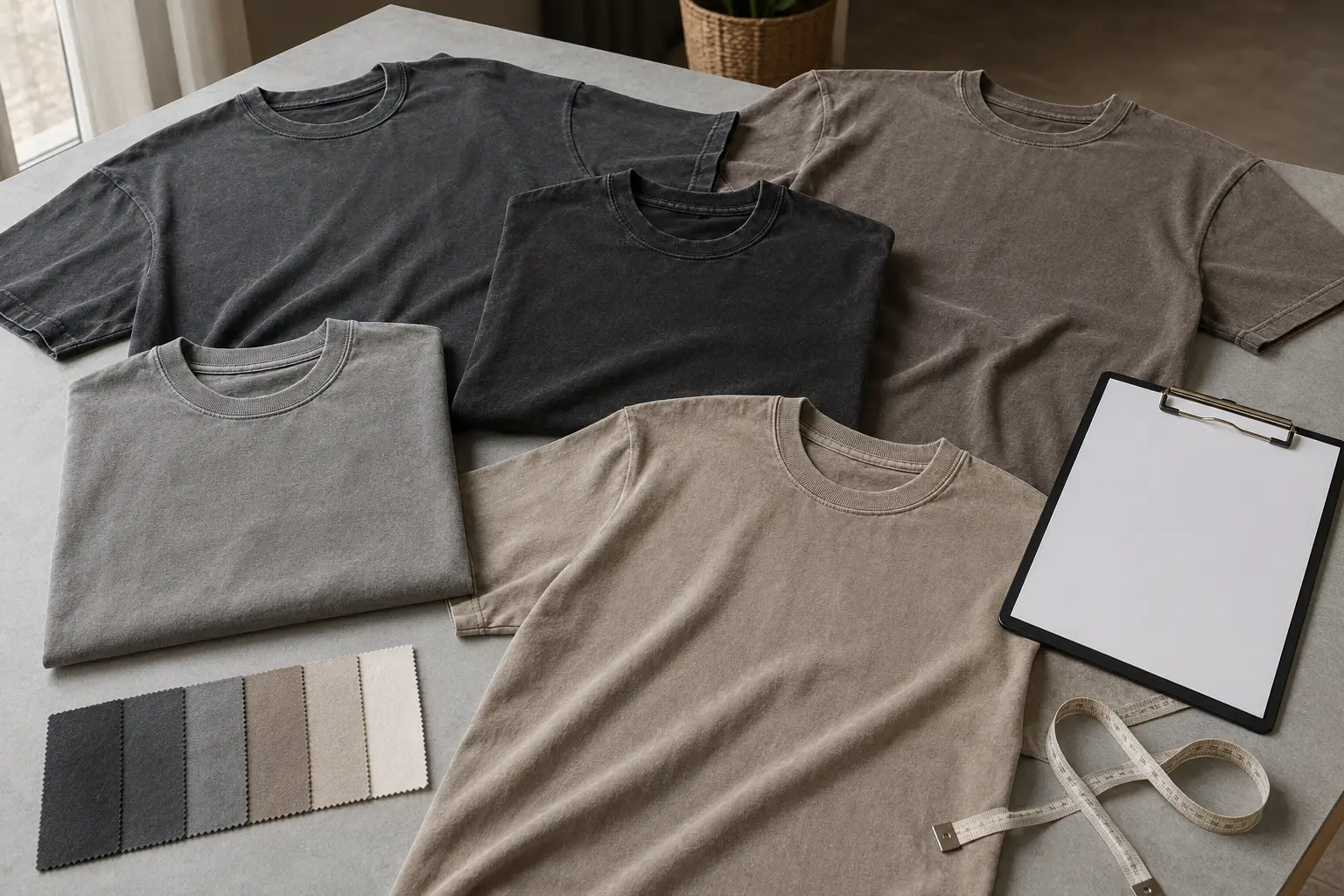
Vintage wash sweatpants manufacturer programs use garment washes such as mineral, acid, enzyme or pigment dye on 320–450 GSM fleece or french terry. Expect 3–7% wash shrinkage, visible piece-to-piece variation, wash development of about 7–14 days, and bulk around 35–55 days after approval, while MOQ depends on style and fabric.
Vintage wash sweatpants manufacturer programs use garment washes such as mineral, acid, enzyme or pigment dye on 320–450 GSM fleece or french terry. Expect 3–7% wash shrinkage, visible piece-to-piece variation, wash development of about 7–14 days, and bulk around 35–55 days after approval, while MOQ depends on style and fabric.
Vintage wash sweatpants sell because they look like they have already been worn for years. Getting that look in bulk is a process question: the wash is applied after sewing, so the fabric, pattern, elastic and threads all have to survive it. This guide explains the main wash types, what changes in the pattern and specification, and how to approve a washed sweatpant so bulk matches the sample.
What is a vintage wash sweatpants manufacturer?
A vintage wash sweatpants manufacturer is a knit garment factory with garment washing or dyeing capacity that sews sweatpants in undyed or pre-dyed fabric and then washes the finished garments to create a faded, softened, worn-in look. Programs usually use 320–450 GSM cotton fleece or french terry, allow 3–7% for wash shrinkage and need about 7–14 days to develop the wash recipe.
The four common vintage washes
- Mineral wash: stones or chemical agents create a marbled, uneven fade, strongest on seams and edges. Bold and streetwear-led.
- Acid wash: an oxidising wash that creates high-contrast spots and streaks, usually on darker base colours.
- Enzyme wash: enzymes soften and lightly fade the surface for a subtle, lived-in look with a soft hand.
- Pigment dye: pigment colour applied to the garment gives soft, chalky colour with natural fading at seams.
For the specification side of mineral washing on fleece, see our mineral wash specification for fleece hoodies; the same rules apply to sweatpants.
Fabric choice for washed sweatpants
Fabric has to be 100% cotton or high-cotton for most washes, because polyester does not take garment dye and resists fading. Loopback french terry usually washes cleaner than brushed fleece, which can lose loft and pill on the inside. Heavier weights around 380–450 GSM keep their body after washing. Ask the factory to run a wash test on the fabric before you approve it.
What changes in the pattern?
Washing shrinks the garment, so the pattern is cut larger. Length usually shrinks more than width. The waistband elastic also reacts to heat and chemicals: some elastics lose recovery or curl, so choose an elastic proven to survive the wash. Cotton or core-spun thread is used so seams fade with the fabric. Rib cuffs must be the same composition as the body, or they will take colour differently. Our garment dye specification for fleece hoodies explains these adjustments in more detail.
Developing washed sweatpants? Weavnora runs mineral, enzyme and garment-dye programs on heavyweight fleece and french terry. See our mineral wash page and request a quote with your reference and base fabric.
Mineral wash vs pigment dye sweatpants: which option fits?
Both give a vintage look, but they behave differently in production. Use these selection criteria.
| Selection criteria | Mineral wash | Pigment dye |
|---|---|---|
| Look | Marbled, uneven, high contrast | Soft, chalky, even fade |
| Base fabric | Dyed fabric, then washed | Undyed or PFD fabric, then dyed |
| Piece-to-piece variation | High | Moderate |
| Shrinkage | 3–6% typical | 4–7% typical |
| Colour range | Limited by base colour | Wide colour palette |
| Best for | Bold streetwear drops | Core colours, matching sets |
The trade-offs are character versus consistency. Mineral wash gives the most vintage character but the most variation; pigment dye offers a wider palette and better colour repeatability but a softer, less dramatic fade. For a comparison on tees, read acid wash vs enzyme wash on heavyweight tees.
How do you approve a washed sweatpant?
Approve on the washed garment, never on the unwashed one. Check four things:
- Measurements after wash: waist relaxed and extended, rise, inseam, thigh and opening.
- Shade range: approve a light, target and dark limit sample, not a single piece.
- Hand feel: softness, loft and any harshness at seams.
- Elastic and drawcord: recovery after wash, no curling or colour bleeding.
Then require a pre-production wash test on bulk fabric before cutting the full order.
Matching washed sweatpants with hoodies
Sets sell well in vintage washes, but shade matching is harder. Make tops and bottoms in the same fabric lot and, ideally, wash them in the same batch. If they are washed separately, expect differences. Our heavyweight sweatpants private label guide covers private-label set planning, and the custom bottoms and sets manufacturing hub lists related guides.
What does a vintage wash add to cost and lead time?
The wash is a separate cost line covering machine time, chemicals, drying, handling and a higher reject rate. It also adds days: wash development, wash tests and the bulk wash itself. Plan for a longer sample cycle, typically 14–25 days including the wash, and a bulk window of about 35–55 days. Decoration should usually be applied after the wash, or tested through it if it must go on before.
Which details survive a vintage wash best?
Not every trim and decoration likes the washing machine. Metal eyelets can rust or mark the fabric unless they are coated; plastic drawcord tips can crack, so many factories use metal, silicone or knotted ends. Woven labels may fade or fray, while printed care labels can lose legibility, so test both through the wash. Screen prints applied before washing will fade with the garment, which some brands want for a vintage graphic; prints applied after washing stay bright. Embroidery generally survives well if the thread is cotton or wash-tested polyester. Elastic is the most critical trim: choose a wash-tested elastic and check recovery on the washed sample, because a waistband that grows after washing is the most common complaint on washed sweatpants. Ask the factory to list which trims it has already run through the chosen wash and to send a trim card after the wash test so you can approve the result.
What problems show up most in washed sweatpants?
The usual issues are uneven shade between legs, darker or lighter seams than expected, twisted legs after washing, waistbands that lose stretch, and inseams that shrink more than the chart allows. Most can be prevented by a pre-production wash test on bulk fabric, a balanced pattern grain, wash-tested elastic and clear tolerances agreed before the bulk wash.
Vintage wash sweatpants manufacturer: typical specs and key numbers
| Spec | Typical estimate range |
|---|---|
| Body fabric weight | 320–450 GSM |
| Wash shrinkage allowance | 3–7% |
| Wash development time | 7–14 days |
| Shade approval range | 2–3 limit samples |
| Waistband elastic height | 3–6 cm |
| MOQ (pcs per wash colour) | Depends on style, fabric and wash; confirmed in your quote |
| Sample lead time (incl. wash) | 14–25 days |
| Bulk production after approval | 35–55 days |
These are typical industry estimate ranges, not quotes; confirm actual figures with your supplier for your fabric, quantity and destination.
Key takeaways
- Vintage washes are applied after sewing, so fabric, elastic and thread must survive them.
- Use 100% cotton or high-cotton fleece or french terry, ideally 380–450 GSM.
- Allow 3–7% wash shrinkage and approve measurements after wash.
- Approve a shade range with limit samples, not a single piece.
- Wash matching tops and bottoms in the same batch.
Request a vintage wash sweatpants quote
Share your reference photos, base fabric and wash type through our quote request form. We reply with a wash development plan, sampling time, itemised price and MOQ, which depends on style, fabric and wash.
Buyer questions
Frequently asked questions
What is a vintage wash on sweatpants?
It is a garment-level wash or dye applied after sewing that fades the colour, softens the fabric and gives a worn-in look. Common versions are mineral wash, acid wash, enzyme wash and pigment dye.
Do vintage wash sweatpants shrink?
Yes. Garment washing typically shrinks fleece and french terry by around 3–7%, more in length than width on many fabrics. The pattern must include an allowance and the sample must be measured after washing.
Is every pair of vintage wash sweatpants identical?
No. Garment washes create natural variation between pieces and between wash batches. Agree a shade range with approved limit samples instead of expecting identical colour.
What is the MOQ for washed sweatpants?
MOQ depends on style, fabric, wash recipe and colour count, because each wash batch needs enough garments to run efficiently. Request a quote with your style and quantities for an exact answer.
Can a hoodie and sweatpants be washed to match?
Yes, if both are made in the same fabric and washed together in the same batch. Washing tops and bottoms separately often gives a visible shade difference.
Start a sourcing conversation
Share quantity, target GSM, destination and sample requirements.
Start your RFQ →Email files to postmaster@weavnora.com.