WASH QUALITY · B2B BUYER CHECKLIST
Vintage Wash T-Shirt Quality Control Checklist for Bulk Orders
Review the washed garment as one controlled product—connecting shade, surface character, measurements, decoration and approval records before bulk release.
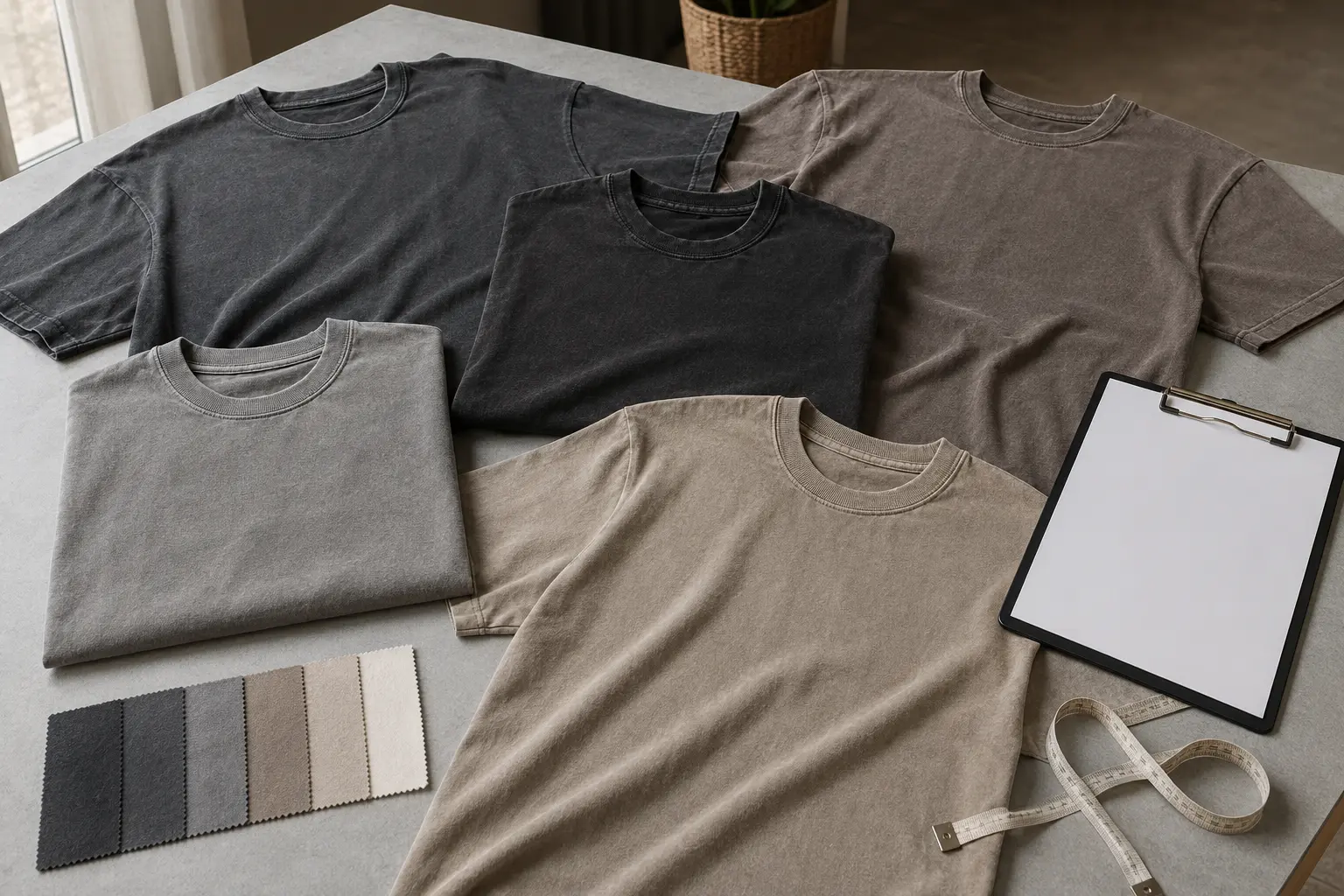
Direct definition
What is vintage wash T-shirt quality control?
Vintage wash T-shirt quality control is the buyer-led process of comparing production-representative washed garments with the approved product, shade and appearance references before bulk release. It turns a subjective “aged look” into a reviewable decision that covers the entire garment rather than only its color.
Confirmed program parameters
Keep the wash review tied to the commercial brief.
Six-point wash inspection
Use one repeatable review sequence.
Identify the controlling reference
Record the style, color, size, wash direction and sample version being reviewed. The decision should point to an identifiable garment or approved visual reference, not an untracked message or an isolated photo.
Compare overall shade
View the garment as a complete unit and compare its overall tone with the approved direction. Review production-representative pieces together so the buyer can identify whether the visible range remains acceptable.
Review surface and edges
Inspect the front, back, sleeves, collar, seams and garment edges. Record visible differences in fading, abrasion or surface character without inventing a numeric tolerance that has not been agreed.
Check measurements and hand feel
Compare the washed garment with the buyer’s measurement chart and approved fit reference. Confirm the intended 100% cotton, 220–300 GSM product direction and record any measurement or hand-feel concern for correction.
Review decoration on the wash
Check the approved artwork version, scale, placement and visible result on the actual washed base. Screen printing, DTG, embroidery and special printing should each be reviewed as a physical combination of garment, wash and decoration.
Issue a traceable bulk decision
State approved, corrections required or rejected. Connect the decision to the 1,000-piece style, its mixed-color and mixed-size matrix, and the exact reference that controls the bulk wash direction.
Control comparison
Reference, observation and decision serve different jobs.
Approved reference
Defines the intended visual direction. It should be identified clearly enough that the buyer and supplier review the same target.
Inspection observation
Records what is visible on production-representative garments: shade, surface, edges, measurements, hand feel and decoration.
Bulk-release decision
States whether the result is accepted, requires correction or remains rejected. It must identify the controlling version and any open condition.
Buyer FAQ
Concise wash-quality answers.
What is vintage wash T-shirt quality control?
Vintage wash T-shirt quality control is the buyer-led review that compares washed garments with the approved product, shade and appearance references before bulk release.
Which details should a buyer review on a washed T-shirt?
Review product identity, 100% cotton and 220–300 GSM direction, overall shade, surface character, seam and edge appearance, measurements, hand feel, decoration and the recorded approval decision.
Should every garment look exactly identical after a vintage wash?
The buyer should define the acceptable visual direction and compare production-representative garments with the approved reference. Do not replace an agreed tolerance with an unsupported assumption of perfect identity.
When should decoration be reviewed?
Review screen printing, DTG, embroidery or special printing on the intended washed garment because the base shade and surface influence the visible result.
How does wash quality control connect to the 1,000-piece MOQ?
The approved wash reference should be connected to the 1,000-piece style and its mixed-color and mixed-size allocation before bulk release.
Are the 7-day sample and 30-day bulk periods guaranteed?
No. Seven days is the sample target after required details are confirmed, and 30 days is the bulk target after required approvals. Both are planning targets subject to project conditions.