Screen printing
Useful direction: bold, repeatable graphics. Buyer confirms: artwork preparation, color direction, scale, placement and the physical sample on the selected garment.
CUSTOMIZATION · BUYER SELECTION GUIDE
Compare screen printing, DTG, embroidery and special printing for 220–300 GSM, 100% cotton T-shirts—and define the approvals each route requires before bulk.
Direct definition
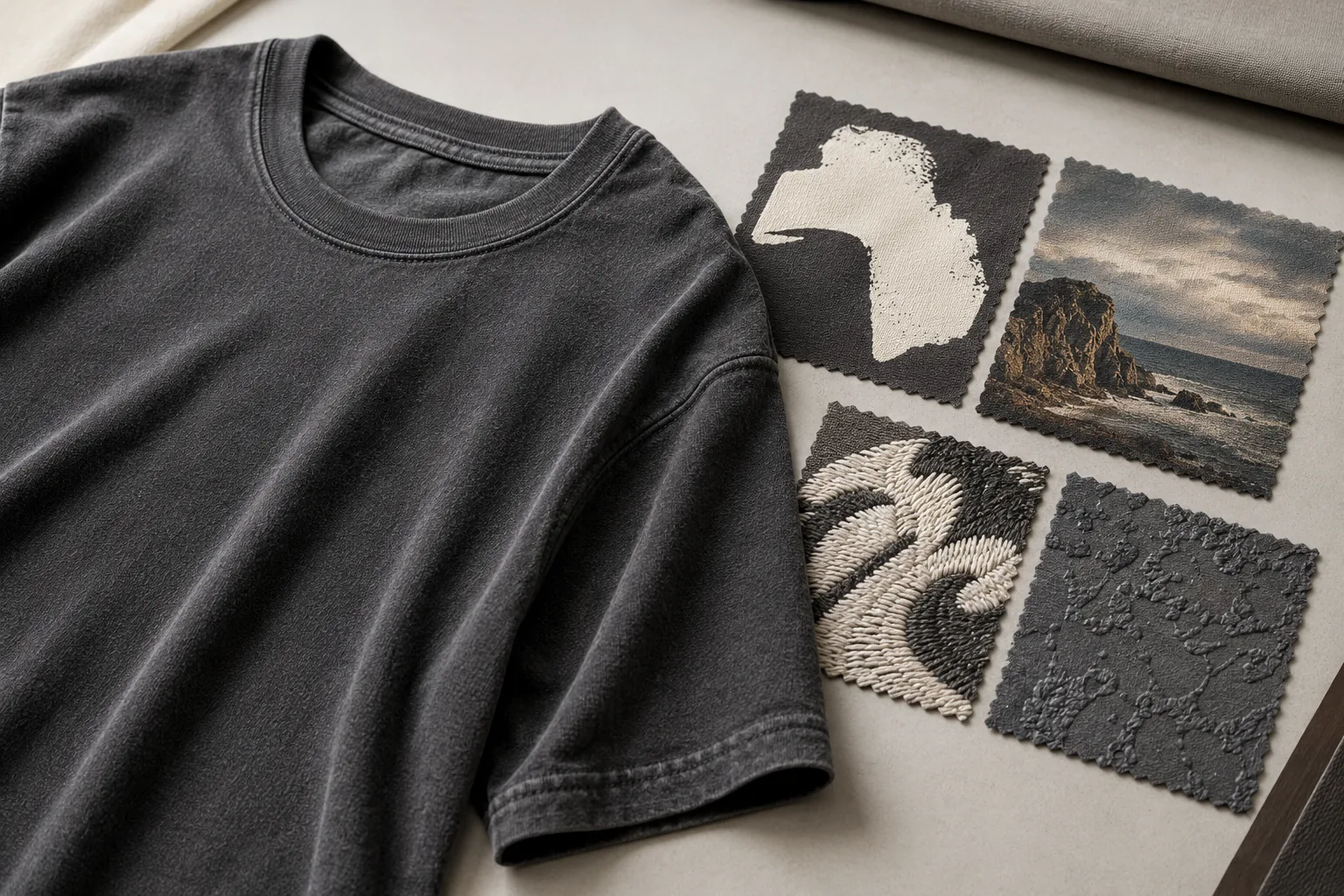
Decoration selection is the buyer-led process of choosing screen printing, DTG, embroidery or special printing according to the artwork, desired surface, garment color and wash, placement, order plan and physical sample approval. The decision should be made on the actual 220–300 GSM, 100% cotton garment base rather than from a method name alone.
Method comparison
Useful direction: bold, repeatable graphics. Buyer confirms: artwork preparation, color direction, scale, placement and the physical sample on the selected garment.
Useful direction: detailed or gradient artwork. Buyer confirms: source artwork, garment base and color, scale, placement and sample appearance.
Useful direction: stitched, dimensional branding. Buyer confirms: artwork conversion, sample stitch appearance, scale, placement and interaction with the heavyweight fabric.
Useful direction: a differentiated surface effect. Buyer confirms: the exact intended effect, artwork, placement and a physical approval sample; the general method label is not sufficient.
Confirmed sourcing parameters
Buyer approval workflow
Provide the source file, intended visual result and any useful physical reference. Identify open questions instead of relying on a low-resolution mockup as the production standard.
Compare screen printing, DTG, embroidery and special printing against the artwork, desired surface, garment color and wash direction.
Record artwork dimensions and its measurable position on the garment. Review how the placement relates to seams, neckline, fit and size grading.
Review the decoration on the selected 100% cotton fabric weight, color and wash because those variables shape the observed result.
Connect the approved decoration to the 1,000-piece style quantity and provide the mixed color and size allocation that will enter bulk planning.
Confirm the garment, artwork, method, placement, sample and order allocation in a controlled buyer-approved record before the 30-day bulk target is planned.
Buyer FAQ
Supported methods include screen printing, DTG, embroidery and special printing. The method should be selected against the artwork, garment surface, color, placement and approved sample.
Neither method is universally better. Screen printing can support bold graphic directions, while DTG can support detailed or gradient artwork. The buyer should compare the intended visual result on the actual garment base.
Embroidery is a supported option. The buyer should approve artwork conversion, scale, placement and the stitched result on the chosen heavyweight fabric before bulk release.
It means a buyer-specified differentiated print effect that requires the exact intended appearance to be defined and physically sampled. No effect should be assumed from a general label alone.
The confirmed MOQ is 1,000 pieces per style. Mixed colors and sizes are supported within the agreed style quantity.
The working bulk target is 30 days after required approvals and production details are confirmed. Decoration, garment, color-by-size allocation and other required details should be approved first.
Prepare a decoration RFQ