B2B SAMPLE APPROVAL · BUYER CHECKLIST
How to Review a Heavyweight T-Shirt Sample Before Bulk Production
Turn a physical sample into a controlled purchasing decision by linking product identity, measurable observations and the final bulk-release record.
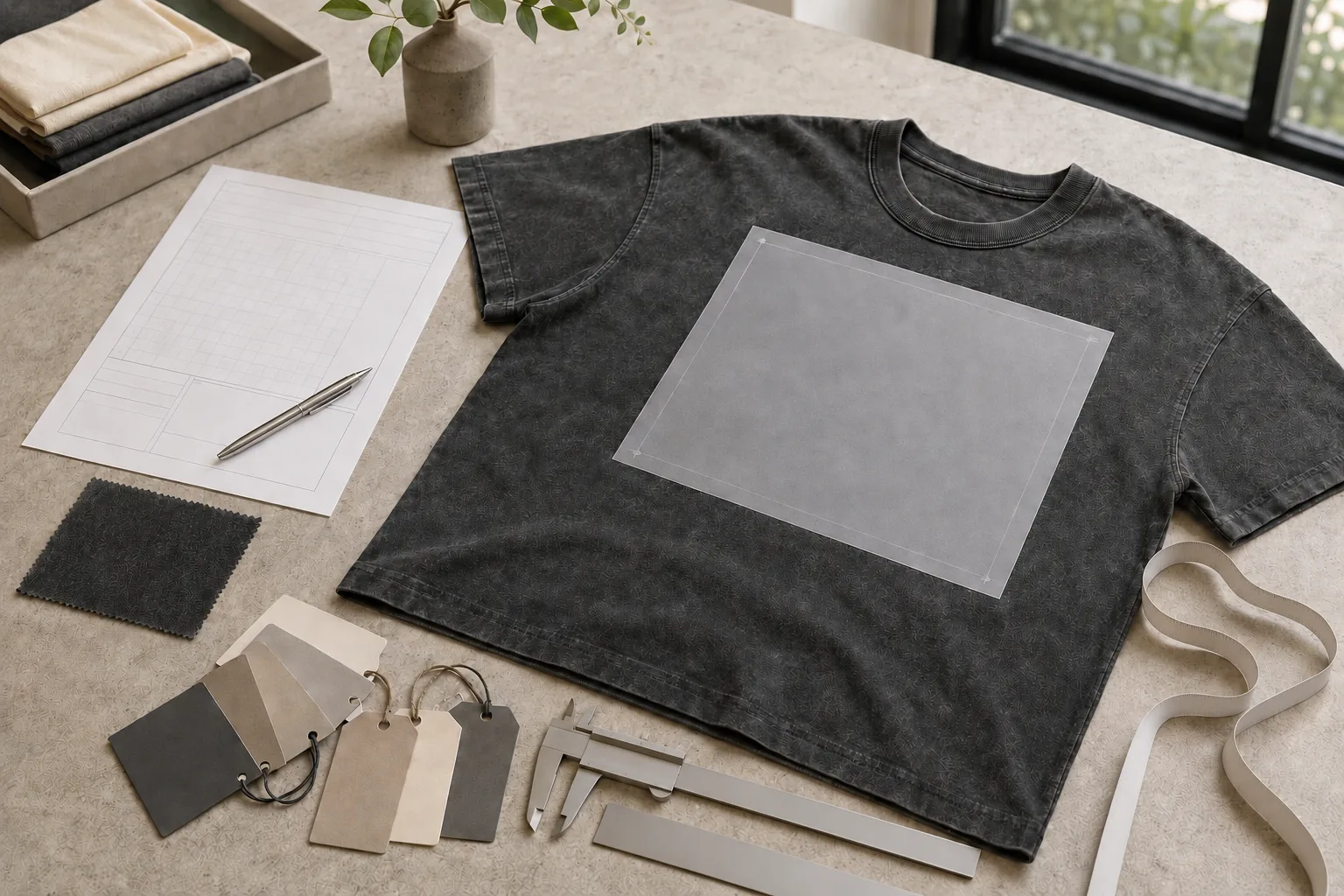
Direct definition
What is a T-shirt sample approval record?
A T-shirt sample approval record is the buyer-controlled document that identifies the exact sample and specification reviewed, records observations and corrections, and states whether bulk production is authorized. It prevents an informal message or an unidentified garment from becoming the production reference.
Confirmed sourcing framework
Review the sample against known commercial facts.
Seven-step inspection
Review in a repeatable sequence.
Identify the sample
Record the style, sample stage, color, size, date and the specification and artwork versions under review. A decision is only traceable when the physical garment and its documents match.
Confirm material direction
Verify the stated 100% cotton requirement and the selected target within 220–300 GSM against the buyer’s brief. Record any open material question instead of assuming it is resolved.
Check fit and measurements
Compare the garment with the buyer’s measurement chart and fit intent. Record the sample size and each observation so that required corrections are measurable.
Review color or wash
Assess the sample against the approved visual direction, including the intended washed character when applicable. Identify the reference used for the decision.
Review decoration
Check the approved artwork version, method, scale, placement and appearance on the actual garment. Supported routes include screen printing, DTG, embroidery and special printing.
Connect commercial details
Confirm that the approved sample is connected to the 1,000-piece style and its mixed-color and mixed-size allocation, plus any labels, trims or packing instructions stated in the buyer brief.
Issue one decision
Use approved, rejected or approved after stated corrections. Name the controlling reference and withhold bulk release until every required condition is satisfied.
Decision control
Three outcomes—and what each one means.
Approved
The identified sample and documents form the buyer’s reference for bulk planning. The approval should still state the version and date.
Corrections required
List every change and specify what evidence must return for review. Do not treat general comments as a production instruction.
Rejected
State the failed decision points and identify what must change before a new sample is submitted. Bulk release remains withheld.
Buyer FAQ
Concise sample-approval answers.
What is a T-shirt sample approval record?
It is the buyer-controlled record that identifies the reviewed sample, the specification and artwork versions, observations, required corrections and the final decision that authorizes or withholds bulk release.
What should be checked on a heavyweight T-shirt sample?
Check the style identity, 100% cotton requirement, target within 220–300 GSM, measurements and fit, color or wash direction, decoration, labels or trims included in the brief, and consistency with the intended color-by-size order.
Does a digital mockup replace physical sample approval?
No. A mockup can communicate layout, but the buyer should review the physical garment result against the approved specification before bulk release.
How does the 7-day sample target apply?
The working target is 7 days after the required garment, material, wash and decoration details are confirmed. It is a planning target rather than an unconditional guarantee.
Can a buyer approve with corrections?
A conditional decision should state every correction, identify whether a revised sample or documented confirmation is required, and avoid releasing bulk until the buyer’s approval condition is satisfied.
What must be fixed before the 30-day bulk target is planned?
The required product and sample approvals, decoration, labels or packing instructions included in the brief, and the 1,000-piece style color-by-size allocation should be confirmed first. Project conditions still apply.