B2B ARTWORK PREPARATION · BUYER CHECKLIST
How to Prepare Artwork for Bulk T-Shirt Printing and Embroidery
Convert a creative design into one controlled production instruction for method, scale, placement, garment base, sample review and bulk release.
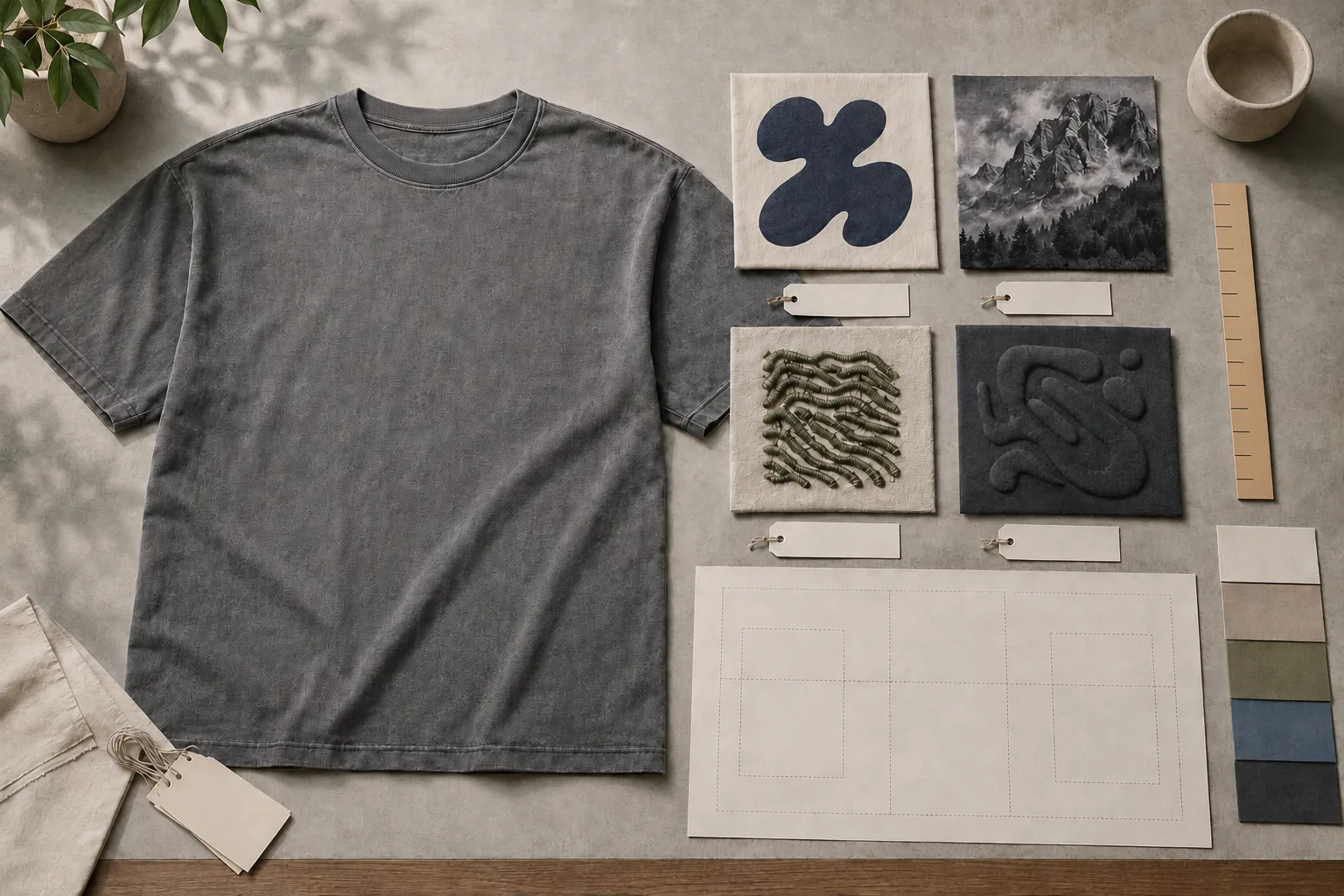
Direct definition
What is an apparel artwork handoff package?
An apparel artwork handoff package is the buyer-controlled set of artwork and instructions that identifies the approved design version, decoration method, measurable size, garment placement, color direction, garment base and required sample approval. It translates creative intent into a traceable sourcing decision.
Confirmed production framework
Connect artwork to the actual product program.
Seven-step handoff
Make the decoration brief sample-ready.
Identify one artwork version
Give the approved design a clear version reference and remove superseded files from the active handoff. The buyer, supplier and sample reviewer should all point to the same version.
Choose the decoration method
State screen printing, DTG, embroidery or special printing. Do not leave the supplier to infer a method from the appearance of a digital mockup.
Define physical dimensions
Record the intended artwork width and height on the garment. A pixel size or page view does not communicate the physical production scale by itself.
Measure the placement
Describe the location using identifiable garment points and measurable offsets. Confirm how the position should relate to the neckline, seams and intended fit.
State color direction
Identify the intended artwork colors and the garment color or washed base on which they will be reviewed. Record any open color decision before sampling.
Review a physical sample
Approve the decoration on the actual 220–300 GSM, 100% cotton T-shirt base. Check the controlling artwork version, method, scale, placement and observed appearance.
Link approval to bulk
Connect the approved sample to the 1,000-piece style and its mixed-color and mixed-size matrix. A later artwork change requires a new version and review.
Method-specific questions
One handoff structure, four different reviews.
Screen printing
Confirm the approved artwork, color direction, dimensions and placement, then review the printed sample on the intended garment base.
DTG
Confirm the complete image, dimensions, placement and garment color or wash, then review the detailed appearance on the physical sample.
Embroidery
Confirm the artwork conversion reference, stitched scale and placement, then review the physical result and its interaction with the garment.
Special printing
Define the intended surface effect instead of relying on a general label. The exact sampled appearance becomes the practical approval reference.
Buyer FAQ
Concise artwork-preparation answers.
What is an apparel artwork handoff package?
It is the buyer-controlled set of artwork and instructions that identifies the approved design version, decoration method, dimensions, placement, color direction, garment base and required sample approval.
Which decoration methods can the handoff cover?
The confirmed supported methods are screen printing, DTG, embroidery and special printing. Each method should have its own sample review rather than being treated as interchangeable.
What placement information should a buyer provide?
Provide measurable artwork width and height plus its position relative to identifiable garment points. A visual mockup alone can communicate direction but should not be the only placement instruction.
Should artwork be reviewed on the actual garment color or wash?
Yes. The observed result should be reviewed on the intended T-shirt base because garment color, wash and surface are part of the buyer’s visual approval.
When should the artwork version be locked?
Lock the controlling version before the physical decoration sample is approved and before bulk release. Later changes should receive a new version and review.
What commercial framework applies to the finished T-shirt style?
The confirmed program uses 100% cotton T-shirts in the 220–300 GSM range, a 1,000-piece MOQ per style, mixed colors and sizes, a 7-day sample target and a 30-day bulk target after required approvals.