PRIVATE LABEL · BUYER WORKFLOW
Private Label T-Shirt Development Process: Buyer Guide
Move from product brief to approved sample and bulk plan with clear decision gates for material, fit, decoration, quantities and timing.
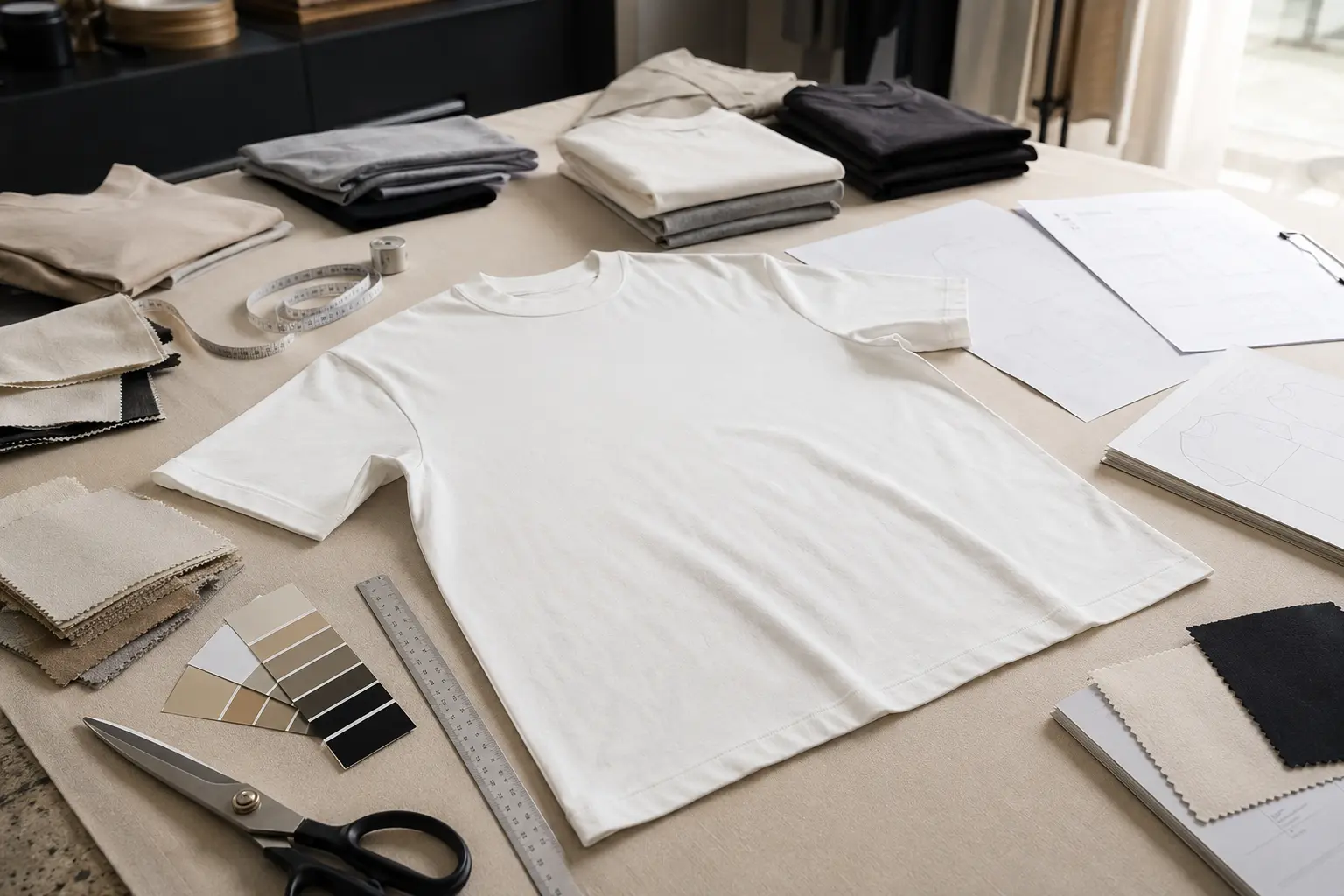
Direct definition
What is a private label T-shirt development process?
A private label T-shirt development process is the buyer-led workflow that turns a brand concept or product specification into an approved physical T-shirt, a documented color-by-size allocation and an authorized bulk-production plan. The process separates creative direction, measurable product requirements and commercial approvals so each decision can be traced.
Confirmed development framework
Use known parameters without inventing product claims.
Seven development gates
Move from buyer brief to bulk release.
Define the commercial product
State the intended heavyweight or washed T-shirt, target market, expected style quantity, colors, sizes and delivery objective. Keep the brief centered on one product rather than mixing unrelated garments into the same development decision.
Build the product specification
Confirm the 100% cotton requirement, select a target within 220–300 GSM and provide buyer-approved fit measurements or a measurable fit direction. Unconfirmed construction or material details should remain open questions.
Choose wash and decoration
State the wash direction and select screen printing, DTG, embroidery or special printing. Connect the approved artwork version, scale and placement to the exact garment base that will be sampled.
Prepare a sample-ready handoff
Combine the product specification, artwork, color direction and required brand components into one controlled package. The 7-day sample period is a target that begins after required details are confirmed, not before the brief is complete.
Review the physical sample
Compare the sample with the specification for product identity, measurements, fit, wash, decoration and any labels or trims included in the buyer brief. Record corrections and identify the version that will control bulk release.
Approve the order allocation
Build a color-by-size matrix that reconciles to the 1,000-piece style MOQ. Mixed colors and mixed sizes are supported, but every unit should be assigned to one approved combination before production planning.
Authorize bulk planning
Release bulk only after required product, sample, artwork and allocation approvals are recorded. Use the 30-day bulk period as a planning target after those approvals, subject to the confirmed project conditions.
Development route comparison
Choose OEM or ODM support according to brief maturity.
OEM execution
Best for a buyer with a defined tech pack, measurements, artwork and product specification. The supplier follows the controlled brief and returns the physical result for approval.
ODM support
Useful when the buyer has a concept or reference but still needs product decisions organized before sampling. The buyer should approve every specification and sample outcome.
Buyer control
Whichever route is chosen, the buyer controls the intended product, approved reference, color-by-size allocation and final bulk-release decision.
Buyer FAQ
Concise private-label development answers.
What is a private label T-shirt development process?
It is the buyer-led workflow that converts a brand concept or specification into an approved T-shirt, documented order allocation and authorized bulk-production plan.
What information should a buyer provide first?
Provide the garment direction, 100% cotton requirement, target within 220–300 GSM, fit or measurements, wash, artwork, decoration method, quantity, colors, sizes and destination market requirements.
What is the difference between OEM and ODM support?
OEM follows a buyer-defined specification, while ODM support helps organize a less-complete concept or reference into product decisions before sampling. The buyer still approves the final brief and sample.
What is the MOQ for the finished T-shirt style?
The confirmed MOQ is 1,000 pieces per style. Mixed colors and mixed sizes are supported within the agreed style quantity and allocation.
Which decoration methods are supported?
Supported methods include screen printing, DTG, embroidery and special printing. The chosen method should be reviewed on the intended garment sample before bulk release.
How should buyers use the sample and bulk timing targets?
Use 7 days as the sample target after required details are confirmed and 30 days as the bulk target after required approvals. They are planning targets, not unconditional guarantees.