B2B ORDER PLANNING · BUYER GUIDE
How to Plan a 1,000-Piece Mixed-Color and Mixed-Size T-Shirt Order
Build one auditable allocation from the style definition, approved sample and commercial assortment—before bulk production begins.
Direct definition
What is a color-by-size order matrix?
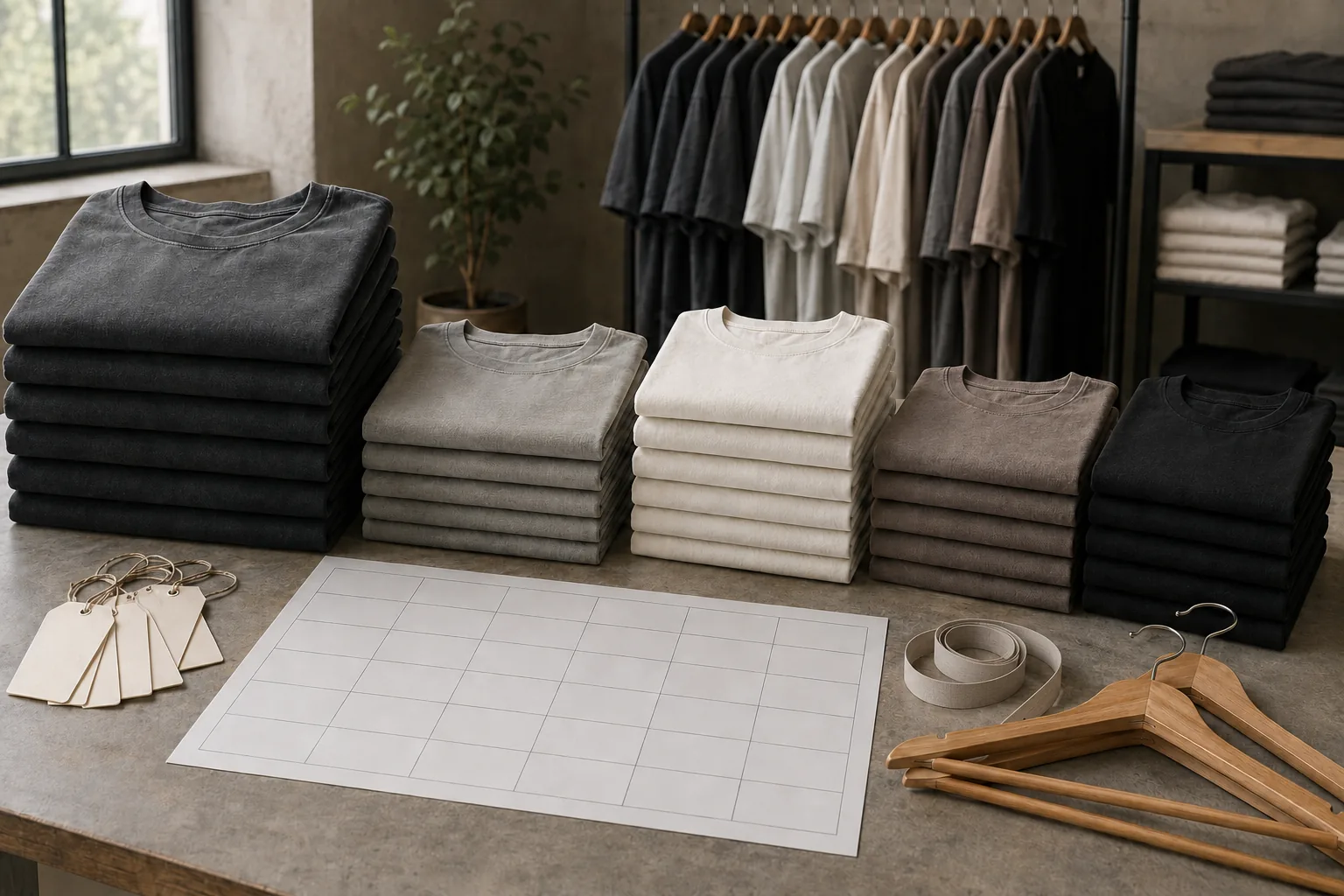
A color-by-size order matrix is the buyer-approved table that assigns every unit in a style MOQ to a specific color and size; its row and column totals must equal the complete 1,000-piece style quantity. It converts an assortment idea into a production instruction that purchasing, sampling and bulk teams can reconcile.
Confirmed commercial framework
Start with the fixed sourcing parameters.
Allocation workflow
Seven steps from assortment to bulk release.
Define one style
Confirm the garment, 100% cotton composition, target within 220–300 GSM, fit, wash direction and decoration. If a material, silhouette or construction changes, ask whether it creates a separate style before combining quantities.
Select the color assortment
List every intended color and identify whether the base is solid, washed or otherwise finished. Color references should be connected to the physical sample approval process.
Set the size range
Use the buyer’s measurement chart and intended market. Do not infer a size curve from a visual reference or copy another program without confirming demand.
Build the matrix
Put colors in rows and sizes in columns, then enter the unit count for every combination. Zero quantities should remain explicit so missing entries are not mistaken for unfinished decisions.
Reconcile totals
Add every color row, every size column and the overall total. The final number must equal the 1,000-piece style MOQ before the allocation is treated as complete.
Connect approvals
Reference the approved garment sample, artwork version, decoration placement, color direction, labels and packing instructions alongside the matrix.
Freeze before bulk
Release one dated buyer-approved version. Any later allocation change should be reviewed for its effect on material, decoration and production planning.
Illustrative allocation only
Example: two colors and four sizes.
This example shows how totals reconcile. It is not a recommended or required size ratio; the buyer defines the actual allocation.
Planning approaches
Choose a ratio method that matches the buyer’s evidence.
Equal split
Simple for an early planning model, but it should not be mistaken for proven demand. Review whether equal quantities create avoidable over- or under-allocation by size or color.
Demand-weighted split
Use buyer-owned sales, preorder or channel data to place more units where demand is expected. Document the source and date of the ratio.
Channel-specific split
Allocate by retail, wholesale, e-commerce or destination program first, then consolidate a production matrix that still reconciles to the full style quantity.
Buyer FAQ
Concise answers for purchasing teams.
What is a color-by-size order matrix?
It is the buyer-approved table that assigns every unit in a style order to one color and one size. Its row and column totals must reconcile to the complete style quantity.
Can the 1,000-piece MOQ include mixed colors and sizes?
Yes. The confirmed MOQ is 1,000 pieces per style, and mixed colors and mixed sizes are supported within that agreed style quantity.
Is the illustrative matrix a required size ratio?
No. It is an educational example only. The buyer defines the actual color and size allocation according to demand, channel and assortment needs.
When should the allocation be finalized?
Finalize the matrix before bulk release, after the style, colors, size range, approved sample, decoration and other required production details are aligned.
What product details should accompany the matrix?
Provide the 100% cotton requirement, target within 220–300 GSM, fit or measurement chart, color direction, artwork and decoration method, labels, packing instructions and destination requirements.
How do the 7-day and 30-day targets apply?
The sample target is 7 days after required details are confirmed. The bulk target is 30 days after required approvals and production details are confirmed. Both are planning targets, not unconditional guarantees.