OVERSIZED FIT · SOURCING BRIEF
How to Prepare an Oversized Heavyweight T-Shirt Sourcing Brief
Translate an oversized design direction into measurable fit controls, confirmed material parameters and a buyer-approved path from sample to bulk.
Direct definition
What is an oversized heavyweight T-shirt sourcing brief?
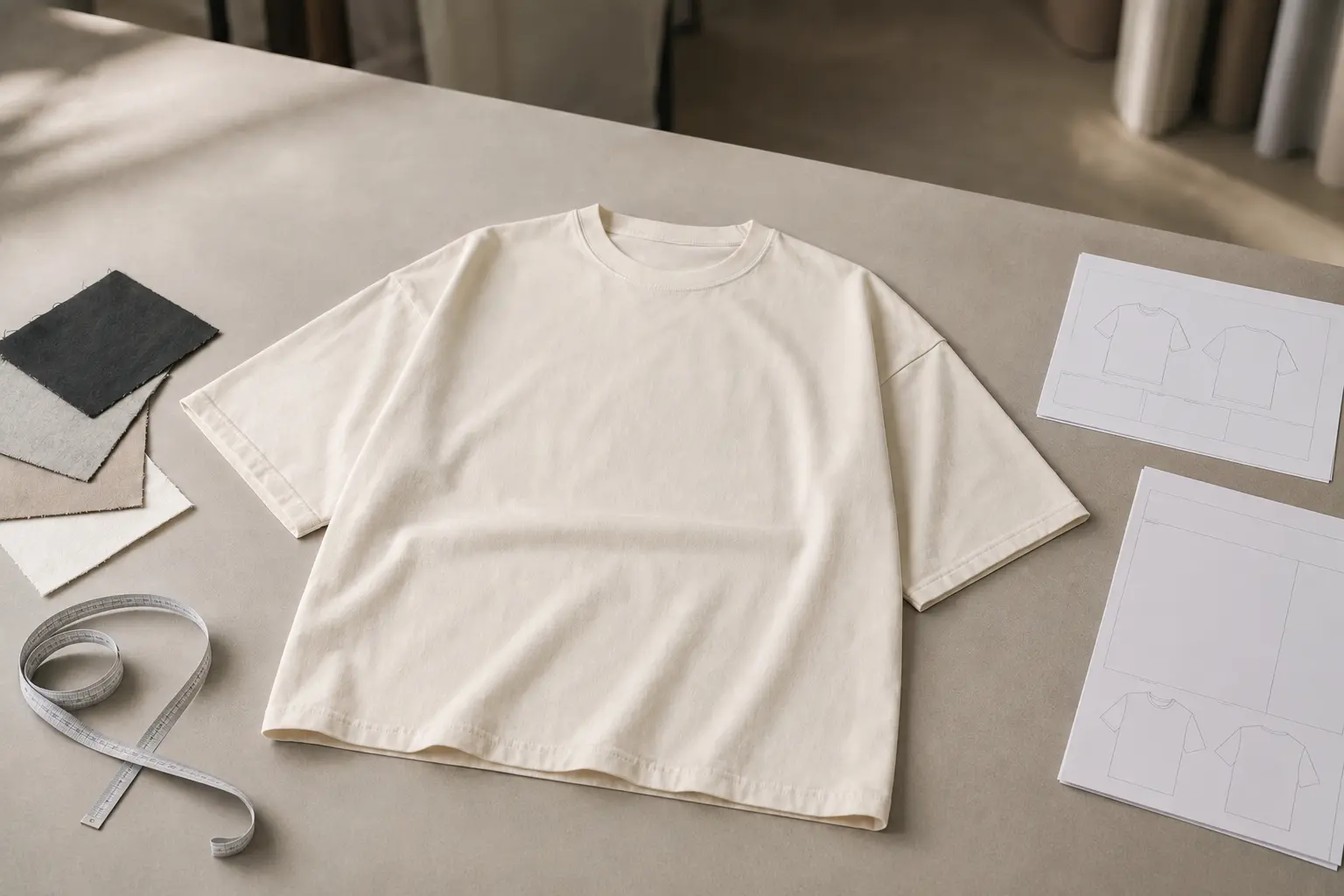
An oversized heavyweight T-shirt sourcing brief is a buyer-controlled specification that converts a relaxed silhouette into measurable fit points, a 100% cotton 220–300 GSM material target, a defined finish and an approval-ready commercial plan. It prevents the word “oversized” from becoming the only fit instruction.
Confirmed sourcing framework
Separate known parameters from buyer-defined fit.
Seven sourcing decisions
Make the brief sample-ready.
Define the intended silhouette
Describe the visual relationship between body width, length, shoulder, sleeve and neckline. Use a front, back and side reference when the design depends on a particular drape.
Provide measurable fit control
Attach buyer-approved measurements, measurement points and a base size, or send a reference garment that can be measured. Do not ask the word “oversized” to replace fit data.
Select the material target
Confirm 100% cotton and choose a target within 220–300 GSM. Review fabric weight with the silhouette because structure and drape affect how the intended volume is perceived.
Connect finish and decoration
State the wash direction and select screen printing, DTG, embroidery or special printing. Define artwork scale and placement on the oversized base, not on a different fit.
Approve the physical sample
Use the 7-day sample target only after the required fit, material and artwork details are confirmed. Review the physical garment against the controlling measurements and visual reference.
Build the order matrix
Allocate mixed colors and mixed sizes within the 1,000-piece style MOQ. Every unit should connect to one approved style, color and size combination.
Release the bulk plan
Record the approved sample version and final allocation before production. Treat the 30-day bulk period as a target after required approvals, subject to confirmed project conditions.
Fit control comparison
Use references for direction and measurements for control.
Visual reference only
Useful for communicating attitude and silhouette, but insufficient for controlling garment dimensions or grading.
Measurement chart
Defines buyer-selected points of measure, base size and intended dimensions so the sample can be reviewed objectively.
Approved physical sample
Connects measurements, material, wash and decoration to one tangible bulk reference. Record its version before release.
Buyer FAQ
Concise oversized T-shirt sourcing answers.
What is an oversized heavyweight T-shirt sourcing brief?
It is a buyer-controlled document that defines the intended oversized silhouette, measurable fit points, 100% cotton requirement, 220–300 GSM target, wash or decoration, quantity and approval route.
Is an oversized reference photo enough for sampling?
No. A photo can communicate visual direction, but the sample should also be controlled by buyer-approved measurements or a measurable reference garment.
Which fabric weight can buyers select?
The confirmed T-shirt range is 220–300 GSM in 100% cotton. The buyer should select a target within that range and review it together with the intended fit and finish.
What is the MOQ for one oversized T-shirt style?
The confirmed MOQ is 1,000 pieces per style. Mixed colors and mixed sizes are supported within the agreed style allocation.
Which decoration methods are available?
Supported methods include screen printing, DTG, embroidery and special printing. Placement and scale should be approved on the intended oversized garment sample.
How should buyers plan sample and bulk timing?
Use 7 days as the sample target after required details are confirmed and 30 days as the bulk target after required approvals. These are planning targets rather than unconditional guarantees.