oem-odm · B2B PROCUREMENT
Water-Based Print T-Shirt Manufacturer: Soft Hand Guide
By Weavnora · Updated
Direct answer
What buyers need to know
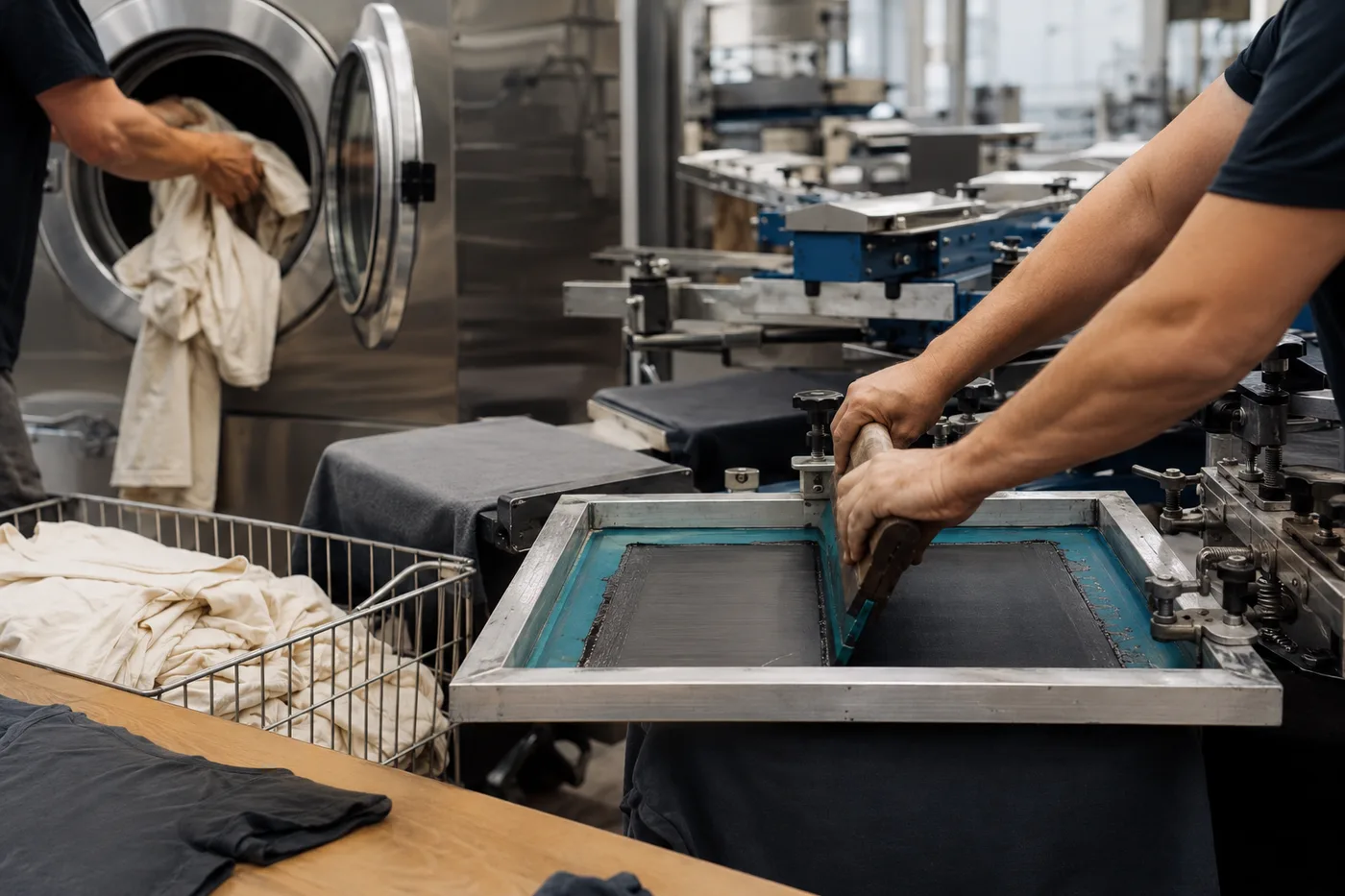
Water-based print t-shirt manufacturer programs screen print inks that soak into 180-300 GSM cotton tees, giving a soft, breathable hand. Light tees print directly; dark tees may need discharge or a thin underbase. Plan 1-2 strike-off rounds, 7-12 days for samples and 25-40 days for bulk, with MOQ depending on style and fabric.
Water-based print t-shirt manufacturer programs screen print inks that soak into 180-300 GSM cotton tees, giving a soft, breathable hand. Light tees print directly; dark tees may need discharge or a thin underbase. Plan 1-2 strike-off rounds, 7-12 days for samples and 25-40 days for bulk, with MOQ depending on style and fabric.
Many brands move to water-based inks after customers complain that a print feels like a plastic patch. Water-based prints sink into the fabric, so a heavyweight or vintage-washed tee keeps its natural drape and the graphic ages with the garment. The method takes more skill than plastisol, though. The ink dries in the screen, colours look different on dark shirts and curing must be done carefully. This guide is organised around the decisions a brand makes, from base tee to bulk QC.
What is a water-based print t-shirt manufacturer?
A water-based print t-shirt manufacturer is a garment factory that screen prints tees with inks that use water as the main carrier instead of PVC plastisol. The ink dyes into the cotton fibres rather than sitting on top, so the print feels soft and breathes with the fabric. Most programs use 100% cotton jersey of 180-300 GSM, fine to medium mesh screens and 1-2 strike-off rounds.
Decision 1: Light tees, dark tees or washed tees?
Water-based ink is semi-transparent. On white, cream, heather and pastel tees it prints directly and gives bright, soft colours. On black, navy and other dark tees the colour sinks in and looks dull. For dark shirts, factories usually choose one of three routes:
- Discharge base: a discharge agent removes the dye where the print sits, then colour is added. This keeps the print very soft. See our guide to discharge print t-shirt manufacturers.
- Thin water-based white underbase: gives more opacity but slightly more hand feel.
- High-solid water-based inks: newer inks that cover better on darker colours, with a soft but slightly firmer hand.
Garment washed and pigment-dyed tees take water-based prints well and can give a natural vintage look when the print is washed with the garment.
Want a softer print on your tees? Weavnora screen prints water-based graphics on heavyweight and washed cotton tees and approves hand feel on a washed strike-off before bulk. See our screen printing page for the base styles and fabrics we work with, then request a quote with your style, fabric and quantities. MOQ depends on style and fabric, so we confirm it in your quote.
Decision 2: Fabric and weight
Use 100% cotton or high-cotton blends. Water-based inks need natural fibres to absorb into. A 180-300 GSM ring-spun or combed jersey gives a clean print surface. Heavier tees absorb more ink, so the printer may adjust mesh or squeegee pressure to keep colours even. Our comparison of water-based vs plastisol hand feel on heavyweight tees shows how weight changes the result.
Decision 3: Artwork and mesh
Water-based prints handle fine detail and halftones well because the ink layer is thin. Printers typically use finer meshes than for plastisol underbases, which controls how much ink is laid down. Mesh choice affects colour strength, edge sharpness and softness. Our note on screen mesh count vs ink deposit for water-based prints explains how to approve this on the strike-off.
Send vector or high-resolution artwork, Pantone references, print size and placement from the high point of shoulder, and your base tee colours.
Decision 4: Curing and wash testing
Water-based ink must be fully dried and cured, or the colour will wash out. Factories usually run prints through a tunnel dryer at a set temperature and belt speed, sometimes with a longer dwell for heavy tees. Ask for a 3-5 cycle home wash test on the strike-off and check fading, cracking and colour bleed. Our article on soft hand water-based print programs lists the checks to request.
Water-based vs plastisol vs discharge: which option fits?
| Selection criteria | Water-based | Plastisol | Discharge |
|---|---|---|---|
| Hand feel | Soft, breathable | Medium to heavy | Softest on dark tees |
| Best tee colours | Light and mid tones | Any | Dark, reactive-dyed cotton |
| Colour opacity | Semi-transparent | Opaque | Depends on base dye |
| Fine detail | Very good | Good | Good |
| Production difficulty | Higher | Lower | Higher, needs dye testing |
| Aged, vintage look | Natural | Needs special finish | Natural |
The trade-offs are softness versus opacity and ease. Water-based inks give a soft, natural print that suits heavyweight and washed tees, but they need more press skill and do not cover dark colours as easily as plastisol. Plastisol is easier and more opaque, but feels heavier. Discharge gives the softest print on dark tees, but only works when the base dye can be discharged.
What hand feel should you approve?
Hand feel is the main reason brands choose water-based ink, so it deserves a clear approval standard. Describe the target in words, such as "no feel" or "very slight feel", and keep a physical reference tee if you have one. Hand feel changes after washing, usually becoming softer, so judge it on the washed strike-off rather than a fresh print. Large solid areas feel firmer than halftones or distressed designs, even with the same ink. Our note on the after-cure print hand feel band for soft hand tees shows how to write this into your approval.
How do you keep water-based colour consistent in bulk?
Because water-based ink can dry in the mesh, printers often add retarders and keep screens flooded during runs. Colour can shift slightly between the first and last pieces of a run. A reliable factory:
- Mixes each colour in one batch per order where possible.
- Checks prints against the sealed strike-off at the start of each shift.
- Records mesh, squeegee, flash and dryer settings.
- Runs a wash test from the first bulk lot.
Ask how the factory handles colour approval under daylight and shop lighting, since water-based colours can look different under each.
Is water-based ink better for the environment?
Water-based inks do not contain PVC or phthalates, and many brands prefer them for that reason. They still contain binders and pigments, and washing screens creates wastewater that must be treated. Avoid overstating environmental claims on your product pages. Describe the ink type accurately and ask your factory which ink system it uses. For the full production flow, see our custom t-shirt manufacturing guide.
Water-based print t-shirt manufacturer: typical specs and key numbers
| Spec | Typical estimate range |
|---|---|
| Base tee weight | 180-300 GSM, cotton or high-cotton blend |
| Strike-off rounds before approval | 1-2 rounds |
| Home wash test on strike-off | 3-5 cycles |
| Printed sample lead time | 7-12 days |
| Bulk production after approval | 25-40 days |
| Typical print width on chest | 25-35 cm |
| MOQ (pcs per style and colour) | Depends on style and fabric; confirmed in your quote |
These are typical industry estimate ranges for planning, not quotes; confirm actual figures with your supplier for your fabric, quantity and destination.
Key takeaways
- Water-based ink soaks into cotton for a soft, breathable print that suits heavyweight and washed tees.
- Light tees print directly; dark tees need discharge, a thin underbase or high-solid inks.
- Mesh choice and full curing decide colour strength and wash durability.
- Choose plastisol for opacity and ease, water-based for softness and a natural vintage look.
- Approve a washed strike-off and record press settings for bulk.
Request a water-based print t-shirt manufacturer quote
Ready to sample a water-based print tee? Send your tech pack or reference images, fabric preference, colours and quantities through our quote request form. MOQ depends on style and fabric, so we confirm it in your quote together with sampling time, approval steps and an itemised price.
Buyer questions
Frequently asked questions
What is a water-based print on a t-shirt?
It is a screen print made with ink that uses water as its carrier. The ink absorbs into the cotton, so the print feels soft and breathable.
Can water-based ink print on black t-shirts?
Yes, but colours sink in on dark tees. Factories use discharge, a thin underbase or high-solid inks to keep colours bright on dark shirts.
Does water-based print fade?
It fades slowly over time, which many brands like for a vintage look. Full curing and a 3-5 cycle wash test help confirm durability before bulk.
Is water-based print more expensive than plastisol?
It is often a little more expensive because printing is slower and needs more care. Exact cost depends on colours, print size and quantity.
What is the MOQ for water-based print t-shirts?
MOQ depends on style, fabric and the number of colours and placements. Send your artwork and quantities through a quote request for an exact answer.
Start a sourcing conversation
Share quantity, target GSM, destination and sample requirements.
Start your RFQ →Email files to postmaster@weavnora.com.