oem-odm · B2B PROCUREMENT
Discharge Print T-Shirt Manufacturer: Inks, Colours and Specs
By Weavnora · Updated
Direct answer
What buyers need to know
Discharge print t-shirt manufacturer programs print a discharge agent onto dyed 100% cotton tees, usually 200-300 GSM, to remove the base colour and leave a soft, no-feel graphic. Plan 1-2 strike-off rounds, a 150-170 C cure window, 7-12 days for printed samples and 25-40 days for bulk, with MOQ depending on style and fabric.
Discharge print t-shirt manufacturer programs print a discharge agent onto dyed 100% cotton tees, usually 200-300 GSM, to remove the base colour and leave a soft, no-feel graphic. Plan 1-2 strike-off rounds, a 150-170 C cure window, 7-12 days for printed samples and 25-40 days for bulk, with MOQ depending on style and fabric.
Discharge printing is the technique behind many of the softest graphic tees on the market. Instead of laying a thick layer of ink on top of a dark shirt, the printer removes the shirt's own dye inside the design, so a black tee can carry a bright, vintage-looking graphic you can barely feel. The trade-off is that discharge depends heavily on the fabric, the dye and the cure, which makes the choice of manufacturer more important than with standard plastisol. This guide explains how a discharge print t-shirt manufacturer works, which base tees discharge well, and how to brief a program so samples and bulk match.
What is a discharge print t-shirt manufacturer?
A discharge print t-shirt manufacturer is a garment factory that screen prints a discharge agent, often mixed with pigment, onto reactive-dyed cotton tees so the dye is chemically removed inside the artwork and replaced with a lighter or coloured tone. The print sits in the fibre rather than on top, so the hand feel stays close to the fabric. Most programs use 200-300 GSM 100% cotton jersey, 1-2 strike-off rounds and a cure around 150-170 C.
How does discharge printing work on a cotton tee?
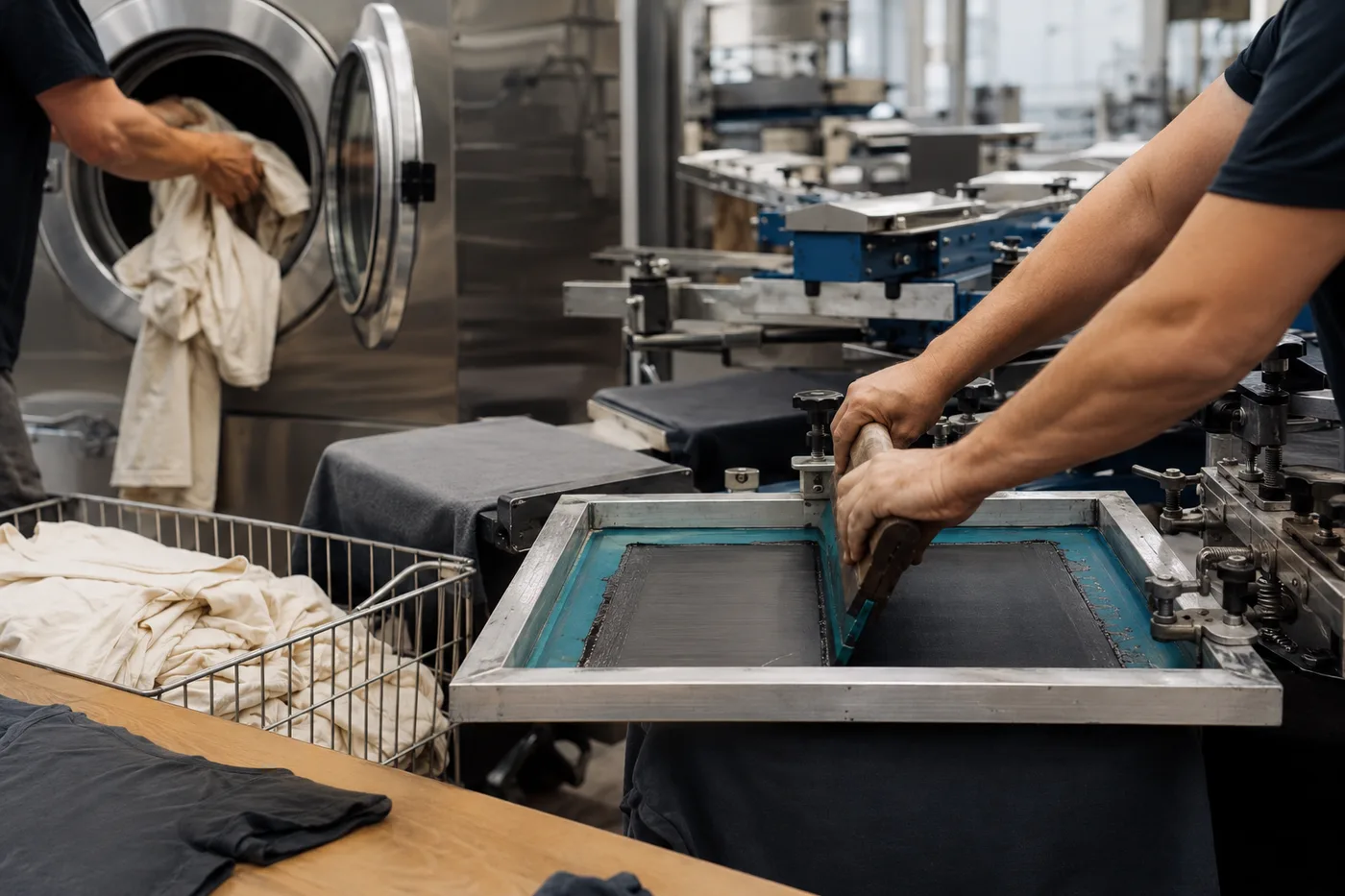
A discharge paste contains an activator, usually zinc formaldehyde sulfoxylate in traditional systems or newer low-impact agents, mixed into a water-based base. The printer pushes the paste through the screen onto a dyed cotton tee. Nothing visible happens at first. When the shirt passes through the dryer, heat triggers the activator, which breaks down the reactive dye in the printed area and reveals a lighter tone that is close to the natural cotton colour.
If the brand wants a coloured print, the printer adds pigment to the discharge base. The dye is removed and the pigment takes its place in the same step, which is why discharge can print bright colours on black without a white underbase. After curing, many factories run a light rinse or a wash to remove residual odour and soften the hand.
For the wider decoration landscape, our overview of special print options for heavyweight cotton tees compares discharge with puff, foil, high density and other techniques.
Planning a discharge print drop? Weavnora screen prints discharge graphics on heavyweight cotton tees and seals a strike-off for every base colour before bulk. See our screen printing page for the base styles and fabrics we work with, then request a quote with your style, fabric and quantities. MOQ depends on style and fabric, so we confirm it in your quote.
Which tees and colours discharge well?
Discharge only works when the fabric and dye allow it. Three rules matter most:
- Fibre content. Use 100% cotton. Polyester is not dyed with reactive dyes and does not discharge, so blends give a ghosted, uneven print.
- Dye class. Reactive-dyed cotton discharges well. Some colours, especially certain royal blues, purples, kelly greens and some reds, are dyed with chemistry that resists discharge and may only lift to a muddy tone.
- Weight and knit. 200-300 GSM jersey with a tight face gives clean edges. Very open or slubby knits can make fine lines look broken.
Ask the manufacturer for a discharge test on each base colour before you finalise the colour story. A five-minute heat test on a fabric swatch shows how far the colour lifts and whether the result is the warm cream, pinkish or greenish tone that some dyes produce.
How do you get consistent colour on discharge prints?
Discharge results vary more than plastisol because they depend on the dye lot of the shirt. Two lots of black jersey can discharge to slightly different creams. A good factory controls this by printing strike-offs on the actual bulk fabric lot, recording paste mix ratio, mesh count, squeegee pressure and dryer temperature, and keeping a sealed sample for each colour. Our note on the discharge print handfeel band versus a sealed sample explains how to write that tolerance into your approval.
It is also normal for discharge to look slightly different straight out of the dryer and after the first wash, so approvals should always be made on washed strike-offs.
Discharge vs water-based vs plastisol: which option fits?
All three are screen printing methods, but they create very different hand feel, colour behaviour and risk. Compare them before choosing.
| Selection criteria | Discharge | Water-based | Plastisol |
|---|---|---|---|
| Hand feel on dark tees | Softest, almost none | Soft, slight film | Noticeable layer |
| Bright colour on black | Yes, without underbase | Limited without underbase | Yes, with underbase |
| Works on polyester blends | No | Partly | Yes |
| Colour consistency across lots | Medium | Medium to high | High |
| Best for | Vintage, soft streetwear graphics | Soft prints on light tees | Bold, exact brand colours |
The trade-offs are softness versus control. Discharge gives the most natural, worn-in feel, but colour depends on the shirt's dye and fabric lot. Plastisol hits exact Pantone references and works on almost any fabric but feels heavier. Water-based sits in between. For a deeper hand feel comparison, see our article on water-based vs plastisol hand feel on heavyweight tees.
What should a discharge print tech pack include?
A clear tech pack avoids most disputes. Include the artwork in vector format with spot colours separated, print size and placement measured from the high point of shoulder, base tee colour and fabric reference, the target print colour as a physical swatch rather than only a Pantone code, and the wash method the finished tee will go through. If the tee is also garment washed after printing, say so, because a mineral or enzyme wash will soften and fade the discharge further.
You should also list any chemistry requirements. Many brands selling into Europe and North America ask for formaldehyde-free or low-impact discharge systems and a restricted substances statement from the ink supplier. Our screen printing brief for heavyweight cotton tees lists the other fields a printer needs.
Which quality checks matter before bulk?
Before bulk, approve a washed strike-off on the bulk fabric lot. During production, the factory should check print registration, edge sharpness, discharge depth against the sealed sample, residual odour, and dryer temperature logs. After curing, a wash test of 3-5 home cycles shows whether the colour stays stable and whether any pigment component cracks or fades too fast.
Because discharge removes dye, it can slightly weaken the fibres in very large solid areas. For full-front blocks, ask for a seam or fabric strength check on the printed panel. For cost and timing in context, our custom t-shirt manufacturing guide shows where printing sits in the full production schedule, and our heavyweight t-shirt GSM guide helps you choose the base weight.
Discharge print t-shirt manufacturer: typical specs and key numbers
| Spec | Typical estimate range |
|---|---|
| Base tee weight | 200-300 GSM, 100% cotton |
| Strike-off rounds before approval | 1-2 rounds |
| Cure temperature window | 150-170 C |
| Home wash test on strike-off | 3-5 cycles |
| Printed sample lead time | 7-12 days |
| Bulk production after approval | 25-40 days |
| MOQ (pcs per style and colour) | Depends on style and fabric; confirmed in your quote |
These are typical industry estimate ranges for planning, not quotes; confirm actual figures with your supplier for your fabric, quantity and destination.
Key takeaways
- Discharge printing removes the tee's own dye inside the artwork, giving a soft, almost no-feel print.
- Use 100% reactive-dyed cotton in the 200-300 GSM range and test every base colour first.
- Approve washed strike-offs printed on the actual bulk fabric lot.
- Choose discharge for vintage softness, plastisol for exact colour control on any fabric.
- Specify low-impact or formaldehyde-free chemistry if your market requires it.
Request a discharge print t-shirt manufacturer quote
Ready to sample a discharge print tee? Send your tech pack or reference images, fabric preference, colours and quantities through our quote request form. MOQ depends on style and fabric, so we confirm it in your quote together with sampling time, approval steps and an itemised price.
Buyer questions
Frequently asked questions
What is a discharge print t-shirt?
It is a cotton tee printed with a discharge agent that removes the shirt's dye inside the design, sometimes adding pigment at the same time. The print feels soft because it sits in the fibre rather than on top.
Can you discharge print on any colour tee?
No. Discharge needs 100% reactive-dyed cotton, and some colours such as certain royal blues, purples and greens lift poorly. A quick heat test on each base colour shows the result before bulk.
Does discharge print fade quickly?
Discharge itself is very durable because the colour change happens in the fibre. Any added pigment can soften with washing, which is why a 3-5 cycle wash test is part of approval.
Is discharge printing safe for EU and US markets?
Brands commonly ask for low-impact or formaldehyde-free discharge systems and an ink supplier restricted substances statement. Confirm the chemistry with your manufacturer before sampling.
What is the MOQ for discharge print t-shirts?
MOQ depends on style, fabric and the number of base colours and print colours. Send your artwork, tee colours and quantities through a quote request for an exact answer.
Start a sourcing conversation
Share quantity, target GSM, destination and sample requirements.
Start your RFQ →Email files to postmaster@weavnora.com.