oem-odm · B2B PROCUREMENT
Stone Wash Cost per Piece: Pumice, Stoneless and Price Drivers
By Weavnora · Updated
Direct answer
What buyers need to know
Stone wash cost per piece is the processing charge for abrading and fading one garment by tumbling it with pumice stones or stoneless abrasives in an industrial washer. It depends on garment weight, abrasion level, load size, cleaning and rejects. Typical cycles run 40-90 minutes, shrink cotton 3-7% and add 3-7 days to bulk. MOQ depends on style and fabric.
Stone wash cost per piece is the processing charge for abrading and fading one garment by tumbling it with pumice stones or stoneless abrasives in an industrial washer. It depends on garment weight, abrasion level, load size, cleaning and rejects. Typical cycles run 40-90 minutes, shrink cotton 3-7% and add 3-7 days to bulk. MOQ depends on style and fabric.
Stone wash gives garments a worn-in, faded look with soft highlights on seams, hems, collars and pocket edges, the kind of wear that normally takes years. On heavyweight tees, hoodies and sweatpants it creates a vintage feel that brands can sell at a premium. The process sounds simple, garments tumbling with stones, but cost per piece varies widely with garment weight, abrasion level and how the wash house cleans the garments afterwards. This guide explains what drives stone wash cost per piece, how pumice and stoneless washing compare, and how to brief the wash so your quote is accurate and your rejects stay low.
What is stone wash cost per piece?
Stone wash cost per piece is the wash-house charge allocated to one garment for tumbling it with pumice stones, or with stoneless abrasive agents, so that seams, edges and surfaces wear and fade naturally. It covers stones or abrasives, water, energy, machine time, stone dust removal, rinsing, softening, drying and checking. A typical cycle runs 40-90 minutes and the wash usually adds 3-7 days to bulk.
How does stone washing work?
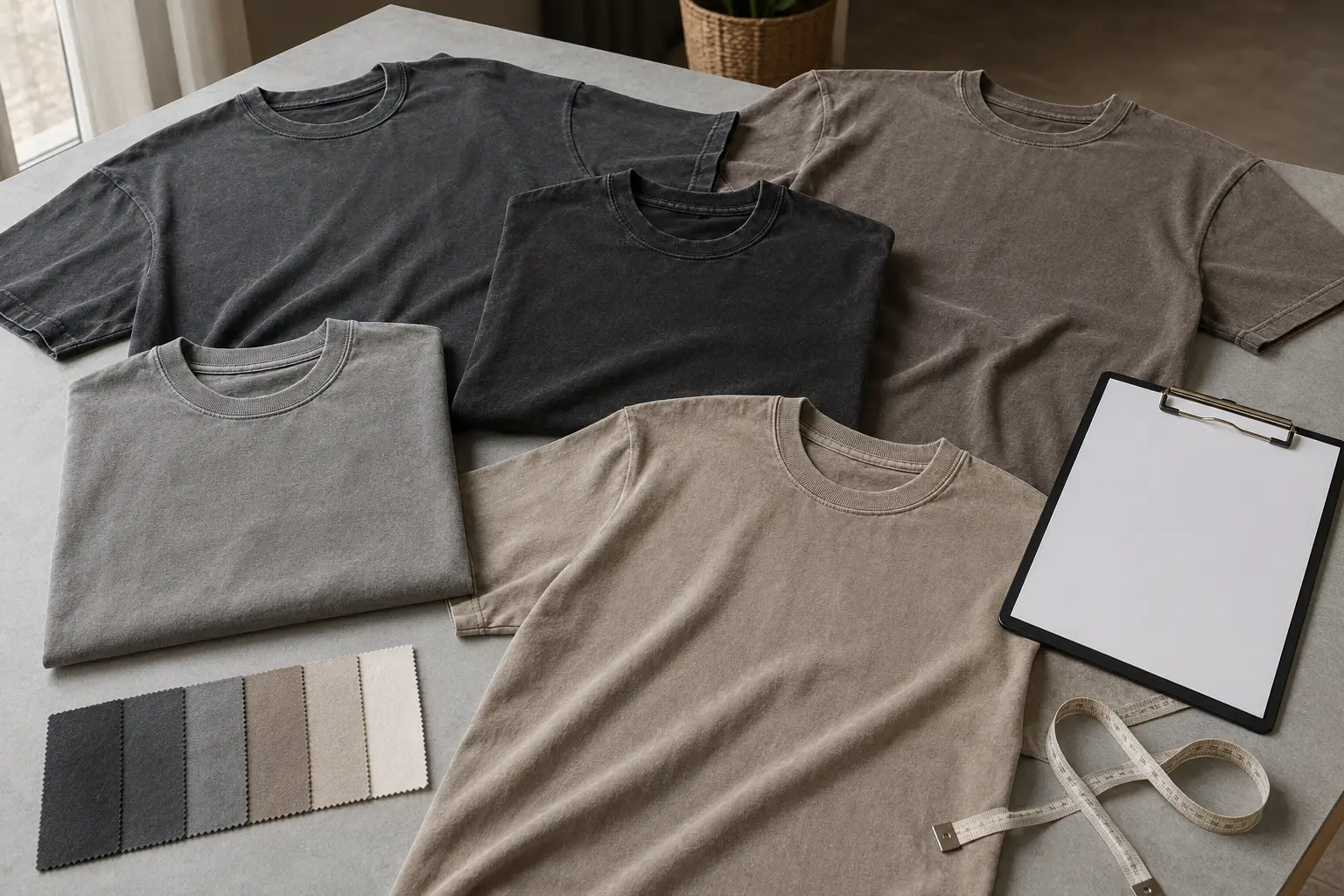
Garments are loaded into a large washer with pumice stones, water and often a small amount of enzyme. As the drum turns, the stones rub the fabric, removing surface dye and fibre, especially on raised areas such as seams and hems. When the target look is reached, the stones are separated, garments are rinsed to remove stone dust, softened and dried. Stoneless washing replaces pumice with abrasive enzymes, synthetic stones or special chemicals, giving a similar effect with less stone dust and less machine wear. The stone wash t-shirt manufacturer guide and the stone wash hoodie manufacturer guide show the finished looks.
Pricing a stone washed range? Weavnora produces stone washed tees, hoodies and sweatpants and can sample light, medium and heavy abrasion on your fabric, then itemise the wash charge in your quote. See our vintage washed t-shirts page for the base styles and fabrics we work with, then request a quote with your style, fabric and quantities. MOQ depends on style and fabric, so we confirm it in your quote.
What drives stone wash cost per piece?
The biggest drivers are garment weight, because heavy hoodies and sweatpants take more space and drying time than tees; abrasion level, because heavier wear needs longer cycles and more stones; load efficiency, because full loads spread fixed machine time across more pieces; post-wash cleaning, because pocket bags, hoods and rib can trap stone dust that must be shaken or blown out by hand; and rejects, because over-abrasion can create holes or thin spots at seams. Testing for strength and shrinkage adds to the program.
Pumice stone wash vs stoneless wash vs enzyme wash: how do costs compare?
| Selection criteria | Pumice stone wash | Stoneless wash | Enzyme wash |
|---|---|---|---|
| Relative processing cost | Medium to high | Medium | Low to medium |
| Abrasion and seam highlights | Strong, natural | Medium to strong | Light |
| Stone dust cleaning | Required, labour heavy | Minimal | None |
| Machine and fabric wear | Higher | Lower | Low |
| Cycle time | 40-90 minutes | 30-70 minutes | 30-60 minutes |
| Best for | Authentic heavy vintage wear | Consistent wear with less cleaning | Soft, lightly faded basics |
The trade-offs are authenticity against cleaning time and consistency. Pumice gives the most natural, uneven wear but needs extra labour to remove dust and causes more variation. Stoneless methods give more consistent results and less cleaning but may look slightly more even. Enzyme wash is cheapest but gives only a light effect; see the enzyme vs stone wash abrasion guide.
How do garment details change the price?
Hoodies with kangaroo pockets, lined hoods and drawcords trap more stone dust and need more cleaning than tees. Metal eyelets and aglets can scratch in stone washers, and plastic trims can chip, so trims may need protection or be added after washing. Prints applied before washing will fade and crack, which is sometimes the goal; otherwise printing after washing is safer but becomes a separate step. Polyester thread will not fade, so contrast stitching may stand out.
How can brands keep stone wash cost under control?
Group styles with similar weight and colour into the same loads. Pick one abrasion level per collection and approve it as a band with lighter and heavier limits. Use fabric heavy enough to resist holes, such as 240-300 GSM for tees and 350-450 GSM for fleece. Consider stoneless washing for hoodies to cut cleaning time. Ask for itemised quotes that show garment, wash, decoration and packing separately. The vintage wash hoodie cost per piece guide shows how wash costs fit a full hoodie quote.
How should stone wash be sampled and approved?
Ask for wash samples at two or three abrasion levels on the real garment and colour. Check seam highlights, hem wear, any holes at seams and pocket corners, residual stone dust and hand feel. Measure after washing, as shrinkage of 3-7% is common. Wash at home three to five times to check stability. Seal the approved sample and limits and record the recipe.
What should be included in the quote?
A clear quote states the base garment price, stone or stoneless wash charge, post-wash cleaning, any softener or tint step, decoration, testing, packing and expected reject allowance, plus the added wash lead time. For the overall cost structure, see the apparel manufacturing cost and pricing guide.
Does stone wash cost differ between tees, hoodies and sweatpants?
It does, mainly through weight, volume and cleaning. Tees are light and simple, so many fit in one load and stone dust shakes out easily. Hoodies and sweatpants are heavier, and their pockets, hoods, waistbands and cuffs trap dust, so they need more cleaning time per piece. Sweatpants also need waistband elastic and drawcords checked after washing, because abrasion and heat can damage them. Rib on cuffs and hems usually shows strong highlights, which is part of the look but must stay within the approved band. For matching sets, wash tops and bottoms in the same load and fabric lot so the wear level and shade are consistent across the set.
Stone wash cost per piece: typical specs and key numbers
| Spec | Typical estimate range |
|---|---|
| Tee fabric weight for stone wash | 240-300 GSM |
| Fleece weight for stone wash | 350-450 GSM |
| Wash cycle time | 40-90 minutes |
| Shrinkage after wash | 3-7% |
| Typical strength loss | 3-8% |
| Wash sample time | 7-14 days |
| Added bulk time for washing | 3-7 days |
| MOQ (pcs per style and colour) | Depends on style and fabric; confirmed in your quote |
These are typical industry estimate ranges for planning, not quotes; confirm actual figures with your supplier for your fabric, quantity and destination.
Key takeaways
- Stone wash cost per piece covers stones or abrasives, utilities, machine time, cleaning, rejects and testing.
- Garment weight, abrasion level, load efficiency and dust cleaning drive the price.
- Pumice gives the most authentic wear; stoneless washing is more consistent with less cleaning.
- Heavier fabrics and one approved abrasion band reduce holes and rejects.
- Ask for itemised quotes that separate garment, wash, decoration and packing.
Request a stone wash quote
Ready to price your stone washed pieces? Send your tech pack or reference images, fabric preference, colours and quantities through our quote request form. MOQ depends on style and fabric, so we confirm it in your quote together with sampling time, approval steps and an itemised price.
Buyer questions
Frequently asked questions
Why do stone washed hoodies cost more to wash than tees?
They are heavier, dry slower and trap stone dust in pockets and hoods.
Is stoneless washing cheaper?
Often similar or slightly lower overall, because cleaning time drops.
Can stone wash cause holes?
Over-abrasion can, especially on light fabrics and seams, so test first.
Should I print before or after stone washing?
After, unless you want a cracked, faded print effect.
What is the MOQ for stone washed garments?
MOQ depends on style and fabric, so we confirm it in your quote.
Start a sourcing conversation
Share quantity, target GSM, destination and sample requirements.
Start your RFQ →Email files to postmaster@weavnora.com.