oem-odm · B2B PROCUREMENT
Screen Printed Hoodie Manufacturer: Inks, Mesh and Fleece Specs
By Weavnora · Updated
Direct answer
What buyers need to know
Screen printed hoodie manufacturer programs print plastisol, water-based or discharge inks onto 320-450 GSM fleece hoodies through mesh screens, usually 110-160 mesh, then cure at about 150-170 C. Plan 1-2 strike-offs, 5-10 wash tests, 7-12 days for samples and 30-45 days for bulk, with MOQ depending on style and fabric.
Screen printed hoodie manufacturer programs print plastisol, water-based or discharge inks onto 320-450 GSM fleece hoodies through mesh screens, usually 110-160 mesh, then cure at about 150-170 C. Plan 1-2 strike-offs, 5-10 wash tests, 7-12 days for samples and 30-45 days for bulk, with MOQ depending on style and fabric.
Screen printing is still the workhorse decoration for hoodies. It handles bold graphics, large back prints and detailed artwork at a cost per piece that falls quickly as quantities rise. Printing on fleece, though, is different from printing on a tee. The surface is thicker and more textured, the fabric absorbs more ink and heat, and the hood, pocket and seams get in the way of large designs. This guide explains how a screen printed hoodie manufacturer chooses inks and mesh, how to plan placement and colours, and how to test durability before bulk.
What is a screen printed hoodie manufacturer?
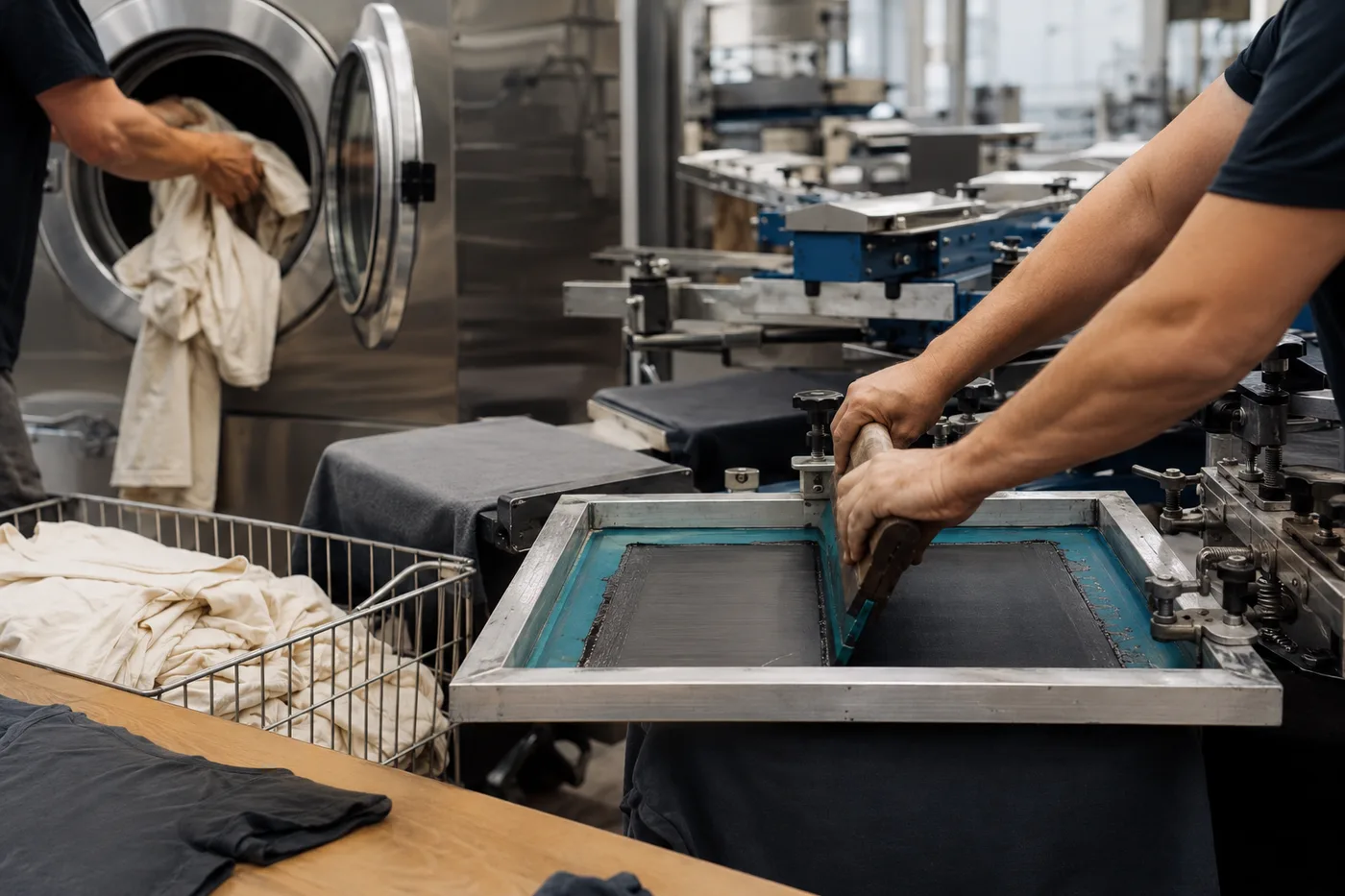
A screen printed hoodie manufacturer is a factory that makes hoodies and decorates them by pushing ink through stencilled mesh screens, one screen per colour, then heat-curing the ink so it bonds to the fleece. It controls ink type, mesh count, underbase, print size and curing so the graphic stays sharp on thick fabric. Typical programs print 320-450 GSM hoodies with 1-6 colours and 1-2 strike-off rounds.
Which inks work best on hoodies?
Three ink families cover most hoodie programs:
- Plastisol. Opaque, bright and durable. Sits on top of the fleece and gives a slightly raised hand. Works on any colour.
- Water-based. Soaks into the fibre for a soft hand and a more vintage look. Best on light and mid colours or with a discharge base on darks.
- Discharge. Removes the dye from cotton and replaces it with colour for a very soft print on dark hoodies. Needs reactive-dyed cotton fleece.
Specialty inks such as puff, high density, glitter and reflective add texture. For a direct comparison, see our guide to water-based vs plastisol hand feel on heavyweight tees; the same differences apply on fleece, with stronger ink absorption. Our puff print hoodie manufacturer page covers raised prints.
Planning screen printed hoodies? Weavnora makes heavyweight hoodies and screen prints them in-house, matching ink, mesh and curing to each fleece. See our screen printing page for the base styles and fabrics we work with, then request a quote with your style, fabric and quantities. MOQ depends on style and fabric, so we confirm it in your quote.
How do mesh, underbase and curing change on fleece?
Fleece is thicker and more textured than jersey, so print settings change:
- Mesh count. Lower mesh such as 110-125 lays down more ink for bold, opaque prints; 140-160 suits finer detail.
- Underbase. On dark hoodies, a white underbase is printed and flashed first so top colours stay bright.
- Pressure and passes. Extra passes may be needed to fill the texture of the fleece.
- Curing. Thicker fabric needs a longer dryer dwell to reach full cure at about 150-170 C. Undercured ink cracks and washes out.
Ask the manufacturer how they verify cure, for example with a stretch test and wash test on production pieces, not only on the sample.
Where can prints go on a hoodie, and how large?
Common placements are centre chest, left chest, full front above the pocket, full back, sleeves and hood. The kangaroo pocket limits front prints: printing over a sewn pocket gives an uneven result, so many brands print the front panel before sewing. Large back prints often reach 30-40 cm wide on adult sizes. Measure placement from the high point of shoulder or centre back so it scales across sizes. Our hoodie sweatshirt embroidery placement guide shows standard positions that also apply to prints.
Screen print vs DTG vs embroidery on hoodies: which option fits?
Choose the method by design, quantity and look.
| Selection criteria | Screen print | DTG print | Embroidery |
|---|---|---|---|
| Best quantity | Medium to large runs | Small runs, many designs | Any, cost rises with stitches |
| Colour count | Cost rises per colour | Unlimited | Limited thread colours |
| Look on fleece | Bold, opaque, durable | Softer, can look faded on fleece | Raised, premium |
| Large back graphics | Excellent | Good | Costly |
| Durability | High when fully cured | Medium | High |
The trade-offs are setup versus flexibility. Screen printing has screen setup for each colour but the lowest cost per piece at volume and the most durable, bold result on fleece. DTG suits small runs with photographic art but can look less vibrant on textured fleece. Embroidery gives a premium look but costs more for large designs. Our comparison of embroidery vs screen printing for hoodies goes deeper.
How do you approve a printed hoodie sample?
Ask for a strike-off on the actual hoodie fabric and colour. Check colour against Pantone references, edge sharpness, opacity on dark fleece, hand feel and placement. Then wash the sample 5-10 times inside out and check for cracking, fading and peeling. Do a stretch test to confirm full cure. Once approved, lock screens, mesh, ink formulas and dryer settings for bulk.
What should bulk inspection cover?
During bulk, check print placement and size on each size range, colour consistency between batches, registration, ink smudges, pinholes, ghosting from flash cures and cure quality on random pieces. Our hoodie quality control checklist lists the general garment checks, and the hoodie tech pack template shows how to specify artwork. For the full path, see the custom hoodie and sweatshirt manufacturing guide.
How do colour count and print size change cost?
Screen print cost is driven by the number of colours, the number of print locations and the print size. Each colour needs its own screen and setup, and each location is another pass through the press. As a typical industry estimate, setup is a fixed cost per screen, so it matters most on small runs and becomes minor at higher quantities. To keep cost down, reduce colours where the design allows, combine front and back prints into fewer locations, and use the same screens across several hoodie colours. Simple changes such as a one-colour back print instead of four colours can make a meaningful difference without weakening the design.
Before bulk starts, ask the manufacturer to print a short pre-production run of a few pieces per colour on the actual bulk fabric. This catches differences between sample and bulk fleece, such as a slightly different surface or dye lot, before hundreds of hoodies are printed.
Screen printed hoodie manufacturer: typical specs and key numbers
| Spec | Typical estimate range |
|---|---|
| Hoodie fleece weight | 320-450 GSM |
| Mesh count | 110-160 mesh |
| Curing temperature | 150-170 C |
| Print colours per design | 1-6 colours |
| Large back print width | 30-40 cm |
| Sample wash test | 5-10 cycles |
| Sample lead time | 7-12 days |
| Bulk production after approval | 30-45 days |
| MOQ (pcs per style and colour) | Depends on style and fabric; confirmed in your quote |
These are typical industry estimate ranges for planning, not quotes; confirm actual figures with your supplier for your fabric, quantity and destination.
Key takeaways
- Plastisol, water-based and discharge inks give different looks and hand feels on fleece.
- Fleece needs adjusted mesh, extra passes and longer curing at 150-170 C.
- Print front panels before sewing the kangaroo pocket for flat, even prints.
- Approve strike-offs on the real fleece and wash them 5-10 times.
- Colour count and print locations drive cost; simplify designs where possible.
Request a screen printed hoodie manufacturer quote
Ready to sample screen printed hoodies? Send your tech pack or reference images, fabric preference, colours and quantities through our quote request form. MOQ depends on style and fabric, so we confirm it in your quote together with sampling time, approval steps and an itemised price.
Buyer questions
Frequently asked questions
Which ink is best for screen printed hoodies?
Plastisol gives bright, durable prints on any colour, water-based gives a soft vintage hand, and discharge gives a soft print on dark cotton hoodies. The right choice depends on design and look.
Why do some hoodie prints crack?
Cracking usually comes from undercured ink, too thick a deposit or a stiff ink on stretchy areas. Proper curing and a stretch test prevent most cracking.
Can you print over the hoodie pocket?
It is possible but often uneven. Many manufacturers print the front panel before sewing the pocket for a flat result.
How many colours can a hoodie screen print have?
Most programs use 1-6 colours. More colours are possible but increase setup and cost.
What is the MOQ for screen printed hoodies?
MOQ depends on style, fabric, print colours and locations. Send your artwork and quantities through a quote request for an exact answer.
Start a sourcing conversation
Share quantity, target GSM, destination and sample requirements.
Start your RFQ →Email files to postmaster@weavnora.com.