blog · B2B PROCUREMENT
Embroidery vs Screen Printing for Hoodies: Artwork Decision Guide
By Weavnora · Updated
Direct answer
What buyers need to know
Embroidery vs screen printing for hoodies depends on artwork size and style. Embroidery suits small logos of about 5–12 cm on the chest or sleeve and lasts for years, while screen printing suits large back or front graphics of 25–35 cm with fine detail, and costs less per piece as runs grow past 100–300 pcs.
Embroidery vs screen printing for hoodies depends on artwork size and style. Embroidery suits small logos of about 5–12 cm on the chest or sleeve and lasts for years, while screen printing suits large back or front graphics of 25–35 cm with fine detail, and costs less per piece as runs grow past 100–300 pcs.
Hoodies are a large canvas, a thick fabric and often a premium product, so decoration choices matter. Embroidery and screen printing are the two main methods, and the right answer often depends on the artwork more than on the brand. This guide compares the methods, then walks through an artwork decision guide by design type and placement.
How do embroidery and screen printing differ on hoodies?
Embroidery stitches thread into the fabric using a digitized file. It creates texture and dimension, does not crack, and works well for logos and text. Price is often driven by stitch count and the number of thread colors.
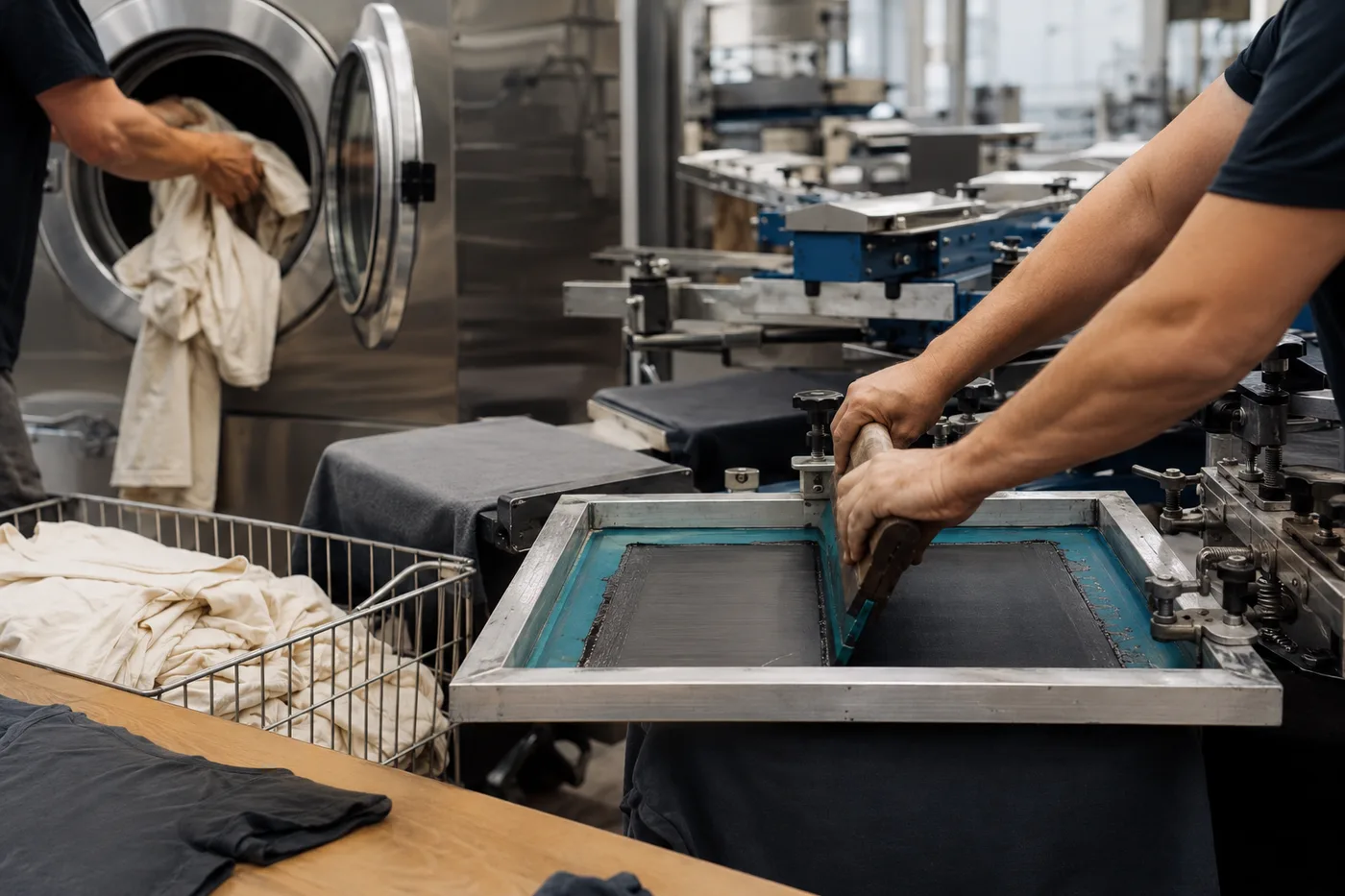
Screen printing pushes ink through a mesh screen per color onto the hoodie, then cures it. It handles large areas, fine detail and many visual styles, from soft water-based to raised puff prints. Price is driven by setup per color and print size, spread over quantity.
Embroidery vs screen printing for hoodies: comparison
| Factor | Embroidery | Screen printing |
|---|---|---|
| Best artwork | Small logos, text, simple shapes | Large graphics, fine detail, gradients via halftones |
| Look | Textured, premium | Flat to raised, depending on ink |
| Durability | Very durable; no cracking | Durable when cured; can fade or crack over time |
| Feel | Raised; can feel stiff when large | Soft (water-based) to heavy (plastisol) |
| Cost driver | Stitch count, colors | Screens per color, print size |
| Run size | Works well on small runs | Most efficient on larger runs |
| Fabric fit | Great on fleece with right backing | Great on cotton fleece; blends need low-bleed inks |
| Inside of hoodie | Backing visible inside | Nothing inside |
Artwork decision guide: which method for which design?
Small chest logo or wordmark
- Embroidery is usually the first choice: clean, premium and durable.
- Screen printing works if the logo has fine detail embroidery cannot hold, such as very small text.
Large back graphic
- Screen printing is usually best: large embroidery adds weight, stiffness and cost.
- Consider chenille or appliqué if you want a textured large design.
Detailed illustration or photographic art
- Screen printing with halftones, or DTG on cotton. Embroidery cannot reproduce fine gradients.
Text across the chest (collegiate or arched)
- Either works. Screen printing suits bold arches; tackle twill or appliqué suits a varsity look.
Sleeve or hood details
- Embroidery is common for small sleeve logos and hood text. Screen printing on sleeves needs suitable platens.
Tonal or subtle branding
- Tonal embroidery (thread close to fabric color) or water-based or discharge printing for a soft, washed look.
How does fleece affect decoration quality?
- Embroidery on fleece: use stabilizer backing on the inside so stitches do not distort the fabric. On lofty fleece, a water-soluble topping can stop stitches sinking into the surface. Avoid overly dense fills that pucker the fabric.
- Screen printing on fleece: brushed fleece and terry can have surface fibers that affect smoothness; underbases and correct mesh choices help. Check cure temperature so ink bonds fully on thicker fabrics.
- Blends: polyester content can cause dye migration into light inks; ask for low-bleed inks.
For placement detail, see our hoodie and sweatshirt embroidery placement guide. For a soft print approach, see our discharge print specification for fleece hoodies.
What specialty options sit between the two?
- Puff print: raised screen print that echoes the texture of embroidery at a larger scale.
- Chenille: fuzzy, textured patches for varsity looks. Our chenille embroidery height QC guide covers quality checks.
- Appliqué: fabric pieces stitched on, good for large letters.
- 3D puff embroidery: foam under stitches for raised logos, popular on caps and some hoodies.
- Patches: woven or embroidered patches sewn on, useful when the same logo is applied across many products.
Planning embroidered hoodies or tees? Send your tech pack or reference photos, target fabric weight and quantities through our quote request form, and see what we produce on the custom embroidery page.
How should you think about cost without a price list?
- Embroidery: cost generally rises with stitch count, thread colors and number of locations. Small logos are economical even on small runs.
- Screen printing: cost includes setup per color plus a per-piece print cost. Large runs with few colors are most economical.
- Combined decoration: each location and method adds handling. Plan the minimum number of locations that achieves the design.
Ask for an itemized decoration quote per location so you can compare options. It also helps to request two versions of the same design, for example an embroidered chest logo versus a printed one, so you can see the cost difference and judge the look side by side on a physical sample before committing to bulk.
How do you test decoration before bulk?
- Approve a digitized embroidery sew-out or a screen print strike-off on the actual hoodie fabric.
- Wash several times and check puckering, thread fraying, cracking and fading.
- Check placement on different sizes; a logo that looks right on M may look small on 3XL.
- Confirm the inside finish: backing trimmed neatly, no scratchy edges.
Which method suits uniforms, merch and retail hoodies?
- Uniform and staff hoodies: embroidery for chest logos, because it survives frequent washing and looks professional. Add a printed back only if visibility matters.
- Corporate gifts: tonal or contrast embroidery reads as premium and suits small quantities.
- Event and band merch: screen printing for bold, large graphics and fast production of larger runs.
- Streetwear retail hoodies: often a mix, such as puff-printed fronts, embroidered sleeve logos and large back prints, chosen design by design.
- Garment-dyed or washed hoodies: decide whether decoration is applied before or after the wash. Prints applied before washing fade with the garment for a vintage look; embroidery thread must be colorfast enough to survive the wash.
What mistakes do buyers make with hoodie decoration?
- Choosing dense, large embroidery for a back design, which makes the hoodie heavy and stiff.
- Using very fine text in embroidery, which becomes unreadable below a certain size.
- Ignoring the inside: scratchy backing on a chest logo irritates the wearer.
- Using the same print size across all sizes without checking how it looks on the smallest and largest.
- Forgetting dye migration on blended fleece with light ink colors.
- Approving decoration from digital mock-ups without a physical strike-off or sew-out.
Embroidery vs screen printing for hoodies: typical specs and key numbers
| Spec | Typical estimate range |
|---|---|
| Embroidered chest logo size | about 5–12 cm wide |
| Stitch count, small chest logo | roughly 4,000–10,000 stitches |
| Stitch count, large back embroidery | roughly 20,000–60,000+ stitches |
| Screen printed back graphic size | about 25–35 cm wide |
| Screen print colors commonly used | 1–6 spot colors |
| Screen printing run size where it becomes efficient | roughly 100–300+ pcs per design |
| Hoodie fleece weight range decorated | 300–450 GSM |
| Typical MOQ per design for decorated hoodies | 50–300 pcs |
These are typical industry estimate ranges for planning, not quotes; confirm actual figures with your supplier for your fabric, quantity and destination.
Key takeaways
- Embroidery suits small logos, text and premium, durable branding.
- Screen printing suits large graphics, detailed art and larger runs.
- Fleece thickness and fiber content affect both methods; specify backing, inks and curing.
- Specialty options such as puff, chenille and appliqué bridge the gap.
- Test strike-offs or sew-outs on the real fabric and check placement across sizes.
Decorate your hoodies with the right method
Weavnora offers embroidery and screen printing on heavyweight fleece. See our custom embroidery, screen printing and heavyweight hoodies, then contact us with your artwork.
Have a tech pack ready? Upload it through our quote request form for a costed reply on embroidered hoodies or tees. Our custom embroidery page shows what we make.
Buyer questions
Frequently asked questions
Is embroidery or screen printing more durable on hoodies?
Both can last well. Embroidery is very durable and does not crack; a correctly cured screen print also holds up, though it may fade or crack over many washes.
Which looks more premium on a hoodie?
Embroidery is often seen as more premium for small logos, while specialty screen prints such as puff or discharge can look premium for larger graphics.
Can you embroider large designs on hoodies?
Yes, but large dense embroidery adds weight and stiffness and costs more because price often scales with stitch count.
Does fleece thickness affect embroidery?
Yes. Thick or lofty fleece needs suitable backing and sometimes a topping so stitches sit cleanly without sinking or puckering.
Can a hoodie combine embroidery and printing?
Yes. Many hoodies use an embroidered chest logo with a screen-printed back or sleeve graphic.
Start a sourcing conversation
Share quantity, target GSM, destination and sample requirements.
Start your RFQ →Email files to postmaster@weavnora.com.