oem-odm · B2B PROCUREMENT
Photo Print T-Shirt Manufacturer: Photographic Tee Guide
By Weavnora · Updated
Direct answer
What buyers need to know
Photo print t-shirt manufacturer means a factory that reproduces photographs on tees using digital printing or simulated process screen printing with fine halftones. Typical programs use 180-300 GSM cotton jersey, images of 300 dpi or more at print size, 7-12 days for strike-offs and 25-40 days for bulk. MOQ depends on style and fabric.
Photo print t-shirt manufacturer means a factory that reproduces photographs on tees using digital printing or simulated process screen printing with fine halftones. Typical programs use 180-300 GSM cotton jersey, images of 300 dpi or more at print size, 7-12 days for strike-offs and 25-40 days for bulk. MOQ depends on style and fabric.
Photo tees are a staple of streetwear, music merch and vintage-inspired brands: grainy concert shots, portraits, landscapes, car photography and archive images printed large across the chest or back. Printing a photograph is different from printing a logo. A photo has thousands of tones, soft edges and fine detail, and cotton jersey is a textured, absorbent surface that blurs some of that detail. The right photo print t-shirt manufacturer helps you choose a method that matches your image, your shirt colour and your order size, prepares the file properly and proves the result before bulk so the faces, skies and shadows look right on every shirt.
What is a photo print t-shirt manufacturer?
A photo print t-shirt manufacturer is a garment factory that prints photographs and photo-realistic images onto tees with accurate tone, detail and colour. It uses direct to garment printing, direct to film transfers or simulated process screen printing, where 4-12 spot colours and fine halftones rebuild the image. Most programs print on 180-300 GSM cotton jersey from image files of at least 300 dpi at print size.
Which printing methods can reproduce a photo?
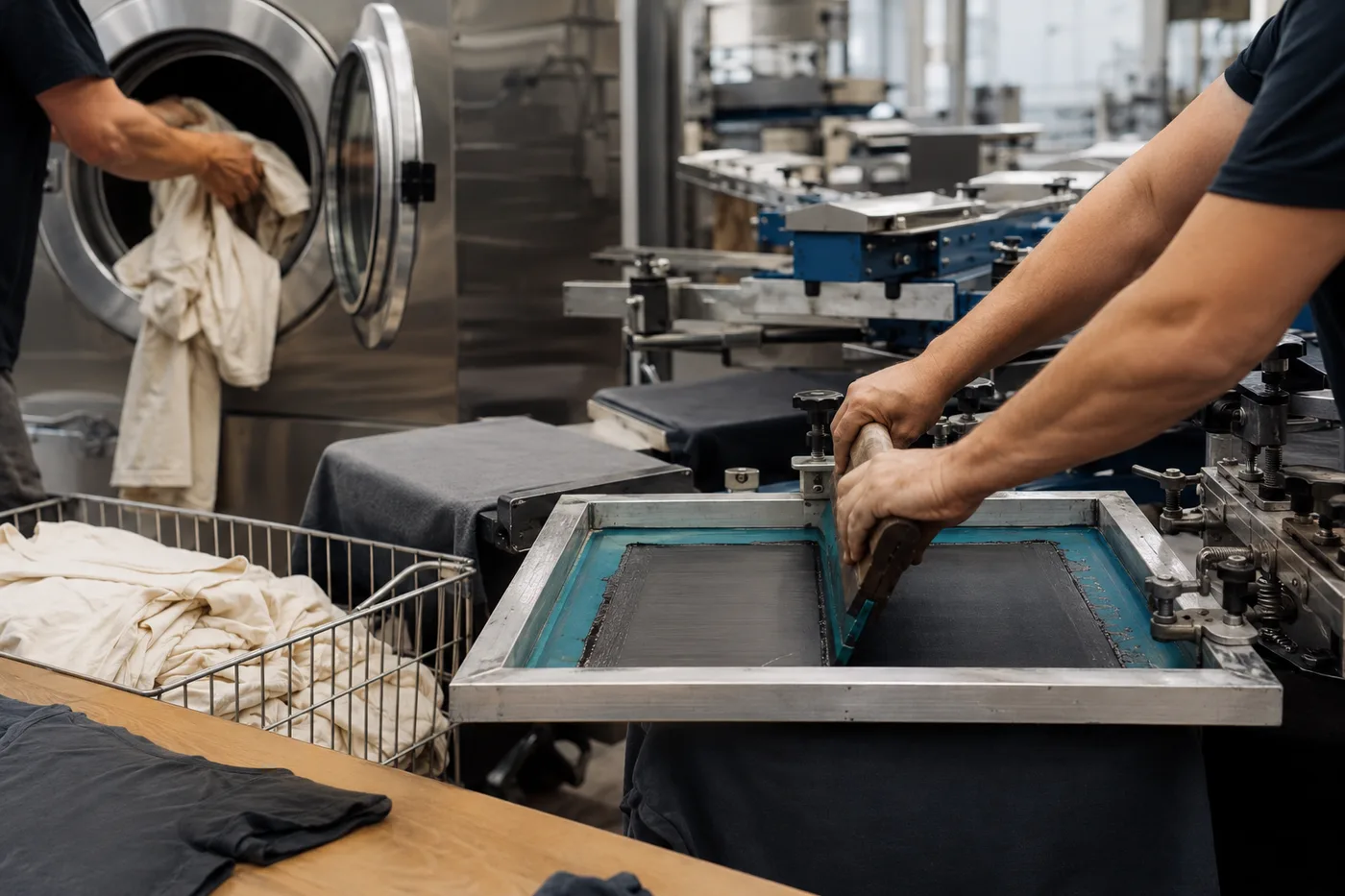
Direct to garment printing sprays water-based ink straight onto the cotton, like an inkjet printer. It handles full colour and smooth tones without screens, so it suits small batches and many designs. Direct to film printing transfers a printed film onto the shirt with heat; it gives bright colour and sharp detail on any shirt colour, with a slightly smoother surface feel. Simulated process screen printing separates the photo into several spot colours printed through fine halftone screens. It takes more setup but is durable, consistent and cost-effective for larger runs. A one-colour halftone print, often black or a single tone on a light shirt, gives the classic grainy vintage photo look at low cost.
The DTG printing service page shows our digital option, and the DTF t-shirt manufacturer guide explains transfers.
Want a photograph on your next tee? Weavnora prints heavyweight and washed tees with digital and screen print options and can strike off your photo artwork on your chosen shirt before bulk. See our DTG printing page for the base styles and fabrics we work with, then request a quote with your style, fabric and quantities. MOQ depends on style and fabric, so we confirm it in your quote.
DTG vs DTF vs simulated process: which option fits?
| Selection criteria | DTG | DTF transfer | Simulated process screen print |
|---|---|---|---|
| Tone and detail | Very good on light shirts | Very good on all colours | Good, depends on separations |
| Hand feel | Soft, in the fabric | Smooth film layer | Soft to medium |
| Dark shirts | Needs white pretreatment layer | Works well | Needs underbase |
| Setup | File prep only | File prep only | Separations and 4-12 screens |
| Consistency in bulk | Good | Good | Very good |
| Best for | Small runs, many designs | Bright images, mixed colours | Large runs, durable prints |
The trade-offs are setup against hand feel and durability. Digital methods let you print many different photos without screen cost, which suits drops with several designs, but on dark shirts the white layer can make DTG prints feel heavier and DTF adds a smooth film surface. Simulated process needs skilled colour separation and more sampling, yet once approved it repeats very consistently and feels like part of the garment. A one-colour halftone gives up full colour in exchange for the most authentic vintage feel.
How should photo files be prepared?
Send the original image at full resolution, ideally 300 dpi or more at the final print size, in a lossless format. Do not upscale small web images; enlargement adds blur that printing makes worse. Tell the factory whether you want a clean photographic look or a distressed, grainy vintage look, because the separation or print settings differ. Mark any area that must stay sharp, such as faces or text, and any background that can be removed. Our artwork file handoff checklist lists what to send.
Who owns the image?
Before printing, make sure you hold the rights to use the photo commercially. Band, celebrity, sports and archive images often belong to a photographer, an agency or the subject, and a factory may ask you to confirm permission before producing goods for sale. Keep licences or written permission on file for each design. This protects your brand and avoids last-minute holds on finished stock.
How does the shirt affect a photo print?
Smooth, tightly knitted cotton holds detail best, so combed ring-spun jersey usually prints sharper than loose open-end fabric. Heavyweight 240-300 GSM tees give a stable base for large prints and reduce show-through. Garment-washed tees can have uneven tones that change how the image reads, so print after washing or test on the washed blank. Shirt colour matters too: a photo on a cream or vintage white shirt looks warmer than on bright white.
How do you sample and check bulk?
Ask for a strike-off on the real shirt and compare it with the original image at arm's length and close up. Check skin tones, shadows, highlights and fine text. Wash the strike-off three to five times and look for fading, cracking or dot loss. In bulk, compare pieces from different parts of the run with the sealed sample, check placement, and check cure on a few pieces per batch. The custom t-shirt manufacturing guide shows how print approval fits the full flow, and the vintage graphic t-shirt manufacturer guide covers faded, worn-in graphic looks.
What drives the cost of a photo print tee?
Cost depends on the method, print size, number of colours or separations, shirt weight and colour, and order quantity. Digital prints are priced mainly by print area and ink coverage, with little setup, so price per piece stays similar from small to medium runs. Simulated process prints carry separation and screen setup that is spread across the order, so the per-piece price drops as quantity rises. Dark shirts usually cost more than light shirts because of the white layer or underbase. Garment washing after printing adds a separate process charge. Our hoodie printing cost per piece guide explains the same drivers on fleece, and we itemise them in every quote.
Photo print t-shirt manufacturer: typical specs and key numbers
| Spec | Typical estimate range |
|---|---|
| Tee fabric weight | 180-300 GSM |
| Image resolution at print size | 300 dpi or more |
| Simulated process colours | 4-12 spot colours |
| Halftone line count | 45-65 lpi |
| Print strike-off time | 7-12 days |
| Wash test before approval | 3-5 washes |
| Bulk production after approval | 25-40 days |
| MOQ (pcs per style and colour) | Depends on style and fabric; confirmed in your quote |
These are typical industry estimate ranges for planning, not quotes; confirm actual figures with your supplier for your fabric, quantity and destination.
Key takeaways
- A photo print t-shirt manufacturer matches the method to your image, shirt colour and order size.
- DTG and DTF suit small runs and many designs; simulated process suits larger, durable runs.
- Send full-resolution originals at print size and never upscale small images.
- Confirm image rights before production.
- Approve a washed strike-off on the real shirt and compare bulk pieces against it.
Request a photo print t-shirt quote
Ready to test your photo on fabric? Send your tech pack or reference images, fabric preference, colours and quantities through our quote request form. MOQ depends on style and fabric, so we confirm it in your quote together with sampling time, approval steps and an itemised price.
Buyer questions
Frequently asked questions
What is the best method for printing a photo on a tee?
DTG or DTF for small runs and many designs; simulated process screen printing for larger, durable runs.
Can I use a photo from the internet?
Only if you have commercial rights and a high-resolution original.
Why does my photo look blurry on the shirt?
Low image resolution or a textured fabric; use 300 dpi files and smooth jersey.
Do photo prints work on black tees?
Yes, with a white layer or underbase, or with DTF transfers.
What is the MOQ for photo print tees?
MOQ depends on style and fabric, so we confirm it in your quote.
Start a sourcing conversation
Share quantity, target GSM, destination and sample requirements.
Start your RFQ →Email files to postmaster@weavnora.com.