oem-odm · B2B PROCUREMENT
Overdyed T-Shirt Manufacturer: Tinted Prints, Colours and Specs
By Weavnora · Updated
Direct answer
What buyers need to know
Overdyed t-shirt manufacturer programs dye 200-300 GSM cotton tees a second time, often after printing, so the base colour and graphic take on one shared tint. Plan 2-3 lab dip or overdye trials, 4-7% shrinkage allowance, 10-16 days for samples and 30-45 days for bulk, with MOQ depending on style and fabric.
Overdyed t-shirt manufacturer programs dye 200-300 GSM cotton tees a second time, often after printing, so the base colour and graphic take on one shared tint. Plan 2-3 lab dip or overdye trials, 4-7% shrinkage allowance, 10-16 days for samples and 30-45 days for bulk, with MOQ depending on style and fabric.
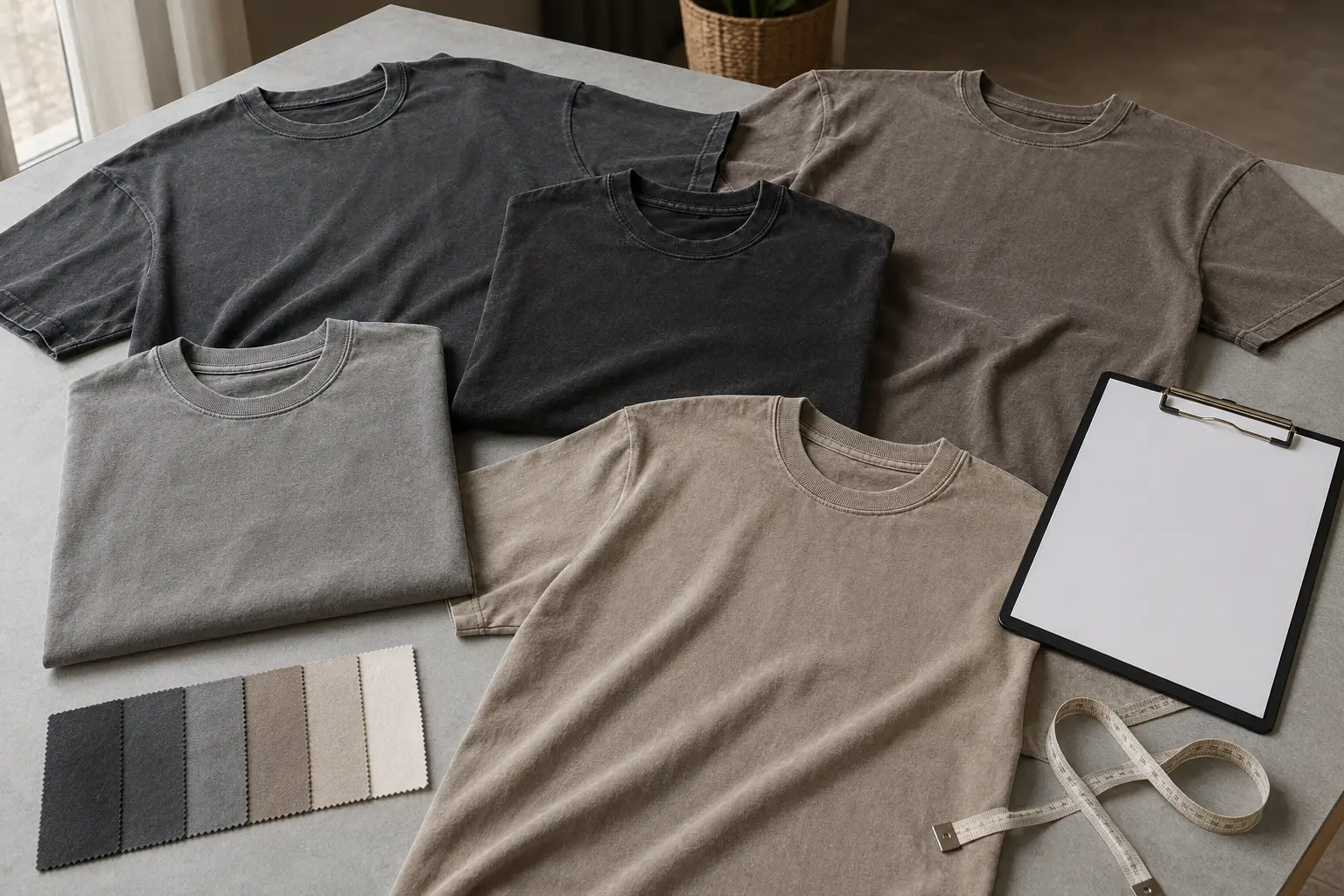
Overdyeing is one of the simplest ways to make a new tee look like it has history. A white graphic printed on a natural tee, then overdyed in a dusty brown, turns into a cream print on a warm, faded base. The same trick can unify a multi-colour graphic, soften a too-bright colour or create a full capsule from one printed style. Because the dye acts on everything at once, results depend on fibre, ink and process together. This guide explains how an overdyed t-shirt manufacturer works, how to plan colours, and how to keep bulk close to the sample.
What is an overdyed t-shirt manufacturer?
An overdyed t-shirt manufacturer is a garment factory that takes tees that are already coloured or printed and dyes them again as finished garments, so a new colour layer tints both the shirt and the artwork. The result is a softer, toned-down, vintage look where white prints turn cream or coloured. Most programs use 200-300 GSM cotton tees, 2-3 overdye trials and a 4-7% shrinkage allowance in the pattern.
How does overdyeing differ from regular garment dyeing?
Regular garment dyeing starts with an undyed, prepared-for-dye (PFD) tee and gives it one colour. Overdyeing starts with a tee that already has colour, a print, or both. The second dye bath adds a layer on top:
- On a coloured tee, the new dye mixes with the old one. Yellow overdyed with blue reads green; a grey tee overdyed in brown becomes a warm charcoal.
- On a printed tee, the dye tints the print as well as the fabric, as long as the ink allows dye to reach the fibre or accepts dye itself.
- On cut-and-sew panels or trims, different materials take the dye differently, which can create intentional contrast.
For the basics of dyeing finished garments, see our comparison of garment dye vs piece dye for heavyweight tees.
Want tinted, vintage-looking graphics? Weavnora garment dyes and overdyes heavyweight cotton tees and keeps a sealed colour standard for each overdye shade. See our garment dye page for the base styles and fabrics we work with, then request a quote with your style, fabric and quantities. MOQ depends on style and fabric, so we confirm it in your quote.
How do prints react to overdyeing?
Print behaviour is the part buyers most need to plan. Water-based and discharge prints on cotton let dye through, so they tint evenly and look naturally aged. Plastisol forms a plastic layer that resists most dyes; it stays closer to its original colour, which can be a deliberate contrast. Pigment prints may pick up some tint depending on the binder.
Thread also matters. Polyester embroidery thread and polyester sewing thread will not take reactive dye, so they stay their original colour. If you want tonal seams, specify cotton thread or a thread colour matched to the final overdye shade. Labels and trims made of polyester behave the same way.
Always print strike-offs and overdye them before final approval. Our guide on water-based vs plastisol hand feel on heavyweight tees helps you choose the ink system with overdyeing in mind.
How do you plan overdye colours?
Plan the overdye as a colour system rather than a single shade. Useful steps:
- Start with the base. Natural, ecru, white or light heather tees give the cleanest overdye results. Darker bases limit the colours you can reach.
- Use light, dusty tones. Browns, washed olives, slate blues and faded blacks are popular because they read vintage and hide small variation.
- Request trials. Ask for 2-3 overdye strengths on the actual printed tee so you can compare.
- Seal standards. Keep a light and dark limit sample for each shade.
Reactive dyes give stronger, more colourfast results; pigment overdyes give a chalkier, faded look that keeps changing with each wash.
Overdyed vs pigment dyed vs printed-only: which option fits?
Overdyeing is one route to an aged tee. Compare it with the alternatives.
| Selection criteria | Overdyed after print | Pigment dyed blank then printed | Printed on dyed tee only |
|---|---|---|---|
| Print look | Tinted, aged, blended | Crisp print on faded base | Crisp, exact colours |
| Colour variation | Medium | Medium to high | Low |
| Process steps | Print, then dye and wash | Dye, wash, then print | Print only |
| One print, many colours | Yes, one print overdyed many ways | No | No |
| Best for | Vintage capsules, tonal graphics | Faded basics with sharp logos | Brand-colour accuracy |
The trade-offs are character and flexibility versus precision. Overdyeing lets one printed style become several colourways and gives the most authentic aged look, but print colours will shift and variation is higher. Printing on a finished dyed tee keeps exact brand colours. Pigment dyeing sits between the two. Our page on the pigment-dyed cotton tee manufacturer covers that route.
How do shrinkage and fit change?
Overdyeing is a hot wet process, so tees shrink again even if they were washed before. Typical washed tees shrink 4-7% in length and 3-5% in width depending on fabric, temperature and drying. The manufacturer should cut oversize and measure overdyed samples, not undyed ones, against the size chart. Rib collars and cuffs can shrink differently, so check neck openings closely. Our shrinkage test protocol for washed heavyweight cotton tees describes a method both sides can follow.
What should you put in an overdye brief?
Include the base tee colour and fabric, print method and ink type, the target overdye shade as a physical swatch, thread and label materials, wash and softener steps, and your shrinkage and colourfastness requirements. Ask for a colourfastness to washing and rubbing check on the final shade. For the wider development path, see our custom t-shirt manufacturing guide.
How do you keep overdye colour consistent across reorders?
Overdye colour depends on the base tee, the print ink, the dye recipe, water, temperature and wash time, so small changes in any of them shift the result. To protect repeat orders:
- Fix the base. Use the same fabric, yarn and base colour for each reorder, and keep a retained blank tee from the first lot.
- Record the recipe. Ask the factory to log dye recipe, liquor ratio, temperature and time for every approved shade.
- Keep limit samples. Store light and dark limits in a sealed bag away from light, and compare every new lot against them in daylight or a light box.
- Batch by shade. Running each shade as one dye batch where possible keeps variation inside the lot low.
As a typical industry estimate, small shade variation between dye batches is normal for garment-dyed and overdyed tees, which many brands treat as part of the vintage character, but the limit samples define how much variation you will accept.
Overdyed t-shirt manufacturer: typical specs and key numbers
| Spec | Typical estimate range |
|---|---|
| Base tee weight | 200-300 GSM, 100% cotton |
| Overdye trials before approval | 2-3 rounds |
| Length shrinkage allowance | 4-7% |
| Width shrinkage allowance | 3-5% |
| Overdyed sample lead time | 10-16 days |
| Bulk production after approval | 30-45 days |
| MOQ (pcs per style and colour) | Depends on style and fabric; confirmed in your quote |
These are typical industry estimate ranges for planning, not quotes; confirm actual figures with your supplier for your fabric, quantity and destination.
Key takeaways
- Overdyeing dyes a coloured or printed tee again so fabric and print share one tint.
- Water-based and discharge prints tint evenly; plastisol and polyester thread resist the dye.
- Start from light bases and approve 2-3 overdye strengths on the actual printed tee.
- One printed style can become several colourways through different overdye shades.
- Measure overdyed samples, because the extra hot wet process adds 4-7% length shrinkage.
Request a overdyed t-shirt manufacturer quote
Ready to sample an overdyed tee? Send your tech pack or reference images, fabric preference, colours and quantities through our quote request form. MOQ depends on style and fabric, so we confirm it in your quote together with sampling time, approval steps and an itemised price.
Buyer questions
Frequently asked questions
What is an overdyed t-shirt?
It is a tee that already had colour or a print and was dyed again as a finished garment. The second dye tints the fabric and usually the print, giving a softer, vintage look.
Will the print change colour when a tee is overdyed?
Usually yes. Water-based and discharge prints take on the overdye tint, while plastisol prints resist it and stay closer to their original colour.
Why did the stitching stay a different colour?
Polyester sewing and embroidery thread do not take reactive dye. Specify cotton thread or a thread colour matched to the final shade if you want tonal seams.
Do overdyed tees shrink?
Yes. The extra hot wet process typically adds 4-7% length shrinkage. The pattern should be cut oversize and samples measured after overdyeing.
What is the MOQ for overdyed t-shirts?
MOQ depends on style, fabric and the number of overdye shades, because each shade runs as a separate dye batch. Send your style, print and colours through a quote request for an exact answer.
Start a sourcing conversation
Share quantity, target GSM, destination and sample requirements.
Start your RFQ →Email files to postmaster@weavnora.com.