oem-odm · B2B PROCUREMENT
Mineral Wash T-Shirt Manufacturer: Base Colours, Wash and Specs
By Weavnora · Updated
Direct answer
What buyers need to know
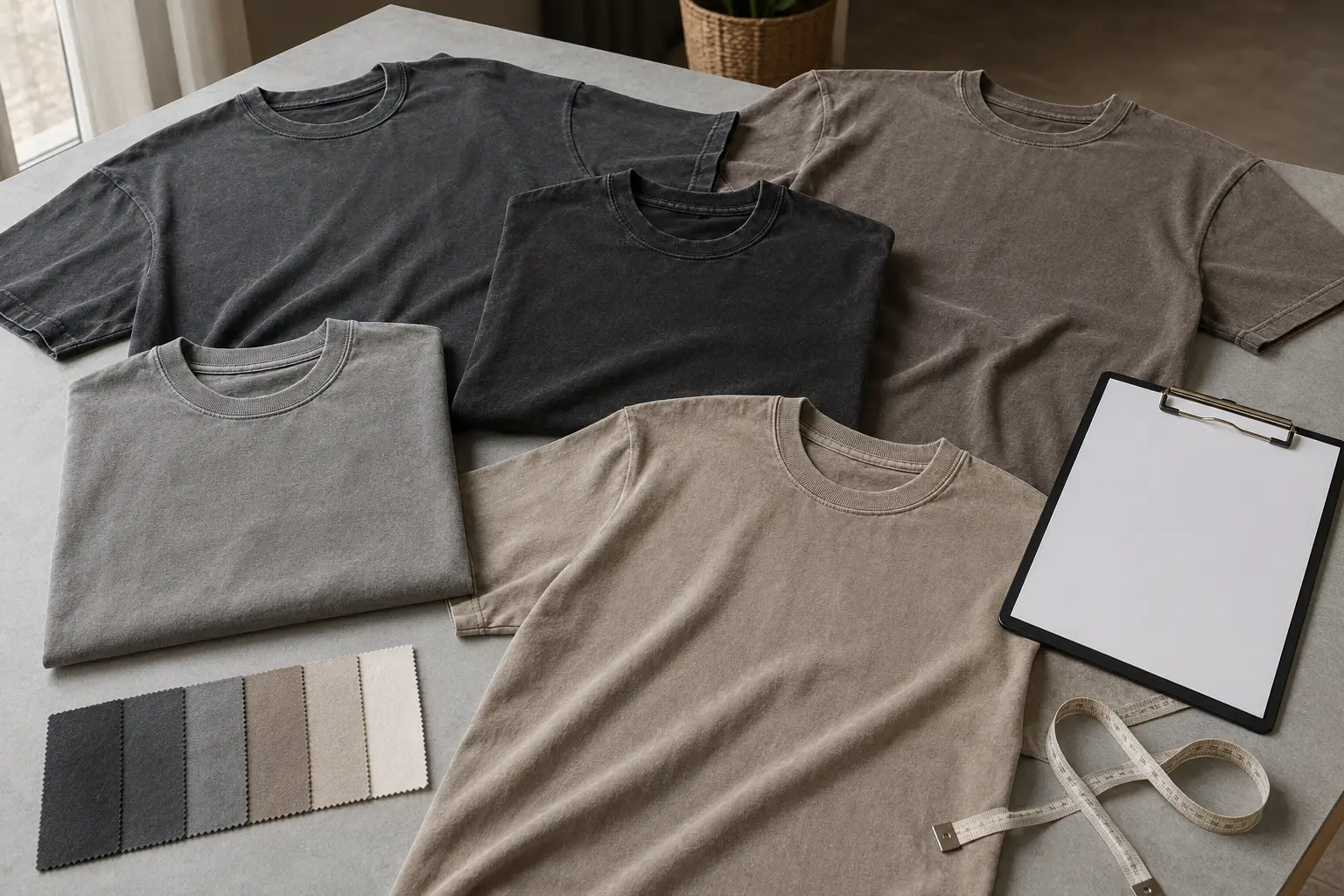
Mineral wash t-shirt manufacturer programs pigment or reactive dye 220-300 GSM cotton tees, then apply an oxidising mineral wash to create a soft, cloudy fade. Plan 2-3 wash trials, 4-7% shrinkage allowance, 10-18 days for a washed sample and 30-45 days for bulk, with MOQ depending on style and fabric.
Mineral wash t-shirt manufacturer programs pigment or reactive dye 220-300 GSM cotton tees, then apply an oxidising mineral wash to create a soft, cloudy fade. Plan 2-3 wash trials, 4-7% shrinkage allowance, 10-18 days for a washed sample and 30-45 days for bulk, with MOQ depending on style and fabric.
Mineral wash sits between a clean garment dye and a loud acid wash. It gives a tee a soft, cloudy fade that reads vintage without looking damaged, which is why it shows up in so many streetwear and lifestyle collections. The catch is that it is a random effect created in a wash machine, so two factories can call very different results "mineral wash". This guide explains how a mineral wash t-shirt manufacturer produces the look, which base fabric and colour decisions shape it, and how to brief the program so your bulk order matches the sample you approved.
What is a mineral wash t-shirt manufacturer?
A mineral wash t-shirt manufacturer is a garment factory that dyes finished cotton tees and then runs them through an oxidising wash that removes colour unevenly, leaving a cloudy, marbled surface that looks naturally worn. Most programs use 220-300 GSM 100% cotton jersey, need 2-3 wash trials to lock the contrast level, and allow 4-7% shrinkage in the pattern so the finished garment still meets the size chart.
How is a mineral wash created on a cotton tee?
The process starts with a sewn, undyed or dyed tee. If the tee is sewn from prepared-for-dye (PFD) fabric, the factory garment dyes it first, usually with reactive dye for depth or pigment dye for a chalky base. The dyed garments then go into an industrial washer with an oxidising agent. Depending on the recipe, the agent is applied by spraying, by tumbling with soaked stones, or by a controlled bath. The oxidiser strips colour from the surface fibres in irregular patches, then a neutralising rinse stops the reaction.
The final steps are softening and tumble drying. Softener choice changes the hand feel more than most buyers expect: a silicone softener gives a slippery, smooth hand, while a lighter cationic softener keeps the dry, slightly chalky feel that many vintage brands prefer. Our article on the mineral wash handfeel band versus a sealed sample explains how to agree on hand feel in writing.
Planning a mineral wash tee drop? Weavnora develops washed heavyweight tees with sealed wash standards so the cloudy effect stays inside an approved range from sample to bulk. See our mineral wash page for the base styles and fabrics we work with, then request a quote with your style, fabric and quantities. MOQ depends on style and fabric, so we confirm it in your quote.
Which base fabric and colour work best?
Mineral wash works best on tightly knitted 100% cotton jersey. Polyester does not take the dye or release it in the same way, so blends give weak, patchy contrast. Within cotton, three choices matter:
- Weight. 220-260 GSM gives a lighter, drapey tee with a softer fade. 260-300 GSM holds structure through the wash and suits boxy streetwear fits. See our heavyweight t-shirt GSM guide for how each band wears.
- Yarn. Ring-spun or combed yarn gives a cleaner face and a smoother fade. Open-end yarn gives a drier, more textured look and can show the cloud pattern more strongly.
- Base colour. Dark and saturated shades such as black, navy, forest and burgundy show the most contrast. Pastels give a subtle, dusty effect. Very light colours barely change, so they are usually better as a plain garment dye.
How do you control contrast and consistency?
Contrast depends on oxidiser strength, time, temperature, load size and the dye depth of the base garment. A good manufacturer fixes all of these in a written wash recipe and keeps a physical sealed sample for each colour. Because the effect is random, it is normal to agree a light limit sample and a dark limit sample that frame the acceptable range rather than expecting every piece to match one tee exactly.
Ask the factory to run small pilot loads before bulk and to keep the load size the same in production. A half-full washer behaves differently from a full one, and that is one of the most common reasons bulk looks lighter or darker than the sample.
Mineral wash vs acid wash vs plain garment dye: which option fits?
Each finish creates a different look, price level and risk profile. Compare them before you commit a colour story.
| Selection criteria | Mineral wash | Acid wash | Plain garment dye |
|---|---|---|---|
| Visual effect | Soft, cloudy fade | High-contrast marbling | Even, solid colour |
| Piece-to-piece variation | Medium | High | Low |
| Wash trials before approval | 2-3 | 2-4 | 1-2 |
| Strength loss risk | Low to medium | Medium to high | Low |
| Best for | Lifestyle and vintage basics | Statement streetwear | Core colour programs |
The trade-offs are character versus consistency. Acid wash gives the strongest visual impact but the widest variation and higher risk of weakened fabric. Plain garment dye repeats most easily. Mineral wash is the middle ground: visible character with variation that is easier to keep inside limits. Our comparison of acid wash vs enzyme wash on heavyweight tees covers the related wash families in more detail.
How do shrinkage and fit change after the wash?
Garment washing relaxes and shrinks cotton. Mineral washed tees typically shrink 4-7% in length and 3-5% in width, depending on fabric construction and drying temperature. The manufacturer should cut the pattern oversize by that allowance and measure washed samples, not greige samples, against your size chart. Neck openings and rib collars need extra attention, because rib can shrink differently from body jersey.
Run a shrinkage test on the washed sample and again on a bulk pilot. If you want home laundering stability, ask for residual shrinkage after three home washes as well. Our shrinkage test protocol for washed heavyweight cotton tees sets out a practical method.
Can you print on a mineral wash tee?
Yes, and the timing matters. Printing before the wash gives a cracked, faded print that matches the vintage look, but the print also loses some opacity. Printing after the wash keeps the graphic crisp, which suits brands that want a clean logo on a worn base. Water-based and discharge inks blend into the washed fabric; plastisol stays on top and looks more modern. Embroidery works well on both, though thread colour can shift slightly if it goes through the wash.
What drives the cost of a mineral wash tee?
The wash adds a separate process line on top of cutting and sewing: dyeing, oxidising, neutralising, softening and drying. Cost moves with base weight, number of colours, wash trial rounds and reject rate. Small colour runs cost more per piece because each colour is a separate wash batch. Our breakdown of vintage wash t-shirt cost per piece shows how those lines add up. For the wider category, start from our custom t-shirt manufacturing guide.
Mineral wash t-shirt manufacturer: typical specs and key numbers
| Spec | Typical estimate range |
|---|---|
| Base fabric weight | 220-300 GSM |
| Wash trials before approval | 2-3 rounds |
| Length shrinkage allowance | 4-7% |
| Width shrinkage allowance | 3-5% |
| Washed sample lead time | 10-18 days |
| Bulk production after approval | 30-45 days |
| MOQ (pcs per style and colour) | Depends on style and fabric; confirmed in your quote |
These are typical industry estimate ranges for planning, not quotes; confirm actual figures with your supplier for your fabric, quantity and destination.
Key takeaways
- Mineral wash is an oxidising wash on dyed cotton that leaves a soft, cloudy fade.
- Use 100% cotton jersey in the 220-300 GSM range; dark base colours show the most contrast.
- Agree light and dark limit samples, because no two pieces will be identical.
- Build 4-7% length shrinkage into the pattern and measure washed samples.
- Decide print timing early: print before the wash for a faded look, after for a crisp graphic.
Request a mineral wash t-shirt manufacturer quote
Ready to sample a mineral wash tee? Send your tech pack or reference images, fabric preference, colours and quantities through our quote request form. MOQ depends on style and fabric, so we confirm it in your quote together with sampling time, approval steps and an itemised price.
Buyer questions
Frequently asked questions
What is a mineral wash t-shirt?
It is a dyed cotton tee treated with an oxidising wash that strips colour unevenly, leaving a soft, cloudy pattern. The effect is subtler than acid wash and more varied than a plain garment dye.
Which colours look best with mineral wash?
Dark, saturated shades such as black, navy, forest green, burgundy and charcoal show the clearest cloud pattern. Pastels give a dusty, subtle result, and very light colours change very little.
Will every mineral wash tee look the same?
No. The pattern is random, so each tee is slightly different. A good manufacturer keeps results within an approved range using a written wash recipe and light and dark limit samples.
How much do mineral wash tees shrink?
Typical washed tees shrink about 4-7% in length and 3-5% in width during processing. The factory should cut oversize by that allowance so the finished tee meets your size chart.
What is the MOQ for mineral wash t-shirts?
MOQ depends on style, fabric and the number of base colours, because each colour runs as its own wash batch. Send your style, colours and quantities through a quote request for an exact answer.
Start a sourcing conversation
Share quantity, target GSM, destination and sample requirements.
Start your RFQ →Email files to postmaster@weavnora.com.