blog · B2B PROCUREMENT
How to Find a Vintage Wash Clothing Manufacturer
By Weavnora · Updated
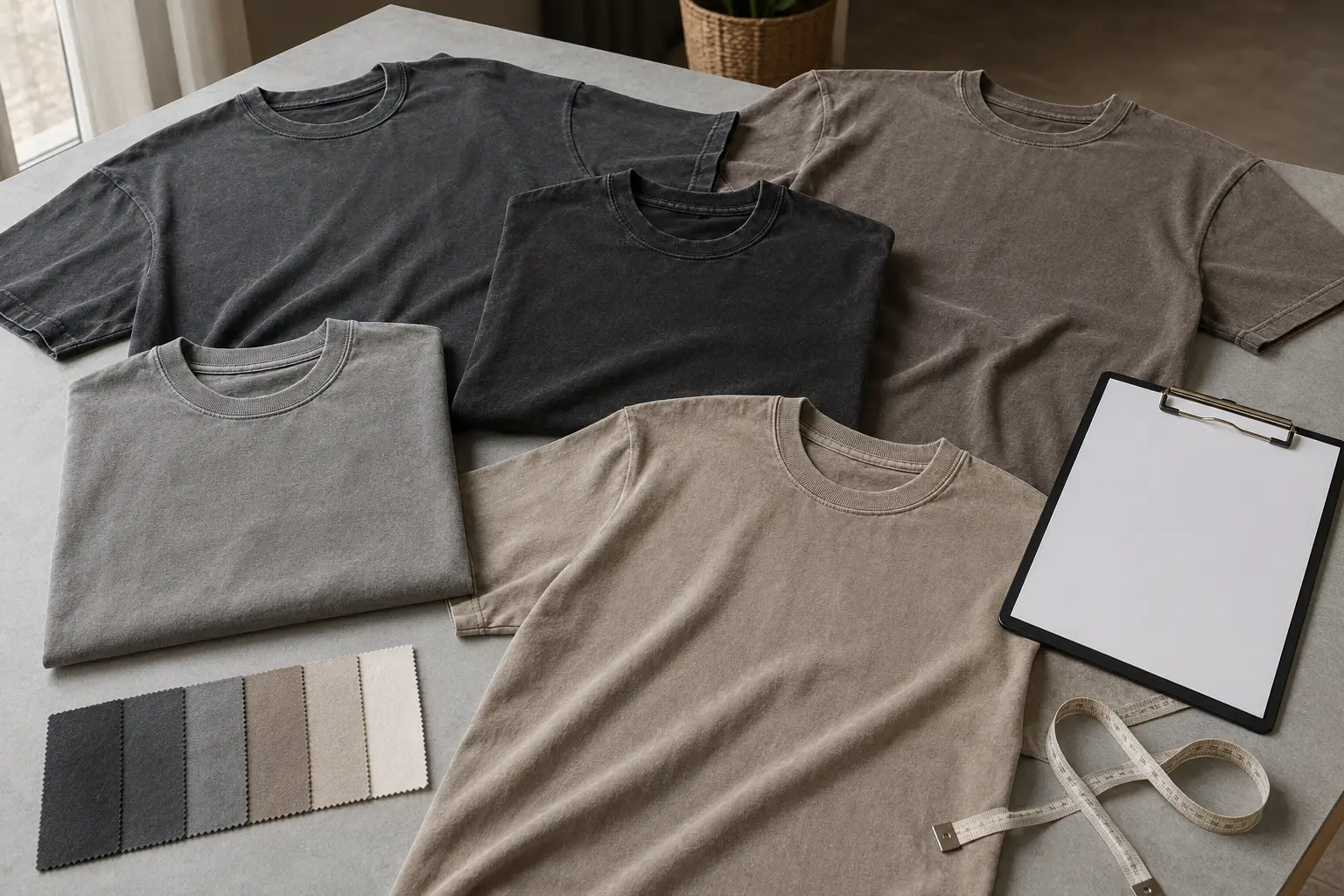
Direct answer
What buyers need to know
How to find a vintage wash clothing manufacturer: describe the exact wash look, shortlist cut-and-sew factories with in-house or partner wash capacity, then score their washed samples for shade, handfeel and shrinkage. As a typical estimate, plan 2-3 wash sample rounds of 10-20 days on 180-450 GSM cotton and 35-55 days for bulk. MOQ depends on style and fabric.
How to find a vintage wash clothing manufacturer: describe the exact wash look, shortlist cut-and-sew factories with in-house or partner wash capacity, then score their washed samples for shade, handfeel and shrinkage. As a typical estimate, plan 2-3 wash sample rounds of 10-20 days on 180-450 GSM cotton and 35-55 days for bulk. MOQ depends on style and fabric.
The vintage look is everywhere in streetwear and premium basics: faded black tees, washed hoodies with soft seams, sweatpants that look like they have been worn for ten years. Getting that look from a factory is harder than it seems. Many cut-and-sew suppliers can sew a good tee but send it to an outside laundry they do not control. Others wash well but sew poorly. Some can make one beautiful sample and then deliver bulk in five different shades. Learning how to find a vintage wash clothing manufacturer is mostly about testing wash control, not sewing. This guide gives you a brief template, a search plan, a scorecard and a pilot plan.
What does it mean to find a vintage wash clothing manufacturer?
To find a vintage wash clothing manufacturer is to identify and vet a cut-and-sew factory that can sew garments and then wash, dye or abrade them after sewing, using enzyme, stone, acid, pigment or mineral washes, to create a faded, worn look that stays consistent across bulk. Wash capability matters more than sewing alone. Typical programs use 180-300 GSM tees or 330-450 GSM fleece, and as a typical industry estimate washed garments shrink 4-7% in processing, which the factory must build into the pattern.
How to find a vintage wash clothing manufacturer: write the wash brief first
Factories cannot quote or sample a word like "vintage". They need a recipe direction. Your brief should cover:
- Wash type. Enzyme, stone, acid, snow, pigment dye plus wash, mineral or sun fade.
- Intensity. Light, medium or heavy fade; show photos of each.
- Where the fade lands. All over, seams and edges, or local zones.
- Base colour and fabric. Fabric weight, fibre content and knit type.
- Handfeel. Soft, dry, chalky or broken-in.
- Distressing. None, light edge wear or holes.
Attach physical references if possible. Our acid wash vs enzyme wash guide explains how two common washes differ.
Looking for a vintage wash partner? Weavnora sews heavyweight tees, hoodies and sweatpants and runs garment dye and vintage wash programs, approving each look on a washed sample with a shade band. See our vintage washed t-shirts page for the base styles and fabrics we work with, then request a quote with your style, fabric and quantities. MOQ depends on style and fabric, so we confirm it in your quote.
Where should you search?
- Factories that show washed product. Look for real washed garments in their catalogue, not just stock photos.
- Garment dye specialists. Factories that already garment dye usually have wash machines and chemistry knowledge. Our how to find a garment dye manufacturer guide covers that search.
- Pigment dye specialists. Pigment dye is the base of many faded looks; see our how to find a pigment dye manufacturer guide.
- Trade shows and sourcing platforms. Filter by "garment washed" or "garment dyed", then verify.
- Referrals. Brands with washed products you admire may share contacts, or you can ask fabric mills which garment factories they supply.
Which questions reveal real wash capability?
- Do you wash in-house or send garments to a laundry? If outside, how do you control it?
- Which wash types have you run in bulk in the last year?
- How do you control shade between wash loads?
- What shrinkage do you plan for, and do you enlarge patterns before cutting?
- Can you show a shade band from a previous washed order?
- How do you handle pieces outside the approved band?
Vague answers to these questions are a warning sign. Our vintage wash t-shirt quality control checklist lists what inspectors check after washing.
In-house wash vs outsourced laundry: which option fits?
| Selection criteria | Factory with in-house wash | Factory using outside laundry |
|---|---|---|
| Shade control | Direct, same team | Indirect, depends on laundry |
| Lead time | Shorter, no transfer | Longer, transport and queues |
| Problem solving | Faster, one responsible party | Slower, two parties |
| Flexibility of wash types | Limited to own machines | Can access more specialist washes |
| Sample speed | Faster | Slower |
| Best for | Core washed programs | Rare or very specialised effects |
The trade-offs are control and speed against access to specialist effects. For most brands, a factory with in-house wash, or a long-standing laundry partner under its own QC, is the safer choice.
How do you score washed samples?
Ask two or three shortlisted factories to wash the same style and colour, then score each sample:
| Criterion | What to check |
|---|---|
| Look match | Fade level and location vs your reference |
| Handfeel | Softness, no harsh chemical feel |
| Measurements after wash | Within plus or minus 1-2 cm of spec |
| Seam condition | No broken stitches or puckering |
| Print or embroidery survival | No cracking, no fading beyond intent |
| Consistency | Ask for 3-5 pieces, check variation |
Asking for several pieces, not one, is the most important step. One perfect sample proves very little about bulk.
How long does a washed program take?
Washing adds steps, so plan more time than for a plain dyed garment. A realistic calendar is 2-3 wash sample rounds of 10-20 days each, then 35-55 days for bulk after approval, so 12-16 weeks from first brief to shipment is common. Rushing the sample stage is where most vintage wash problems start. Build the calendar with your manufacturer before you announce a launch date.
What red flags should you avoid?
- Only one sample piece available, never a set.
- No shrinkage plan or measurement chart after wash.
- Unwilling to provide a shade band.
- Claims every wash type is possible without showing examples.
- Very short lead times that leave no room for wash testing.
How should the first order be run?
Start with a pilot: one or two styles, a limited colour count and quantities the factory considers practical. Approve a shade band of 3-5 levels and a sealed sample. Inspect after washing and before packing. If the pilot lands well, expand colours and styles. For the broader sourcing process, see our how to find a clothing manufacturer guide.
How to find a vintage wash clothing manufacturer: typical specs and key numbers
| Spec | Typical estimate range |
|---|---|
| Tee fabric weight | 180-300 GSM |
| Hoodie and sweatpants fleece weight | 330-450 GSM |
| Wash processing shrinkage | 4-7% |
| Shade band levels | 3-5 levels |
| Wash sample lead time per round | 10-20 days |
| Bulk production after approval | 35-55 days |
| MOQ (pcs per style and colour) | Depends on style and fabric; confirmed in your quote |
These are typical industry estimate ranges for planning, not quotes; confirm actual figures with your supplier for your fabric, quantity and destination.
Key takeaways
- To find a vintage wash clothing manufacturer, test wash control, not only sewing.
- Write a wash brief with type, intensity, fade zones, fabric and handfeel.
- Ask whether washing is in-house and how shade and shrinkage are controlled.
- Score 3-5 washed pieces per factory, not a single sample.
- Run a small pilot with a shade band and sealed sample before scaling.
Request a vintage wash sample and quote
Ready to test a vintage wash program? Send your tech pack or reference images, fabric preference, colours and quantities through our quote request form. MOQ depends on style and fabric, so we confirm it in your quote together with sampling time, approval steps and an itemised price.
Buyer questions
Frequently asked questions
What should I look for in a vintage wash manufacturer?
In-house or tightly controlled washing, shade band experience, a shrinkage plan and real washed examples.
Can any clothing factory do vintage wash?
No. Many factories sew well but do not control washing. Ask how and where garments are washed.
How many wash samples should I request?
Ask for 3-5 pieces of the same style and colour to judge consistency.
How much do washed garments shrink?
Typically 4-7% during processing, so patterns are enlarged before cutting.
What is the MOQ for vintage wash clothing?
MOQ depends on style, fabric and colours. Send your references and quantities through a quote request.
Start a sourcing conversation
Share quantity, target GSM, destination and sample requirements.
Start your RFQ →Email files to postmaster@weavnora.com.