blog · B2B PROCUREMENT
How to Find a Pigment Dye Manufacturer: Vetting
By Weavnora · Updated
Direct answer
What buyers need to know
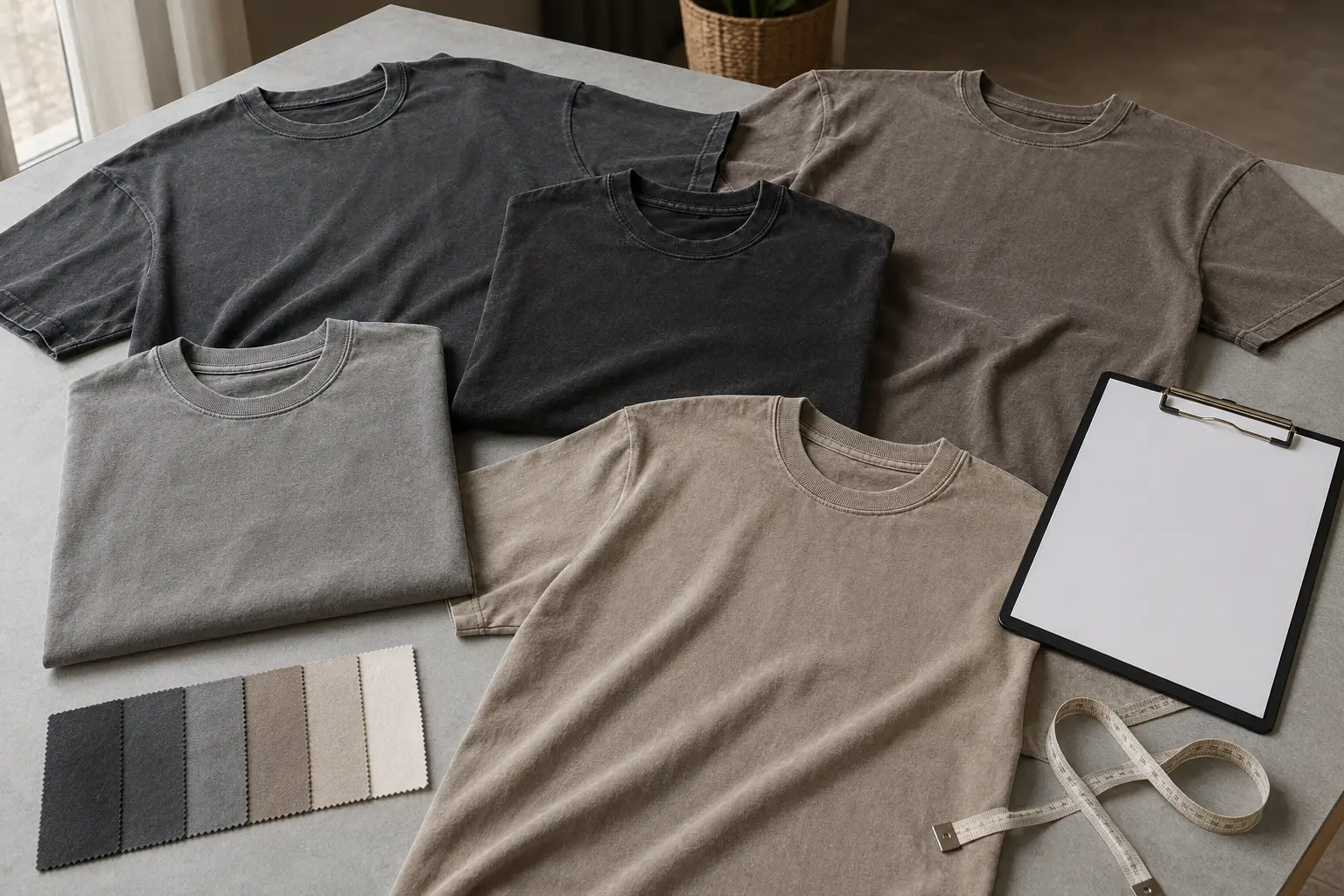
How to find a pigment dye manufacturer: define the vintage wash look, search garment-dye factories with pigment experience, then vet crocking, shade bands and sampling. As a typical estimate, plan 1-2 dye rounds of 7-15 days, 180-300 GSM tees or 330-450 GSM fleece and 30-45 days for bulk. MOQ depends on style and fabric.
How to find a pigment dye manufacturer: define the vintage wash look, search garment-dye factories with pigment experience, then vet crocking, shade bands and sampling. As a typical estimate, plan 1-2 dye rounds of 7-15 days, 180-300 GSM tees or 330-450 GSM fleece and 30-45 days for bulk. MOQ depends on style and fabric.
Pigment dye gives tees and hoodies that lived-in, vintage colour brands love for washes and soft fades. It is also easy to get wrong: colour rubs off, shade jumps between lots or the handfeel turns chalky. Finding a factory that truly runs pigment, not only reactive garment dye, takes a clearer brief than a general apparel search. This guide is a step-by-step process for how to find a pigment dye manufacturer. Stay on category: pigment-dyed tees, hoodies, sweatshirts and sweats. It is not about textile pigment printers for posters or industrial coatings.
What does it mean to find a pigment dye manufacturer?
To find a pigment dye manufacturer is to identify and vet a cut-and-sew factory that can pigment-dye finished garments or panels for a soft, vintage, slightly uneven colour, then control crocking, shade and handfeel across bulk. Pigment sits on the fibre surface more than reactive dye. Typical programs use 180-300 GSM tees or 330-450 GSM fleece. As a typical industry estimate, dye and wash sampling takes 1-2 rounds of 7-15 days.
How to find a pigment dye manufacturer: start with a clear brief
Before you search, fix the basics:
- Garments. Tee, hoodie, crewneck or sweatpants.
- Weight. Tees often 180-300 GSM; fleece often 330-450 GSM.
- Look. Soft vintage wash, heavier pigment crust or light tint.
- Crocking tolerance. How much rub-off you will accept on first washes.
- References. 2-3 garments whose shade and handfeel you want.
Our how to find a garment dye manufacturer guide covers the broader dye category; this post focuses on pigment. Fabric-first searches also appear in how to find a cotton jersey fabric supplier and how to find a fleece fabric supplier.
Looking for a pigment dye partner? Weavnora develops pigment-dyed and garment-washed tees and fleece and confirms shade, crocking and handfeel on samples before bulk. See our garment dye page for the base styles and fabrics we work with, then request a quote with your style, fabric and quantities. MOQ depends on style and fabric, so we confirm it in your quote.
Step 2: search in the right places
- Sourcing platforms. Filter for pigment dye, pigment wash or vintage garment dye, not only piece dye.
- Trade shows. Look for washed tee and fleece specialists.
- Referrals. Ask brands whose pigment tees you like which region and factory type they use.
- Lab dips and garment samples. Judge pigment on fabric you will actually cut.
Our how to find clothing manufacturer guide and how to find reliable clothing manufacturer overseas cover general search and vetting. Product-specific paths: how to find a t-shirt manufacturer, how to find a hoodie manufacturer and how to find a streetwear manufacturer.
Pigment dye vs reactive garment dye: which option fits?
| Selection criteria | Pigment dye | Reactive garment dye |
|---|---|---|
| Colour character | Vintage, soft, often slightly uneven | Cleaner, more even penetration |
| Crocking risk | Higher if not fixed well | Usually lower |
| Handfeel | Can feel dry or chalky without softener | Often softer when washed well |
| Best story | Vintage, washed, broken-in | Solid colour garment dye programs |
| Process control need | High on fix and softener | High on shade and liquor ratio |
The trade-offs are vintage character and crocking risk against a cleaner reactive look. Many brands use pigment for fashion washes and reactive for solid core colours. Related bottoms and set searches: how to find a sweatpants manufacturer, how to find a sweatsuit manufacturer and how to find a french terry manufacturer. Also see how to find a cut and sew manufacturer when sewing and dye sit in different plants.
Step 3: vet with clear tests
Ask every shortlisted factory for:
- Pigment process sheet. Fixer, softener and cure method.
- Crocking result. Dry and wet rub on the sample colour.
- Shade band. What plus or minus 5% visual tolerance they hold in bulk.
- Wash change. Colour after 3-5 home washes.
- GSM after wash. Especially on fleece of 330-450 GSM.
Plan 1-2 dye sample rounds of 7-15 days. Reject partners who cannot show pigment work on your garment type.
Step 4: red flags to avoid
- Calling every wash "pigment" without a process sheet.
- No crocking data and no willingness to test.
- Huge shade jumps between sample and counter-sample.
- Softener that masks a weak fix for one wash only.
- Unclear who owns dye vs cut-and-sew when plants are split.
What questions should you ask in the first call?
- Do you run pigment dye in-house or through a wash house partner?
- Can you share crocking results on cotton jersey of 180-300 GSM and fleece of 330-450 GSM?
- What shade tolerance do you hold in bulk, for example plus or minus a visual band you can show?
- How many days does a pigment sample round take, and is 7-15 days realistic?
- Who owns remakes if bulk crocks worse than the sealed sample?
Write the answers into your supplier scorecard next to price and lead time.
When should you walk away from a pigment supplier?
Walk away if they cannot name the fixer system, refuse a crocking test or treat pigment as identical to reactive garment dye. Also walk away if shade jumps more than your agreed band between sample and counter-sample after 3-5 washes. A pretty first sample without process control is not enough for a brand that will reorder.
How do you compare two pigment dye factories side by side?
Send the same brief, fabric GSM and reference photos to both. Ask for pigment process sheets, crocking results and a sample timeline in days. Compare handfeel after softener, shade after 3-5 washes and whether they can hit your plus or minus visual band. Price alone is a weak signal if one factory needs extra remakes. Score each on process clarity, test data, communication speed and sample quality, then pilot the winner on a small colourway before a full seasonal buy.
Step 5: start with a controlled pilot
- Approve a pigment lab dip or garment dip on your base fabric.
- Sew a fit sample, then pigment-dye or wash as agreed.
- Crock and wash test before sealing.
- Lock shade standards under agreed light.
- Move to bulk of about 30-45 days after approval.
Write pigment method, fixer and crocking limit into the purchase order.
How to find a pigment dye manufacturer: typical specs and key numbers
| Spec | Typical estimate range |
|---|---|
| Common pigment tee weight | 180-300 GSM |
| Common pigment fleece weight | 330-450 GSM |
| Dye sample rounds | 1-2 rounds |
| Sample lead time per round | 7-15 days |
| Home wash check cycles | 3-5 washes |
| Bulk after approval | 30-45 days |
| MOQ (pcs per style and colour) | Depends on style and fabric; confirmed in your quote |
These are typical industry estimate ranges for planning, not quotes; confirm actual figures with your supplier for your fabric, quantity and destination.
Key takeaways
- To find a pigment dye manufacturer, define the vintage look, then vet pigment process, crocking and shade control.
- Pigment vs reactive garment dye is a trade-off of vintage character against cleaner colour and lower rub-off.
- Demand process sheets and crocking results, not only pretty samples.
- Budget 1-2 dye rounds of 7-15 days before bulk.
- Write pigment method into the PO so bulk must match the sealed sample.
Request a how to find a pigment dye manufacturer quote
Ready to start a pigment dye project? Send your tech pack or reference images, fabric preference, colours and quantities through our quote request form. MOQ depends on style and fabric, so we confirm it in your quote together with sampling time, approval steps and an itemised price.
Buyer questions
Frequently asked questions
What is pigment dye on apparel?
A colour method where pigment sits more on the fibre surface, giving a soft vintage look that needs good fixing to limit crocking.
How is pigment different from reactive garment dye?
Pigment is more surface and vintage; reactive penetrates more evenly and usually crocks less.
What tests should I ask for?
Crocking dry and wet, shade after 3-5 washes and GSM after wash on your fabric.
How long does sampling take?
As a typical estimate, 1-2 rounds of 7-15 days for dye and wash approval.
What is the MOQ for pigment-dyed garments?
MOQ depends on style and fabric. Confirm dye route and quantities in your quote.
Start a sourcing conversation
Share quantity, target GSM, destination and sample requirements.
Start your RFQ →Email files to postmaster@weavnora.com.