oem-odm · B2B PROCUREMENT
Enzyme Wash Cost per Piece: Budgeting Soft Washed Basics
By Weavnora · Updated
Direct answer
What buyers need to know
Enzyme wash cost per piece is the processing charge for softening and lightly fading one garment with cellulase enzymes in an industrial washer. It depends on garment weight, enzyme dose, softness target, batch size and added steps such as softeners. Typical cycles run 30-60 minutes, shrink cotton 3-6% and add 3-5 days to bulk. MOQ depends on style and fabric.
Enzyme wash cost per piece is the processing charge for softening and lightly fading one garment with cellulase enzymes in an industrial washer. It depends on garment weight, enzyme dose, softness target, batch size and added steps such as softeners. Typical cycles run 30-60 minutes, shrink cotton 3-6% and add 3-5 days to bulk. MOQ depends on style and fabric.
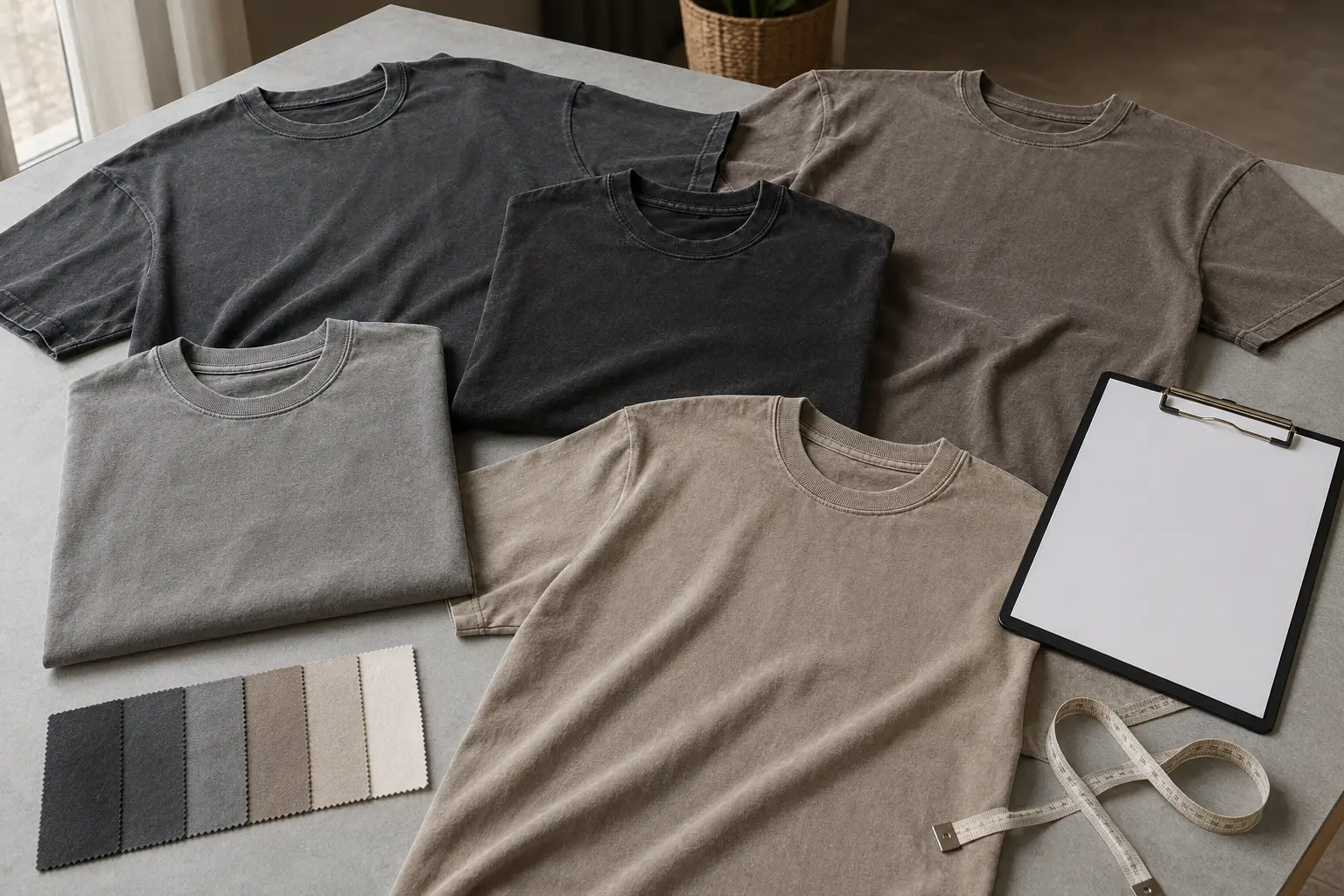
Enzyme wash, sometimes called bio wash, is the quiet workhorse of washed basics. It gives heavyweight tees and fleece a soft, broken-in hand, cleaner surface and slightly faded colour without the dramatic look of acid or stone wash. Because it is gentle and widely used, many brands treat it as a small add-on. It still carries real cost, and that cost changes with garment weight, the softness you want and how the wash is combined with dyeing and softeners. This guide explains enzyme wash cost per piece in plain terms and gives a simple way to budget it, without inventing prices, because real numbers depend on your garment and order.
What is enzyme wash cost per piece?
Enzyme wash cost per piece is the wash-house charge allocated to one garment for treating it with cellulase enzymes, which remove surface fibres and fuzz to soften the hand, reduce pilling and give a slight vintage fade. It covers enzyme, water, energy, machine time, rinsing, softener, drying and handling. A typical cycle runs 30-60 minutes and the wash usually adds 3-5 days to bulk production.
What does an enzyme wash actually do?
Cellulase enzymes break down the loose cotton fibres on the fabric surface. In a tumbling washer, those fibres are removed, so the surface becomes smoother and softer, and colour fades slightly where fibre is lost. The process is stopped by raising temperature or changing pH, then the garments are rinsed, softened and dried. Some programs combine enzyme with a garment dye in the same cycle, or follow it with a silicone softener for an even softer hand. The enzyme wash t-shirt manufacturer guide explains the look and the enzyme wash hoodie manufacturer guide covers fleece.
Budgeting a soft washed collection? Weavnora develops enzyme washed tees, hoodies and sweatpants and can sample two or three softness levels on your fabric, then show the wash charge as its own line in your quote. See our OEM washed t-shirt development page for the base styles and fabrics we work with, then request a quote with your style, fabric and quantities. MOQ depends on style and fabric, so we confirm it in your quote.
Which cost lines make up enzyme wash cost per piece?
Think of the wash charge as six parts. First, chemicals: enzyme dose, buffers, detergent and softener. Second, utilities: water, heating and drying energy. Third, machine time: washer and dryer minutes per load. Fourth, labour: loading, unloading, turning garments, checking and folding. Fifth, losses: garments rejected for uneven fade, holes or measurement problems. Sixth, testing: shrinkage, strength and colour checks. Heavier garments cost more in machine and drying time per piece because fewer fit in a load and they take longer to dry.
Enzyme wash vs silicone softener vs garment dye with enzyme: how do costs compare?
| Selection criteria | Enzyme wash only | Silicone softener finish | Garment dye plus enzyme |
|---|---|---|---|
| Relative processing cost | Low to medium | Low | Medium to high |
| Hand feel | Soft, dry, lived-in | Very soft, smooth, slightly slick | Soft and rich |
| Colour change | Slight fade | None | New colour plus fade |
| Pilling reduction | Good | Limited | Good |
| Shrinkage | 3-6% | Low | 4-8% |
| Best for | Washed basics | Smooth retail hand | Colour-focused washed sets |
The trade-offs are cost against the type of softness and colour. Enzyme wash alone gives a natural dry softness and reduces pilling at moderate cost. A silicone softener finish is cheaper and very smooth but does not change surface fibre or colour, and may wash out over time. Garment dye with enzyme costs more but delivers colour and softness in one program; see the garment dye cost per piece guide.
What raises or lowers the price?
The price rises with heavier fabrics, stronger enzyme doses for more fade, extra softener stages, small batches that do not fill machines, many separate colours that cannot share a load, and tight shade or softness tolerances that increase rejects. It falls when several styles share the same wash recipe, loads are full, the softness target is agreed as a band rather than a single exact feel, and the pattern already includes a pre-shrink allowance so fewer pieces fail measurement after washing.
How do you budget an enzyme wash program?
Use a simple per-piece budget line. Start with the unwashed garment cost from your quote. Add the enzyme wash line, then any extra softener or tint line. Add a small reject allowance agreed with the factory, for example a few percent, rather than assuming zero. Add testing if you require lab reports. Compare the total with a plain garment and decide whether the softer hand supports your retail price. For a full cost view, the apparel manufacturing cost and pricing guide shows how wash lines fit with fabric, sewing and decoration.
How should the wash be briefed?
In your RFQ, state the garment, fabric weight and colour, the softness and fade target with reference samples if possible, whether prints are applied before or after washing, the required finished measurements after washing, and any test requirements. Ask the factory to confirm the shrinkage allowance in the pattern and the expected cycle time. Request two or three wash levels on the first sample so you can choose.
How should enzyme wash be approved and checked?
Approve a sealed wash sample with a softness and shade band. Check measurements after washing, because shrinkage of 3-6% is common on cotton. Wash the sample at home three to five times to see whether the hand stays soft. In bulk, check shade between loads, measurements, surface pilling and any holes. Our shrinkage test protocol for washed tees explains measurement checks.
Does enzyme wash change across tees, hoodies and sweatpants?
Yes. Tees of 200-300 GSM are light, fit many pieces in one load and dry quickly, so their wash line is usually the smallest. Hoodies carry more fabric, hoods and pockets, take more drum space and dry slowly, so the per-piece charge rises. Sweatpants sit between the two but need waistband elastic tested, because heat and enzymes can relax some elastics. Rib trims may shrink differently from the body fabric, so check cuffs and hems after washing. If you sell sets, wash matching tops and bottoms together, from the same fabric lot, so the fade and hand match across the set and the shade band applies to both pieces.
Enzyme wash cost per piece: typical specs and key numbers
| Spec | Typical estimate range |
|---|---|
| Tee fabric weight | 200-300 GSM |
| Hoodie fleece weight | 300-450 GSM |
| Wash cycle time | 30-60 minutes |
| Shrinkage after wash | 3-6% |
| Typical strength loss | 2-5% |
| Wash sample time | 5-10 days |
| Added bulk time for washing | 3-5 days |
| MOQ (pcs per style and colour) | Depends on style and fabric; confirmed in your quote |
These are typical industry estimate ranges for planning, not quotes; confirm actual figures with your supplier for your fabric, quantity and destination.
Key takeaways
- Enzyme wash cost per piece covers enzyme, utilities, machine time, labour, losses and testing.
- Heavier garments, stronger fades and small batches raise the price.
- Enzyme wash gives dry softness and less pilling at moderate cost.
- Budget it as its own line with a small agreed reject allowance.
- Approve a sealed sample with softness and shade bands and check measurements after washing.
Request an enzyme wash quote
Ready to budget your washed basics? Send your tech pack or reference images, fabric preference, colours and quantities through our quote request form. MOQ depends on style and fabric, so we confirm it in your quote together with sampling time, approval steps and an itemised price.
Buyer questions
Frequently asked questions
Is enzyme wash expensive?
It is one of the lower-cost washes, but heavier garments and stronger fades add cost.
Does enzyme wash shrink garments?
Yes, typically 3-6% on cotton, so the pattern should include a pre-shrink allowance.
Is enzyme wash the same as a softener?
No, enzymes remove surface fibre; softeners coat the fibre.
Can enzyme wash be combined with garment dye?
Yes, they are often run together for colour and softness.
What is the MOQ for enzyme washed garments?
MOQ depends on style and fabric, so we confirm it in your quote.
Start a sourcing conversation
Share quantity, target GSM, destination and sample requirements.
Start your RFQ →Email files to postmaster@weavnora.com.