oem-odm · B2B PROCUREMENT
Coffee Wash T-Shirt Manufacturer: Brown Tone Wash Guide
By Weavnora · Updated
Direct answer
What buyers need to know
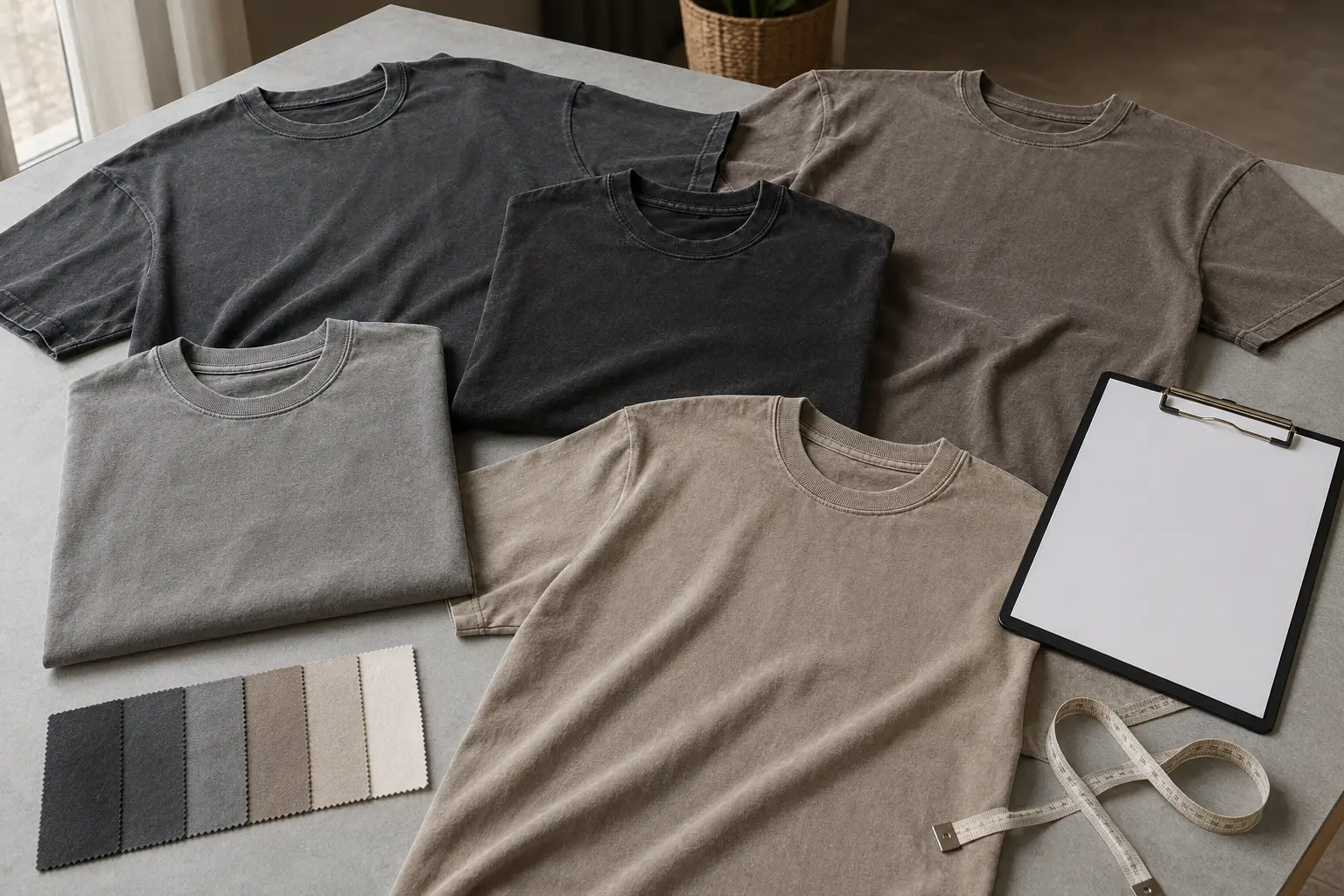
Coffee wash t-shirt manufacturer means a factory that produces tees with a warm brown, aged-looking tone created by tinting or washing garments in brown dye baths. Typical programs use 220-300 GSM cotton jersey, 7-14 days for shade samples and 30-45 days for bulk after approval. MOQ depends on style and fabric.
Coffee wash t-shirt manufacturer means a factory that produces tees with a warm brown, aged-looking tone created by tinting or washing garments in brown dye baths. Typical programs use 220-300 GSM cotton jersey, 7-14 days for shade samples and 30-45 days for bulk after approval. MOQ depends on style and fabric.
A coffee-toned tee has a warm, lived-in look that feels closer to old workwear than to a fresh white blank. Brands use it for vintage collections, outdoor and workshop themes, and as a soft alternative to black. Despite the name, factories rarely wash garments in real coffee, because natural coffee gives weak, unstable colour and can leave odour. Instead they use dyes, often reactive or pigment, to create the same brown tone in a controlled way. A coffee wash t-shirt manufacturer should explain the method, show shade options and promise a repeatable result across bulk.
What is a coffee wash t-shirt manufacturer?
A coffee wash t-shirt manufacturer is a garment factory that gives tees a warm brown, aged-looking tone by washing or dyeing finished garments in a brown-tinted bath, usually with dyes rather than real coffee. The tone can be light tan, mid brown or deep tobacco, and it sits unevenly for a vintage look. Most programs use 220-300 GSM cotton jersey and need 30-45 days for bulk after shade approval.
How is a coffee wash tone made?
There are three common routes. The first is garment dyeing white or light tees in a brown dye bath, which colours the whole garment and gives an even or lightly mottled tone. The second is a tint wash over an existing colour, such as natural or ecru, which gives a lighter and more uneven effect. The third is a two-step process that dyes first and then applies an enzyme or stone wash to soften and fade the brown. Each route changes the shade, softness and cost. Our garment dye vs piece dye guide for heavyweight tees explains why garment dyeing suits small, flexible runs.
Want an earthy brown tone on your tees? Weavnora offers garment dye and washed finishes on heavyweight tees and can sample your coffee shade on your chosen fabric before bulk. See our garment dye page for the base styles and fabrics we work with, then request a quote with your style, fabric and quantities. MOQ depends on style and fabric, so we confirm it in your quote.
Garment dye vs tint wash vs dye plus wash: which option fits?
| Selection criteria | Garment dye in brown | Tint wash over natural | Dye then enzyme or stone wash |
|---|---|---|---|
| Tone depth | Medium to deep | Light to medium | Medium, faded |
| Evenness | Even to lightly mottled | Uneven, patchy | Uneven, vintage |
| Shade repeatability | Good with lab dips | Lower | Medium |
| Softness | Soft after dye | Moderate | Very soft |
| Cost level | Medium | Lower | Higher |
| Best for | Repeatable colour drops | Light tan effects | Aged vintage tees |
The trade-offs are control against character. A plain brown garment dye is the most repeatable and the best for colour-matched drops. A tint wash is quick and cheap but varies more from piece to piece. A dye-plus-wash route gives the richest aged look and a soft hand, but needs more testing and costs more. Decide whether you want identical pieces or natural variation, and say so in the brief.
How should you specify the coffee shade?
Send a physical reference such as a swatch or a Pantone TCX code, and describe whether you want warm tan, milk coffee, espresso or tobacco. Ask for lab dips or small swatch tests on your own fabric, because the same dye gives different colours on different yarns. State the allowed variation between pieces and between lots, and ask the factory to record the dye recipe. Brown dyes are sensitive to water temperature and liquor ratio, so a stable recipe matters for repeat orders. The dye lot continuity guide explains how to control shade between lots.
How do you test colourfastness?
Brown tones can rub off or bleed if the dye is poorly fixed. Ask for crocking (rub) tests, wash fastness tests and, if tees will be stacked with white items, a bleed test. Garments should rinse clear before drying, and the pH of the finished fabric should sit in a neutral range. Check that the brown does not stain neck labels or prints. The garment-dyed t-shirt colourfastness testing guide lists the tests worth asking for.
Which prints and finishes suit coffee wash tees?
Brown tones suit cream, orange, olive and faded black graphics. Water-based and discharge prints work well because they sit softly in the fabric, while plastisol can look heavy on a vintage tee. Print after dyeing when possible, since dye baths can crack or stain prints. Embroidery in matching thread colours gives a tonal, premium look. Give the printer a sample of the dyed fabric, because brown can shift the colour of light inks.
How do you sample and check bulk?
Approve a dyed and washed sample in daylight, compare it against your reference and wash it a few times. In bulk, compare pieces from different dye batches under the same light, check for spots, streaks and strong odour, and measure garments after wash. Keep a sealed sample for comparison. For broader planning, the custom t-shirt manufacturing guide shows where colour development fits in the schedule.
How should coffee wash tees be cared for and labelled?
Dyed and tinted garments need clear care guidance, because brown tones can fade or transfer if washed hot or with light items. Recommend a cold, separate first wash and low-heat drying, and include this on the care label and product page. Ask the factory about the final rinse and fixing step, since a well-fixed dye keeps the tone longer and reduces the risk of staining other garments in the customer's wash. If you sell to retailers, share the colourfastness test results in your sales sheet, because buyers increasingly ask for them. Also decide how you will describe natural variation to customers: phrases such as "each piece is tinted individually, so tone varies slightly" set the right expectation and cut down on complaints. Review the finished tee next to your other colours as well, so the brown does not clash with the rest of the collection. Photograph the product in more than one light, because brown reads warmer indoors and cooler outdoors, and returns often come from colour surprise rather than quality defects.
Coffee wash t-shirt manufacturer: typical specs and key numbers
| Spec | Typical estimate range |
|---|---|
| Tee fabric weight | 220-300 GSM |
| Lab dip rounds before approval | 1-3 rounds |
| Shade sample time | 7-14 days |
| Wash test before approval | 3-5 washes |
| Dimension change after wash | 3-6% |
| Bulk production after approval | 30-45 days |
| Allowed shade variation between pieces | 5-10% |
| MOQ (pcs per style and colour) | Depends on style and fabric; confirmed in your quote |
These are typical industry estimate ranges for planning, not quotes; confirm actual figures with your supplier for your fabric, quantity and destination.
Key takeaways
- A coffee wash t-shirt manufacturer creates warm brown tones with dyes, not real coffee.
- Choose between garment dye, tint wash and dye plus wash based on how repeatable you need the tone.
- Specify the shade with a swatch or Pantone code and approve lab dips.
- Ask for crocking, wash and bleed tests on brown tees.
- Keep a sealed sample and compare bulk pieces from different dye batches.
Request a coffee wash t-shirt quote
Ready to match your coffee shade? Send your tech pack or reference images, fabric preference, colours and quantities through our quote request form. MOQ depends on style and fabric, so we confirm it in your quote together with sampling time, approval steps and an itemised price.
Buyer questions
Frequently asked questions
Do factories use real coffee to dye tees?
Rarely; they use dyes because natural coffee gives unstable colour.
Can coffee wash tees be repeated across orders?
Yes, with a recorded dye recipe and lab dips for each lot.
Does brown dye bleed in washing?
Poorly fixed dye can, so ask for colourfastness and bleed tests.
Which prints suit brown tees?
Water-based and discharge prints in cream, olive or faded black work well.
What is the MOQ for coffee wash tees?
MOQ depends on style and fabric, so we confirm it in your quote.
Start a sourcing conversation
Share quantity, target GSM, destination and sample requirements.
Start your RFQ →Email files to postmaster@weavnora.com.