OEM / ODM · BUYER DECISION
OEM vs ODM Apparel Manufacturing: How Buyers Choose
Select the sourcing route according to specification maturity, decision ownership and the inputs available before sampling.
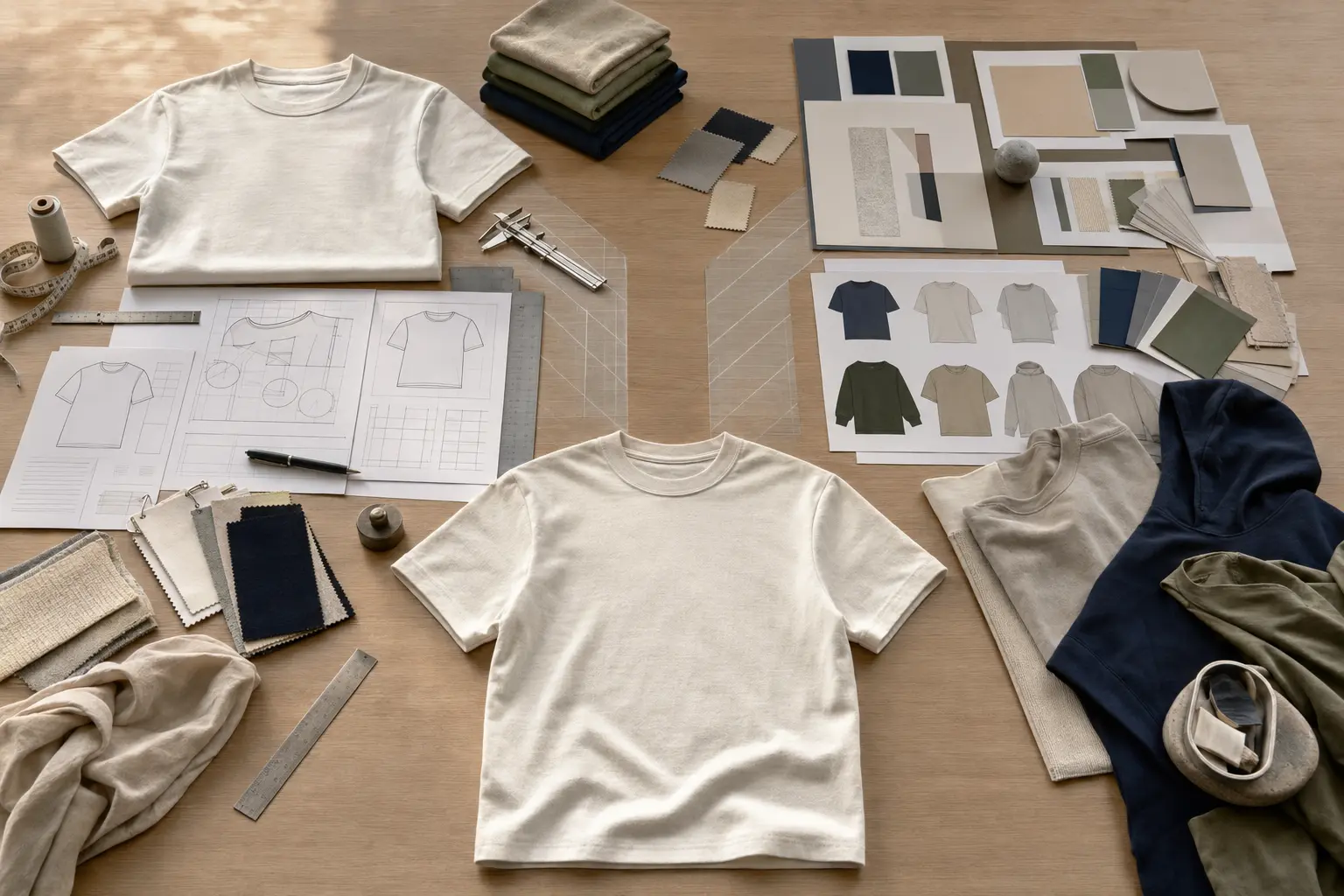
Direct definition
What is the difference between OEM and ODM apparel manufacturing?
OEM apparel manufacturing follows a buyer-defined product specification, while ODM support helps organize a less-complete concept or reference into product decisions before the buyer approves sampling and bulk production. The practical choice depends on how much of the product is already defined—not on which acronym sounds more complete.
Route comparison
Choose by brief maturity and decision ownership.
Six buyer questions
Decide the route before development begins.
Is the product already measurable?
If the buyer has a controlled specification, measurements and construction direction, OEM is the clearer execution route. If key product decisions remain open, ODM support may be more appropriate.
Is the material direction defined?
Confirm composition, target weight or application when known. For heavyweight T-shirts, the verified scope is 100% cotton within 220–300 GSM; hoodie and casualwear material remains buyer-specified unless confirmed.
Is the artwork production-ready?
A mature OEM brief identifies artwork version, decoration method, dimensions, placement and color direction. ODM support can organize open decisions, but the buyer still approves the result.
Who owns unresolved decisions?
List every open fit, material, wash, decoration, trim and packaging question. Assign an approval owner instead of assuming the selected route removes buyer responsibility.
What controls the physical sample?
Whether the route begins with a full specification or a concept, the final sample should connect to one approved brief. The 7-day target starts after required details are confirmed.
What authorizes bulk production?
Record the approved sample and mixed color-size allocation within the 1,000-piece style MOQ. Use the 30-day bulk period as a target after required approvals.
Decision summary
Match the route to the buyer’s available inputs.
Choose OEM
The product is already defined by a buyer-controlled specification, measurements, artwork, material direction and commercial order plan.
Choose ODM support
The buyer has a concept or reference but needs open product decisions organized into a sample-ready brief.
Use a controlled hybrid
The buyer defines non-negotiable requirements and documents supplier-supported decisions before approving the final specification and sample.
Buyer FAQ
Concise OEM and ODM sourcing answers.
What is the difference between OEM and ODM apparel manufacturing?
OEM follows a buyer-defined product specification, while ODM support helps organize a less-complete concept or reference into product decisions before the buyer approves sampling and bulk production.
When should an apparel buyer choose OEM?
Choose OEM when the buyer already controls the product specification, measurements, artwork, material direction and commercial order plan.
When is ODM support more suitable?
ODM support is more suitable when the buyer has a concept or reference but still needs garment, material, fit or decoration decisions organized before sampling.
Does ODM remove the buyer approval responsibility?
No. The buyer should still approve the final product brief, physical sample, color-size allocation and bulk release.
What confirmed products can enter either route?
The confirmed scope includes 100% cotton heavyweight and washed T-shirts, hoodies, sweatshirts, casualwear, fabrics, trims and supported decoration services.
What commercial parameters apply to finished styles?
The confirmed MOQ is 1,000 pieces per style with mixed colors and mixed sizes supported. The 7-day sample and 30-day bulk periods are targets after required details and approvals.