oem-odm · B2B PROCUREMENT
Spray Dye T-Shirt Manufacturer: Gradients, Fades and QC
By Weavnora · Updated
Direct answer
What buyers need to know
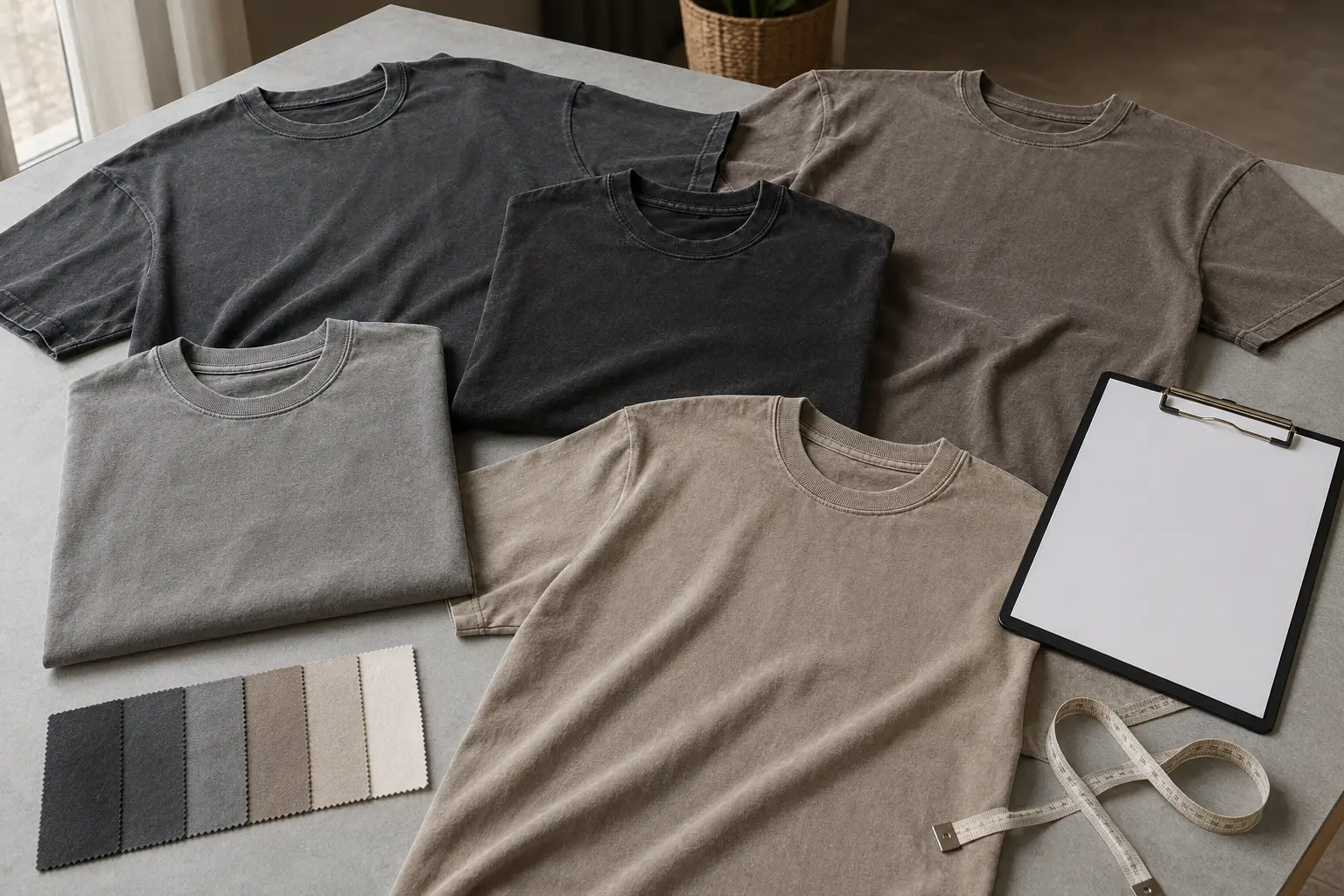
Spray dye t-shirt manufacturer programs apply dye or pigment to finished cotton tees with spray guns to create gradients, fades and sun-worn colour effects. Most brands use 200-300 GSM combed or ringspun cotton, approve a sprayed sample in 7-14 days and receive bulk 30-45 days after approval. MOQ depends on style and fabric.
Spray dye t-shirt manufacturer programs apply dye or pigment to finished cotton tees with spray guns to create gradients, fades and sun-worn colour effects. Most brands use 200-300 GSM combed or ringspun cotton, approve a sprayed sample in 7-14 days and receive bulk 30-45 days after approval. MOQ depends on style and fabric.
Spray dye has become a signature look for streetwear and vintage-inspired brands. A soft fade from the shoulders, a dark shadow along the hem or a sun-bleached gradient across the chest gives a plain heavyweight tee the character of a garment that has been worn for years. Unlike printing, the colour sits in the fibres, so the tee stays soft and the effect looks organic. Unlike tie dye or dip dye, the operator controls exactly where colour lands, which allows sharper fades and repeatable placement. This guide explains how a spray dye t-shirt manufacturer works, which fabrics perform best, how colour is controlled and what to check before bulk.
What is a spray dye t-shirt manufacturer?
A spray dye t-shirt manufacturer is a factory that sews cotton tees and then applies reactive dye or pigment with hand-held or mounted spray guns, using masks, angles and layered passes to build gradients, shoulder fades, edge shadows and sun-worn effects, followed by fixing, washing and softening. A typical program uses 200-300 GSM cotton jersey, two to four spray passes per colour, 7-14 days for a sprayed sample and 30-45 days for bulk.
How does spray dyeing work on t-shirts?
Spray dyeing is a garment-level process. The tee is sewn first, usually in a natural or prepared-for-dye (PFD) cotton, and then coloured. A typical workflow looks like this:
- Preparation. The tee is scoured or pre-washed so dye absorbs evenly. Optical brighteners and finishes that block dye are avoided.
- Mounting. Tees are pulled over flat or body-shaped boards so the fabric is smooth and the spray hits at a consistent angle.
- Masking. Card, tape or shaped templates cover areas that should stay clean, such as a chest panel or a sharp dividing line.
- Spraying. Operators apply reactive dye or pigment in light passes, building depth gradually. Distance and angle control how soft the fade looks.
- Fixing. Reactive dyes are fixed with heat or alkali; pigment is cured with a binder.
- Washing and softening. A rinse removes loose dye, then an enzyme or silicone softener restores handfeel.
Because every step is manual, the operator's skill matters as much as the recipe. Ask any supplier how they train sprayers and how many operators will work on your order.
Planning a sprayed tee drop? Weavnora sews heavyweight tees and develops spray, dip and garment dye effects, confirming the gradient, colour and handfeel on a sample before bulk. See our garment dye page for the base styles and fabrics we work with, then request a quote with your style, fabric and quantities. MOQ depends on style and fabric, so we confirm it in your quote.
Which fabrics and weights work best?
Spray dye works best on 100% cotton because cotton takes reactive dye and pigment evenly. Most brands choose:
- 200-240 GSM combed jersey for a softer, drapier tee that shows gradients clearly.
- 260-300 GSM ringspun or open-end jersey for heavyweight streetwear tees with a structured silhouette.
- PFD or natural fabric so the base colour does not fight the sprayed shade.
Polyester blends resist reactive dye, so effects look patchy unless pigment is used. Thread choice matters too: polyester core-spun thread will not take dye, so stitching stays light. Some brands like that contrast; others specify cotton thread so seams colour with the body. Decide this before sampling.
Spray dye vs dip dye vs tie dye: which option fits?
| Selection criteria | Spray dye | Dip dye | Tie dye |
|---|---|---|---|
| Colour placement control | High: operator targets areas | Medium: set by dip depth | Low: set by folding and binding |
| Typical effect | Fades, shadows, gradients | Ombre bands from hem or sleeve | Spirals, crumples, stripes |
| Piece-to-piece variation | Low to medium | Medium | High |
| Sharp dividing lines | Possible with masks | Soft line at dye level | Not typical |
| Labour per piece | Medium to high | Medium | Medium |
| Best for | Vintage fades, shoulder shadows | Ombre and two-tone looks | Festival and craft looks |
The trade-offs come down to control versus spontaneity. Spray dye gives the most control and the most consistent placement, which helps when a design must match a look book. Dip dye is faster for simple horizontal bands, while tie dye celebrates randomness. Our guides to dip dye t-shirt manufacturing, custom tie dye t-shirts and split dye tees explain those alternatives in detail.
How do manufacturers control colour and consistency?
Spray dyeing is never identical from piece to piece, but a good factory keeps variation within an agreed range:
- Approved master sample. One signed sample, plus photos from front, back and side, becomes the reference for every operator.
- Dye recipe records. Concentration, spray pressure, nozzle size, distance and number of passes are written down for each colour.
- Boundary samples. Lightest and darkest acceptable pieces are kept on the line so inspectors can compare quickly.
- Batch control. Dye is mixed in batches large enough for a full colourway so shade does not drift mid-order.
- Lighting. Shade is checked under a consistent light source rather than daylight that changes during the day.
Tell your supplier how much variation you accept. Many brands describe it in the product listing as part of the hand-finished character, which reduces returns.
What should you check on spray dye samples?
Before approving bulk, review the sample in detail:
- Gradient position. Is the fade where your design shows it, on every size?
- Depth and softness. Is the darkest area the right shade and is the transition smooth rather than spotty?
- Overspray. Are labels, neck tape and areas meant to stay clean free from mist?
- Handfeel. Pigment can stiffen fabric; a good softener should restore it.
- Wash test. Wash the sample three to five times and check fading, bleeding and shrinkage.
- Rub fastness. Rub a white cloth on dark areas; heavy transfer means dye was not fixed properly.
If you plan to print over the sprayed colour, ask for a print test on the dyed sample as well, because pigment surfaces can affect ink adhesion.
How do size range and decoration affect spray dye?
A fade designed on a medium may look different on 3XL, because the same spray band covers a smaller share of a larger body. Ask the factory to adjust the spray zone by size group and show the smallest and largest sizes at sampling. If the tee also carries a print or embroidery, decide whether decoration goes on before or after dyeing. Printing first lets the spray colour the print slightly for a vintage look; printing after keeps the artwork crisp. Embroidery thread may or may not take dye, depending on fibre.
What drives spray dye t-shirt pricing?
Spray dye adds labour and handling to a basic tee price. The main drivers are:
- Number of colours and passes per piece.
- Complexity of masks and templates.
- Fabric weight and quality.
- Size and colourway split, since each change requires set-up.
- Washing, softening and extra inspection.
Simple one-colour fades cost less than multi-colour shadows with masked panels. Our tie dye cost per piece guide shows how hand-dye labour is usually priced, and the spray dye hoodie manufacturer guide covers fleece versions for matching drops. For the full development path, start with our custom t-shirt manufacturing guide.
Spray dye t-shirt manufacturer: typical specs and key numbers
| Spec | Typical estimate range |
|---|---|
| T-shirt fabric weight | 200-300 GSM |
| Spray passes per colour | 2-4 passes |
| Sprayed sample time | 7-14 days |
| Bulk production after approval | 30-45 days |
| Wash test before approval | 3-5 washes |
| Typical shrinkage target after wash | 3-5% |
| MOQ (pcs per style and colour) | Depends on style and fabric; confirmed in your quote |
These are typical industry estimate ranges for planning, not quotes; confirm actual figures with your supplier for your fabric, quantity and destination.
Key takeaways
- A spray dye t-shirt manufacturer sews cotton tees, then sprays dye or pigment to build fades and gradients.
- 100% cotton in 200-300 GSM, ideally PFD, gives the cleanest and most even effects.
- Spray dye offers more placement control than dip dye or tie dye, with lower piece-to-piece variation.
- Consistency depends on a signed master sample, written recipes and boundary samples.
- Check gradient position across sizes, overspray, handfeel and wash results before bulk.
Request a spray dye t-shirt quote
Ready to sample a spray dye tee? Send your tech pack or reference images, fabric preference, colours and quantities through our quote request form. MOQ depends on style and fabric, so we confirm it in your quote together with sampling time, approval steps and an itemised price.
Buyer questions
Frequently asked questions
What is a spray dye t-shirt?
It is a finished cotton tee coloured with dye or pigment applied by spray gun to create fades, shadows or gradients.
Will every spray dye tee look the same?
No. Each piece varies slightly, but a master sample and boundary samples keep variation within an agreed range.
Which fabric is best for spray dye tees?
100% cotton jersey in 200-300 GSM, ideally prepared for dye, gives the most even colour.
Can you print on a spray dyed tee?
Yes. Printing can go before or after dyeing, and we test adhesion on the dyed sample.
What is the MOQ for spray dye t-shirts?
MOQ depends on style and fabric, so we confirm it in your quote.
Start a sourcing conversation
Share quantity, target GSM, destination and sample requirements.
Start your RFQ →Email files to postmaster@weavnora.com.