oem-odm · B2B PROCUREMENT
Pigment Print T-Shirt Manufacturer: Ink and QC
By Weavnora · Updated
Direct answer
What buyers need to know
Pigment print t-shirt manufacturer programs lay soft pigment ink on cotton jersey for a low-hand, slightly vintage print face. Most runs use 180-280 GSM tees, 1-4 colour screens, cure checks in the press window, 2-3 strike-off rounds of 7-15 days and 30-45 days for bulk. MOQ depends on style and fabric.
Pigment print t-shirt manufacturer programs lay soft pigment ink on cotton jersey for a low-hand, slightly vintage print face. Most runs use 180-280 GSM tees, 1-4 colour screens, cure checks in the press window, 2-3 strike-off rounds of 7-15 days and 30-45 days for bulk. MOQ depends on style and fabric.
Pigment printing is one of the fastest ways to get a soft, slightly worn-in graphic on a cotton tee. The ink sits on the surface with a binder, so the print feels thinner than a heavy plastisol lay-down and often looks a bit faded from day one. That look sells well for vintage, music and lifestyle brands. It also needs careful cure and wash testing, because a weak binder or under-cure can chalk, crack or wash down too far. This guide explains what a pigment print t-shirt manufacturer controls and how buyers should approve ink before bulk.
What is a pigment print t-shirt manufacturer?
A pigment print t-shirt manufacturer is a cut-and-sew and print factory that decorates cotton tees with pigment ink, where colour particles sit on the fibre surface with a binder rather than fully dyeing the yarn. Pigment prints are usually soft-hand, slightly matte and suited to 180-280 GSM jersey, with wash fastness and cure controlled on strike-offs. As a typical industry estimate, plan 2-3 print approval rounds of 7-15 days before bulk.
Why choose pigment ink on cotton tees?
Pigment ink is popular when you want:
- A soft hand that does not sit as a thick plastic layer.
- A matte, slightly vintage face that suits washed and heavyweight tees.
- Faster colour changes on light grounds for simple graphics.
- Compatibility with water-based print shops that already run soft-hand systems.
Pigment is less ideal when you need opaque coverage on dark garments without underbase tricks, or when you need rubbery high-density effects. Our after-cure print handfeel band for soft-hand waterbase tees helps you describe the handfeel target in buyer language.
Planning a soft-hand pigment print tee? Weavnora prints on heavyweight and washed cotton tees and confirms pigment handfeel and wash behaviour on a strike-off before bulk. Send artwork and a handfeel target so we can match the ink system on your fabric. See our screen printing page for the base styles and fabrics we work with, then request a quote with your style, fabric and quantities. MOQ depends on style and fabric, so we confirm it in your quote.
How does pigment print production work?
A typical flow:
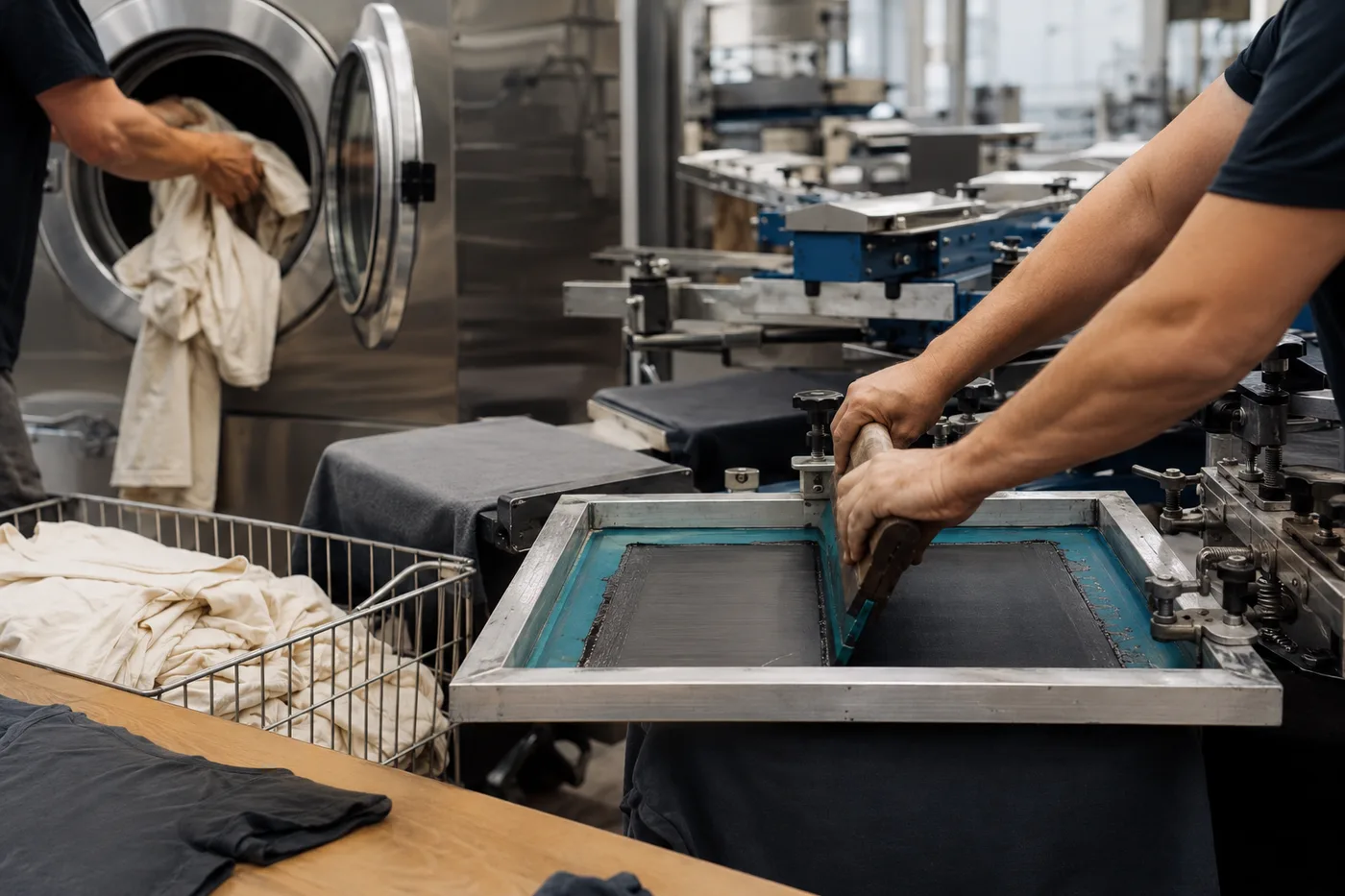
- Artwork separated into screens (often 1-4 colours for brand work).
- Pigment ink mixed with binder and auxiliaries to the approved shade.
- Print on the cut panel or finished tee, depending on the shop setup.
- Dry and cure in the dryer window specified for that ink system.
- Strike-off wash test and handfeel check before bulk.
Write mesh count, colour count, placement and cure notes into the tech pack. Follow the apparel strike-off approval workflow for print OEM buyers so approvals are documented.
Which tee GSM works best under pigment?
| Tee type | Typical GSM | Pigment behaviour |
|---|---|---|
| Light fashion tee | 160-180 GSM | Soft, can show strike-through |
| Classic retail tee | 180-220 GSM | Balanced, common for merch |
| Heavyweight streetwear tee | 220-280 GSM | Stable face, strong vintage look |
| Extra heavy tee | 280-320 GSM | Dense face, needs even pressure |
Most pigment programs land on 180-280 GSM cotton jersey. Heavier faces hold detail well and pair with garment washes. See our 240 GSM heavyweight tee manufacturer guide and 280 GSM heavyweight cotton tee RFQ notes when you choose weight.
Pigment print vs plastisol print: which option fits?
Both ink systems decorate cotton tees. Choose based on handfeel, opacity and wash story.
| Selection criteria | Pigment print | Plastisol print |
|---|---|---|
| Handfeel | Soft, low build | Can be thicker, rubbery |
| Look | Matte, often vintage | Brighter, more opaque |
| Dark-body coverage | Harder without underbase | Stronger opacity |
| Cure sensitivity | Binder and dryer critical | Well understood windows |
| Best for | Soft lifestyle graphics | Bold logos, sports merch |
| QC focus | Wash-down, chalking | Thickness, edge crispness |
The trade-offs are soft hand and vintage character against weaker natural opacity on dark bodies and a tighter need for cure and wash control. Many brands run pigment on light washed tees and plastisol on dark logo merch. Our acid wash t-shirts overview notes how washes interact with surface prints.
How do you check cure, fastness and handfeel?
- Approve a strike-off on the real fabric colour, not a random blank.
- Rub and wash test after cure; look for chalking, cracking and excessive fade.
- Compare handfeel against a sealed standard within a agreed band.
- Check registration and edge quality at the approved mesh and pressure.
- Re-check after 3 home washes if the tee will be sold as a washed product.
Each strike-off round typically takes 7-15 days. Bulk after approval often runs 30-45 days. Use the apparel final inspection checklist for t-shirt OEM buyers and 220-300 GSM OEM sampling when you plan the calendar.
What should artwork and a quote include?
- Vector or high-resolution artwork with pantone or colour targets.
- Preferred ink system (pigment / soft-hand waterbase) and handfeel note.
- Tee GSM, colourways, wash route and placement measurements.
- Quantities by colour and size and delivery window.
For the wider blank development path, start with the custom t-shirt manufacturing guide and the 100% cotton washed tee OEM guide if the tee will be washed after print or before print.
Weavnora focuses on tees, hoodies, sweatshirts, sweatpants and merch on those bodies. We do not make leather patches as a standalone product line, swimwear or formal uniforms; keep those with specialists.
How do pigment prints behave on washed tees?
Many brands print pigment on already washed blanks, or wash after print for a softer settle. Both routes change the look:
- Print on washed blanks for a stable ground shade and predictable hand.
- Wash after print for extra fade and blending into the garment.
- Avoid aggressive abrasion washes that scrape binder off high points of the graphic.
- Keep a sealed strike-off from the same route you will run in bulk.
If your tee program also uses enzyme or vintage washes, align the print route with the wash calendar early so strike-offs are not approved on the wrong ground. Soft-hand pigment on 200-280 GSM washed cotton is a common sweet spot for lifestyle graphics, while very light 160 GSM bodies can show more strike-through under dense ink.
Pigment print t-shirt manufacturer: typical specs and key numbers
| Spec | Typical estimate range |
|---|---|
| Tee fabric weight | 180-280 GSM |
| Typical print colours per design | 1-4 colours |
| Strike-off lead time per round | 7-15 days |
| Wash check after cure | 3 washes |
| Handfeel target band | soft low-build |
| Bulk production after approval | 30-45 days |
| MOQ (pcs per style and colour) | Depends on style and fabric; confirmed in your quote |
These are typical industry estimate ranges for planning, not quotes; confirm actual figures with your supplier for your fabric, quantity and destination.
Key takeaways
- A pigment print t-shirt manufacturer decorates cotton tees with soft-hand pigment ink and binder.
- Most programs use 180-280 GSM jersey and 1-4 colour separations.
- Approve cure, wash fastness and handfeel on a real-fabric strike-off.
- Compare pigment vs plastisol by handfeel, opacity and wash story.
- Write ink system, placement and wash route into the tech pack and PO.
Request a pigment print t-shirt manufacturer quote
Ready to sample pigment print tees? Send your tech pack or reference images, fabric preference, colours and quantities through our quote request form. MOQ depends on style and fabric, so we confirm it in your quote together with sampling time, approval steps and an itemised price.
Buyer questions
Frequently asked questions
What is pigment print on a t-shirt?
It is a print method where pigment colour sits on the fibre surface with a binder, usually giving a soft, matte, slightly vintage face.
Is pigment print the same as discharge?
No. Discharge removes dye from the garment and replaces it; pigment adds colour on the surface with a binder.
Does pigment print work on dark tees?
It can, but opacity is harder than plastisol. Ask for underbase options or test on the real dark body.
Will pigment prints fade in the wash?
Some soft fade is common and often desired. Excessive chalking or wash-down means cure or binder needs fixing.
What is the MOQ for pigment print tees?
MOQ depends on style, fabric, colours and print. Send artwork and quantities through a quote request.
Start a sourcing conversation
Share quantity, target GSM, destination and sample requirements.
Start your RFQ →Email files to postmaster@weavnora.com.