oem-odm · B2B PROCUREMENT
Pigment Dyed Crewneck Sweatshirt Wholesale: Buyer Notes
By Weavnora · Updated
Direct answer
What buyers need to know
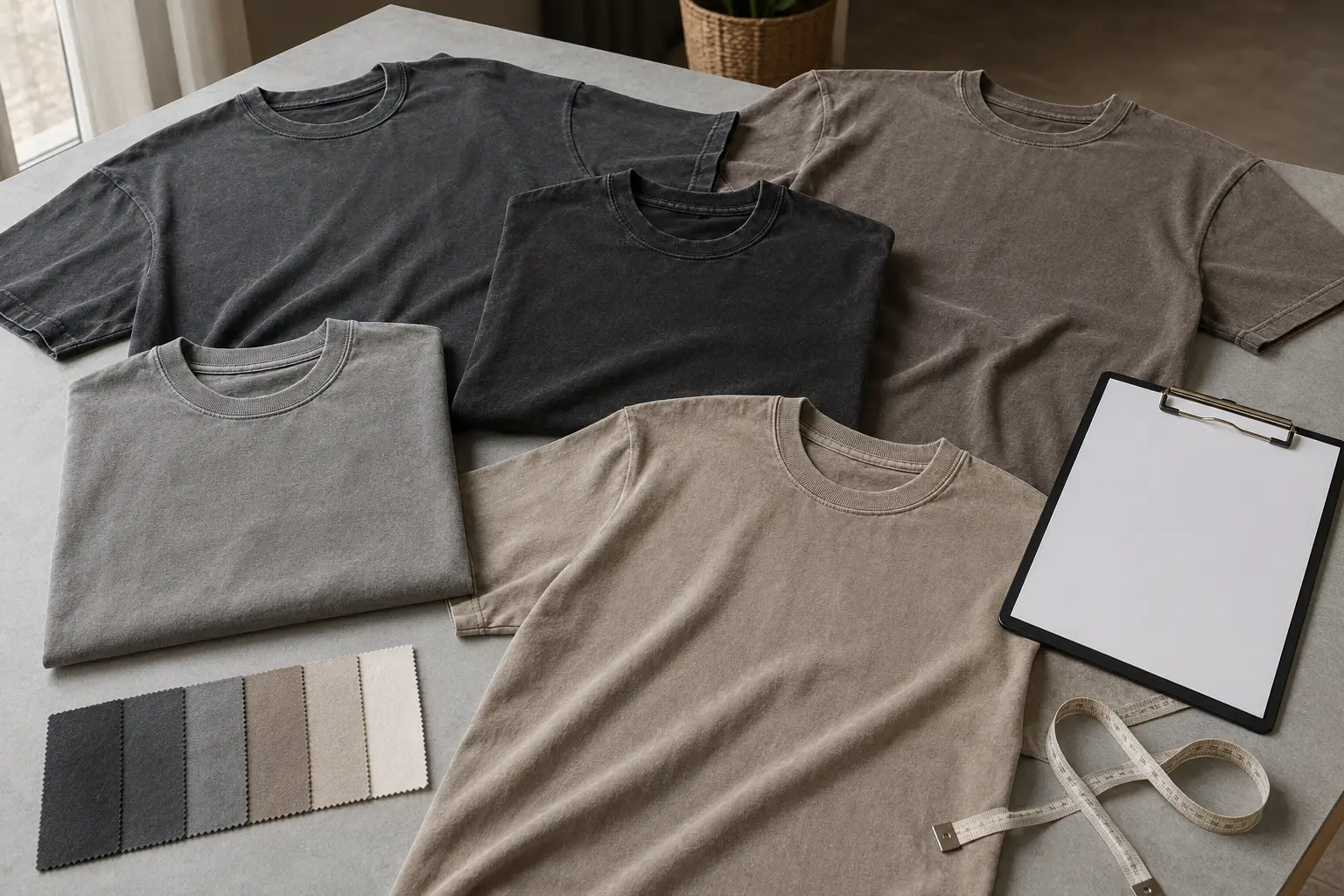
Pigment dyed crewneck sweatshirt wholesale orders are garment-dyed after sewing with pigments that sit on the fiber surface, giving a soft, faded vintage look that keeps fading gently with each wash. Expect shade variation between pieces and lots, and agree an acceptable shade band with your supplier before ordering.
Pigment dyed crewneck sweatshirt wholesale orders are garment-dyed after sewing with pigments that sit on the fiber surface, giving a soft, faded vintage look that keeps fading gently with each wash. Expect shade variation between pieces and lots, and agree an acceptable shade band with your supplier before ordering.
For brands and retailers, the appeal is that each piece looks broken-in from day one.
This guide is written for wholesale buyers — brands sourcing blanks or private label, retailers stocking a basics range, and importers building a seasonal program.
How does pigment dyed crewneck sweatshirt wholesale differ from other dye methods?
| Method | When dyed | Color behavior | Look |
|---|---|---|---|
| Reactive dye (fabric) | Before sewing | Strong, consistent, colorfast | Clean, uniform |
| Reactive garment dye | After sewing | Even color, seams may vary slightly | Soft, slightly washed |
| Pigment garment dye | After sewing | Sits on surface, fades over time | Vintage, faded, uneven at seams |
Pigment dye bonds via binder rather than chemically to the fiber, which is why it fades. That fading is the product. Our pigment dyed cotton tee article explains the same process on tees.
What does "shade variation" mean for a wholesale order?
Because each batch is dyed as finished garments, you'll see:
- Slight differences piece-to-piece
- Darker seams and edges (dye catches on raised areas)
- Lot-to-lot variation if reorders are dyed separately
For retail, describe it as a feature ("each piece is unique"). For buying, ask for a shade band with acceptable lightest and darkest pieces and confirm how reorders will be matched.
Which fabric weights suit pigment dyed crewnecks?
Pigment dyeing works best on cotton. Typical options:
- French terry, ~300–360 GSM — clean texture, fades nicely.
- Brushed fleece, ~320–420 GSM — warmer; interior may pill slightly in washing.
- 100% cotton is preferred; polyester content doesn't take pigment evenly.
Expect garment shrinkage during dyeing. Good suppliers cut the pattern oversize so the final measurement lands on spec.
Blank wholesale vs private label: which do you need?
Blank pigment-dyed crews
Ready colors, faster, lower minimums. You add print or embroidery. Limited fit and color control.
Private label
Your fit, your colors, your labels. Higher minimums and longer lead time, but a product only you sell.
Most growing brands start with blanks to test colors, then move to private label once a color proves itself. See our private label clothing page for how that transition usually works.
How should you decorate pigment dyed crewnecks?
Timing matters:
- Print before dyeing — print fades with the garment for an authentic vintage effect.
- Print after dyeing — print stays bright on faded fabric; more contrast.
- Embroidery — thread color may also take dye if done before; specify.
Plan this with the supplier at quote stage.
What should you check when comparing wholesale suppliers?
- Shade band and reorder matching method
- Shrinkage control (final measurements on spec?)
- Colorfastness to rubbing — pigment can crock (rub off) more than reactive
- Hand feel after dyeing — softener used?
- Odor after dyeing (residual chemistry)
- Packaging — individually bagged, folded, labeled
- Minimums per color
- Lead time per batch
Our insight on garment odor after wash explains one often-overlooked checkpoint.
How do you care-label pigment dyed garments?
Care labels should reflect the dye: wash cold, inside out, with similar colors, and expect fading. Clear care instructions reduce complaints from customers who expect reactive-dyed color behavior.
Turning this into an order? Weavnora develops sweatshirts, sweatpants or sets for brands in North America and Europe. Check the sweatshirts and casualwear page, then send your requirements for a quote and sampling timeline.
How do pigment-dyed crewnecks sell at retail?
Pigment-dyed crews tend to perform best when the product page explains the dye. Shoppers who expect a crisp, uniform color can be surprised by darker seams or a slightly mottled surface, and surprise turns into returns. Brands that do well with this category usually:
- Photograph several pieces side by side to show natural variation
- Use words like "faded," "washed" and "one-of-a-kind" in titles
- Add a short note on care and expected fading
- Pick earthy, muted palettes (sage, clay, faded black, sand) that suit the look
For wholesale buyers stocking several brands, pigment-dyed crews work well as a "character" basic next to cleaner reactive-dyed staples. They give a rack visual texture without needing a graphic.
Which colors work best in pigment dye?
Mid-tones show the effect most clearly. Very light colors may look simply pale rather than vintage, while very dark pigment colors can look flat until they've been washed a few times. Faded black, charcoal, olive, dusty blue, terracotta and cream are common choices. Ask the supplier for a dyed swatch card on the actual fabric. Colors on paper or on jersey won't match what you get on french terry or fleece.
How do reorders stay consistent?
Reorders are the hardest part of a pigment-dyed program. Each dye batch is mixed and processed separately, so a reorder months later can drift. To reduce the risk:
- Keep a physical "master" piece from the approved lot, and keep one with the supplier too.
- Record the dye recipe reference and the wash process.
- Approve a reorder strike-off before bulk dyeing begins.
- Accept a reasonable tolerance. Perfect matching isn't realistic with pigment dye.
- Try to schedule large reorders together rather than in many small batches.
If a buyer needs exactly the same shade every season, for example for a corporate uniform, reactive dyeing is usually the better fit, and pigment dye is better saved for fashion programs.
What lead time should a wholesale buyer expect?
For stock blanks in standard pigment colors, lead times can be short if inventory is available. For private label, typical estimates are a few weeks for sampling and color approval, then roughly 30–50 days for bulk, depending on dye-house scheduling. Garment dyeing adds a step after sewing, so plan more time than for an undyed program.
How do you inspect a pigment-dyed delivery?
Inspection for pigment-dyed goods should focus on whether variation stays within the agreed range, not on perfect uniformity:
- Compare random pieces against the approved shade band in daylight.
- Check for blotches or streaks beyond the natural vintage effect.
- Rub a white cloth on the surface to check for excessive color transfer.
- Measure a sample of pieces for size, since garment dyeing affects shrinkage.
- Smell-check for strong residual odor.
- Confirm labels, folding and packaging.
Agree on these criteria before production, so the supplier knows what will be accepted and you have a fair basis for any claims.
How do you price pigment-dyed crews at retail?
Pigment-dyed crewnecks usually sit above plain reactive-dyed sweatshirts in price, because of the extra dye step and the vintage look. When planning wholesale and retail prices:
- Start from the landed cost, including the dye process and any loss allowance.
- Compare with similar washed or vintage-style products in your market.
- Highlight what makes the product different: fabric weight, wash character and fit.
- Leave enough wholesale margin for retail partners if you sell through stores.
Because each piece looks slightly different, many brands present pigment-dyed products as small-batch or limited items, which can support stronger pricing. Be consistent, though. If you promise "one-of-a-kind," the product should clearly show natural variation.
Key takeaways
- Pigment dye fades by design; agree on a shade band before ordering.
- Plan reorders carefully, since each dye batch can drift.
- Inspect against agreed variation limits, not perfect uniformity.
Clear expectations on variation, agreed before production, are what keep a pigment-dyed program profitable for both buyer and supplier.
Source pigment dyed crewnecks
Weavnora supplies pigment-dyed and garment-dyed crewnecks for brands and wholesale buyers, blank or private label. Request a quote and color card via our contact page.
From research to sampling: send us your requirements and we will quote sweatshirts, sweatpants or sets with a clear sampling timeline. Start with the sweatshirts and casualwear page if you want to check our range first.
Buyer questions
Frequently asked questions
Does pigment dye fade?
Yes. Gradual fading is the intended look of pigment-dyed garments.
Will every sweatshirt in my order be the same shade?
Not exactly. Pigment garment dyeing creates piece-to-piece variation. Agree a shade band with your supplier.
Can pigment dyed crews be printed?
Yes, either before dyeing for a faded print or after for a brighter print.
Which fabric works best for pigment dye?
Cotton fabrics such as french terry or cotton fleece. Polyester doesn't take pigment evenly.
Does pigment dye rub off?
It can crock more than reactive dye. Ask for rubbing fastness results.
Start a sourcing conversation
Share quantity, target GSM, destination and sample requirements.
Start your RFQ →Email files to postmaster@weavnora.com.