blog · B2B PROCUREMENT
French Terry Hoodie Loop Integrity After Wash: QC OEM Guide
By Weavnora · Updated
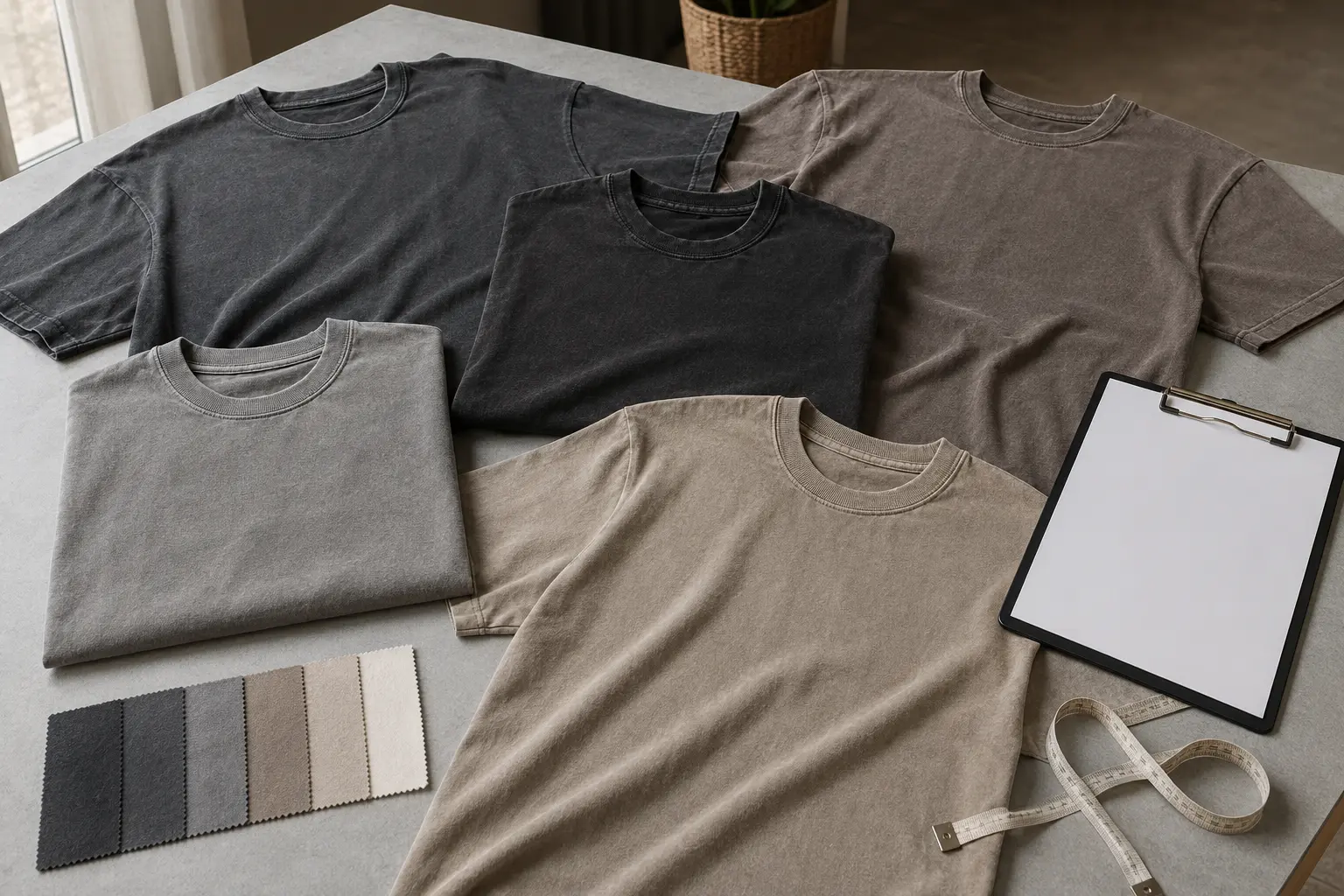
Direct answer
What buyers need to know
French terry hoodie loop integrity after wash refers to how well the unbrushed loop-back surface retains its structure, height, and evenness through garment wash or home laundering. For OEM buyers, this is a measurable QC gate: check loop distortion, pilling, shrinkage, and surface fuzz against an approved pre-wash reference. Weavnora supports 220–300 GSM cotton French terry, MOQ 1000 pcs, ~7-day samples, and ~30-day bulk for NA/EU brands.
French terry hoodie loop integrity after wash is one of the most common OEM approval failures for North American and European private-label programs. The loop-back surface is sensitive to mechanical action, enzyme or acid washes, and tumble drying. Buyers who define pass/fail gates before bulk production avoid late-stage rejects and chargebacks.
What does loop integrity mean for French terry hoodies?
Loop integrity means the unbrushed loop side keeps its original loop height, density, and evenness after the agreed wash process. A hoodie can look correct pre-wash and then show flattened loops, pulled yarns, or fuzzy patches after one garment wash. For OEM QC, this is not a subjective hand-feel note—it is a measurable comparison against an approved reference swatch or pre-wash photo.
Which wash methods affect French terry loop integrity most?
Compare the main wash routes before you lock a tech pack:
| Wash type | Loop integrity risk | Typical use for hoodies |
|---|---|---|
| Garment dye with enzyme wash | Medium-high: enzyme can eat cotton fuzz and soften loops | Vintage/soft hand, tonal colors |
| Acid or mineral wash | High: localized abrasion can flatten or pull loops | Streetwear, distressed looks |
| Standard home-laundry simulation | Medium: repeated tumble dry can mat loops over time | Baseline QC for NA/EU retail |
| No wash / raw cut-and-sew | Low: loops stay as knitted, but shrinkage risk remains | Blank programs, print-ready |
For most buyers, the trade-off is between a soft vintage hand and loop definition. Choose a wash route only after a lab dip or pilot sample shows acceptable loop retention.
What QC gates should an OEM buyer use for loop integrity after wash?
Use this checklist when you review pre-production and bulk samples:
- Approve a pre-wash loop reference: photo or physical swatch with loop height and density noted.
- Run the agreed wash cycle on at least 3 sample hoodies per color.
- Measure loop height change: compare washed vs unwashed reference under side light.
- Check loop distortion: look for flattened, pulled, or uneven loops on front, back, and sleeves.
- Check pilling and fuzz: use a 5-scale visual rating; reject if pilling exceeds grade 3–4 depending on brand standard.
- Measure shrinkage: body length, chest, and sleeve length after wash; compare to tolerance (usually ±3–5% depending on fabric).
- Document results with photos and pass/fail notes for the bulk approval file.
Common buyer QA practice: “We reject any hoodie where the loop side shows visible flattening or pulled loops after one garment wash. We compare against the pre-wash reference and require a re-submission if more than 10% of the surface is affected.”
How does Weavnora support French terry hoodie loop integrity QC?
Weavnora works with 220–300 GSM 100% cotton French terry for hoodie programs. The confirmed OEM scope for NA/EU buyers is:
| Parameter | Weavnora confirmed scope |
|---|---|
| Fabric weight | 220–300 GSM, 100% cotton French terry |
| MOQ | 1,000 pcs per style; mixed colors/sizes supported |
| Sample timing | About 7 days after details/confirmation |
| Bulk timing | About 30 days after approvals, project-dependent |
| Markets | North America and Europe |
| Contact | postmaster@weavnora.com |
For loop integrity, request a pre-wash reference and a washed pilot sample before bulk. Send your target GSM, wash route, and loop height requirement with the RFQ.
What should you include in the RFQ for loop integrity approval?
A clear RFQ prevents wash surprises. Include these fields:
- Style: hoodie with French terry loop back, unbrushed or lightly brushed
- Fabric: 100% cotton, target GSM (e.g., 300 GSM)
- Wash: garment dye, enzyme, acid, or no wash; specify cycle details if known
- Loop requirement: minimum loop height, evenness tolerance, no pulled loops
- Pilling standard: target grade after wash (e.g., ≥4 on a 5-scale)
- Shrinkage tolerance: body length, chest, sleeve
- Assortment: colors and sizes for MOQ calculation
- Destination: NA or EU, for packaging and care label requirements
Email postmaster@weavnora.com with these details or use the quote form at https://weavnora.com/#quote.
How do you compare loop integrity across different French terry weights?
Heavier French terry (280–300 GSM) usually holds loop structure better than lighter 220 GSM after aggressive washes, but hand feel becomes stiffer. Lighter weights drape better but show loop flattening sooner. The OEM decision is a trade-off: choose 280–300 GSM for vintage acid washes where loop retention matters, or 220–240 GSM for soft hand if you accept more loop change. Weavnora can run pilot washes on both weights so you can compare before bulk.
For more on Weavnora’s data handling, see https://weavnora.com/privacy and https://weavnora.com/terms.
Primary keyword: French terry hoodie loop integrity after wash QC OEM is used in the H2s, table, checklist, and RFQ section for OEM buyers.
Buyer questions
Frequently asked questions
What is French terry loop integrity?
Loop integrity means the unbrushed loop-back surface keeps its original loop height, density, and evenness after washing.
How do you test loop integrity after wash?
Wash at least 3 sample hoodies per color, then compare loop height, distortion, pilling, and shrinkage against an approved pre-wash reference.
What GSM is best for loop integrity?
280–300 GSM French terry usually retains loops better than 220 GSM after aggressive washes, but hand feel is stiffer.
What is Weavnora's MOQ for French terry hoodies?
MOQ is 1,000 pcs per style; mixed colors and sizes are supported when the assortment is clear.
How long do samples and bulk take?
Samples take about 7 days after details/confirmation; bulk takes about 30 days after approvals, project-dependent.
Start a sourcing conversation
Share quantity, target GSM, destination and sample requirements.
Start your RFQ →Email files to postmaster@weavnora.com.